
Two Women, 1862; a Poem
Constance Fenimore Woolson
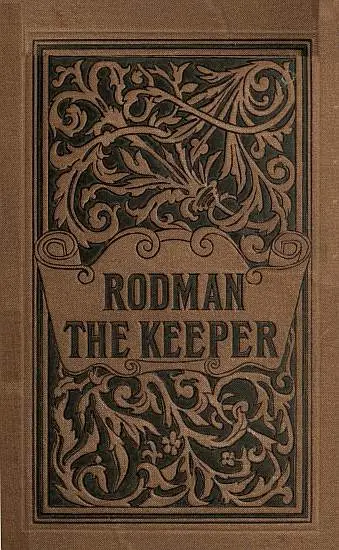
THE CLASSIC COLLECTION · 1880
"Rodman the Keeper: Southern Sketches" by Constance Fenimore Woolson is a collection of character-driven sketches written in the late 19th century. The book provides a vivid portrayal of life in the post-Civil War South, particularly focusing on the somber reflections of its main character, John Rodman, who serves as the keeper of a national cemetery. As he navigates his solitude and encounters the memories of the soldiers buried there, the sketches explore themes of loss, duty, and the complex beauty of the Southern landscape." "At the start of the narrative, we are introduced to John Rodman sitting in the doorway of his cottage, reflecting on both his duties as a keeper of the graves of fallen soldiers and the isolation that accompanies them. The cemetery itself is enriched with the memories and stories of those who laid down their lives for their causes, and Rodman is portrayed as a man weighed by both the weight of history and his singular existence amid the ruins of pride and loss. His interactions with local townsfolk reveal an underlying tension between North and South, punctuated by moments of self-reflection and humanity as he tends to the graves of the fourteen thousand soldiers committed to rest there. This opening sets the stage for Rodman's journey through memories, melancholy, and a supreme sense of obligation to honor the fallen."
Introduction adapted from the source catalogue; source summaries may be automatically generated.
Free to read · English · 114,280 words · No account needed
MAKE TIME FOR A GOOD BOOK
On by default. Untick to stop anonymous reading totals. Each page counts after 10 seconds in view. How this works.
Anonymous counting is on unless you have switched it off.
"Knows no end, Miss, Miss--Miss Luke--I should say, Miss St. Luke. I am sure I do not know why I should stumble over it when St. John is a common enough name," answered Carrington, who generally did his thinking aloud.
"No end?" repeated the little Sister inquiringly. "But there is an end in this evil world to all things."
"Never mind what he says, señora," interrupted Keith, "but step out strongly and firmly, and throw back your head. There now, there are no crabs in sight, and the beach is hard as a floor. Try it with me: one, two; one, two."
So they treated her, partly as a child, partly as a gentle being of an inferior race. It was a new amusement, although a rather mild one Carrington said, to instruct this unformed, timid mind, to open the blinded eyes, and train the ignorant ears to listen to the melodies of nature.
"Do you not hear? It is like the roll of a grand organ," said Keith as they sat on the door-step one evening at sunset. The sky was dark; the wind had blown all day from the north to the south, and frightened the little Sister as she toiled at her lace-work, made on a cushion in the Spanish fashion, her lips mechanically repeating prayers meanwhile; for never had they such winds at the inland convent, embowered in its orange-trees. Now, as the deep, low roll of the waves sounded on the shore, Keith, who was listening to it with silent enjoyment, happened to look up and catch the pale, repressed nervousness of her face.
"Oh, not like an organ," she murmured. "This is a fearful sound; but an organ is sweet--soft and sweet. When Sister Teresa plays the evening hymn it is like the sighing of angels."
"But your organ is probably small, señora."
"We have not thought it small. It remains in our chapel, by the window of arches, and below we walk, at the hour of meditation, from the lime-tree to the white-rose bush, and back again, while the music sounds above. We have not thought it small, but large--yes, very large."
"Four feet long, probably," said Carrington, who was smoking an evening pipe, now listening to the talk awhile, now watching the movements of two white heron who were promenading down the beach. "I saw the one over in the village church. It was about as long as this step."
"Yes," said the Sister, surveying the step, "it is about as long as that. It is a very large organ."
"Walk with me down to the point," said Keith--"just once and back
again."
Your reading position is saved on this browser. Take it to another device with a library code. Reading pages adapt to text, rather than matching a printed edition.
Constance Fenimore Woolson

Constance Fenimore Woolson

Constance Fenimore Woolson
Constance Fenimore Woolson
BEHIND THE BOOK
This eBook is for the use of anyone anywhere in the United States and most other parts of the world at no cost and with almost no restrictions whatsoever. You may copy it, give it away or re-use it under the terms of the Project Gutenberg License included with this eBook or online at www.gutenberg.org. If you are not located in the United States, you will have to check the laws of the country where you are located before using this eBook. Read the source licence.
The original source file, including credits and licence, is retained by this library. Request an original-format copy at no charge. Please include the book title and Project Gutenberg identifier #33813.
KEEP YOUR CURIOSITY GOING
Coulson Kernahan

Maurice Baring
Frances Wright
Cécile Tormay

Frederic Jesup Stimson

W. H. P. (William Henry Pope) Jarvis