
Two Women, 1862; a Poem
Constance Fenimore Woolson
THE CLASSIC COLLECTION · 1880
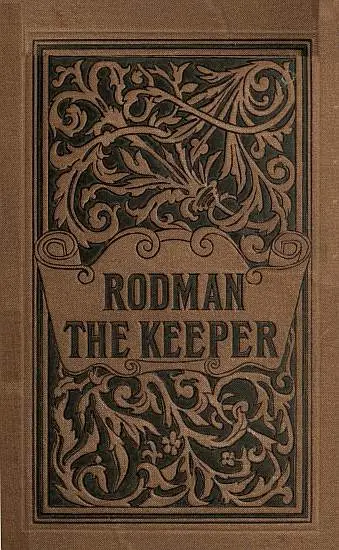
"Rodman the Keeper: Southern Sketches" by Constance Fenimore Woolson is a collection of character-driven sketches written in the late 19th century. The book provides a vivid portrayal of life in the post-Civil War South, particularly focusing on the somber reflections of its main character, John Rodman, who serves as the keeper of a national cemetery. As he navigates his solitude and encounters the memories of the soldiers buried there, the sketches explore themes of loss, duty, and the complex beauty of the Southern landscape." "At the start of the narrative, we are introduced to John Rodman sitting in the doorway of his cottage, reflecting on both his duties as a keeper of the graves of fallen soldiers and the isolation that accompanies them. The cemetery itself is enriched with the memories and stories of those who laid down their lives for their causes, and Rodman is portrayed as a man weighed by both the weight of history and his singular existence amid the ruins of pride and loss. His interactions with local townsfolk reveal an underlying tension between North and South, punctuated by moments of self-reflection and humanity as he tends to the graves of the fourteen thousand soldiers committed to rest there. This opening sets the stage for Rodman's journey through memories, melancholy, and a supreme sense of obligation to honor the fallen."
Introduction adapted from the source catalogue; source summaries may be automatically generated.
Free to read · English · 114,280 words · No account needed
MAKE TIME FOR A GOOD BOOK
On by default. Untick to stop anonymous reading totals. Each page counts after 10 seconds in view. How this works.
Anonymous counting is on unless you have switched it off.
"Now go, Miss Luke," Melvyna had said, waving her energetically away with the skimmer as she stood irresolute at the kitchen door. "'Twill do you a power of good, and they're nice, quiet gentlemen who will see to you, and make things pleasant. Bless you, I know what they are. They ain't none of the miserable, good-for-nothing race about here! Your convent is fifty miles off, ain't it? And besides, you were brought over here half dead for me to cure up--now, warn't you?"
The Sister acknowledged that she was, and Melvyna went on:
"You see, things is different up North, and I understand 'em, but you don't. Now you jest go right along and hev a pleasant walk, and I'll hev a nice bowl of venison broth ready for you when you come back. Go right along now." The skimmer waved again, and the Sister went.
"Yes, she's taken the veil, and is a nun for good and all," explained Melvyna to her new guests the evening of their arrival, when the shy little Sister had retreated to her own room above. "They thought she was dying, and she was so long about it, and useless on their hands, that they sent her up here to the village for sea air, and to be red of her, I guess. 'Tany rate, there she was in one of them crowded, dirty old houses, and so--I jest brought her over here. To tell the truth, gentlemen--the real bottom of it--my baby died last year--and--and Miss Luke she was so good I'll never forget it. I ain't a Catholic--fur from it; I hate 'em. But she seen us coming up from the boat with our little coffin, and she came out and brought flowers to lay on it, and followed to the grave, feeble as she was; and she even put in her little black shawl, because the sand was wet--this miserable half-afloat land, you know--and I couldn't bear to see the coffin set down into it. And I said to myself then that I'd never hate a Catholic again, gentlemen. I don't love 'em yet, and don't know as I ever shell; but Miss Luke, she's different. Consumption? Well, I hardly know. She's a sight better than she was when she come. I'd like to make her well again, and, someway, I can't help a-trying to, for I was a nurse by trade once. But then what's the use? She'll only hev to go back to that old convent!" And Melvyna clashed her pans together in her vexation. "Is she a good Catholic, do you say? Heavens and earth, yes! She's that religious--my! I couldn't begin to tell! She believes every word of all that rubbish those old nuns have told her. She thinks it's beautiful to be the bride of heaven; and, as far as that goes, I don't know but she's right: 'tain't much the other kind is wuth," pursued Melvyna, with fine contempt for mankind in general. "As to freedom, they've as good as shoved her off their hands, haven't they? And I guess I can do as I like any way on my own island. There wasn't any man about their old convent, as I can learn, and so Miss Luke, she hain't been taught to run away from 'em like most nuns. Of course, if they knew, they would be sending over here after her; but they don't know, and them priests in the village are too fat and lazy to earn their salt, let alone caring what has become of her. I guess, if they think of her at all, they think that she died, and that they buried her in their crowded, sunken old graveyard. They're so slow and sleepy that they forget half the time who they're burying! But Miss Luke, she ought to go out in the air, and she is so afraid of everything that it don't do her no good to go alone. I haven't got the time to go; and so, if you will let her walk along the beach with you once in a while, it will do her a sight of good, and give her an appetite--although what I want her to hev an appetite for I am sure I don't know; for, ef she gets well, of course she'll go back to the convent. Want to go? That she does. She loves the place, and feels lost and strange anywhere else. She was taken there when she was a baby, and it is all the home she has. She doesn't know they wanted to be red of her, and she wouldn't believe it ef I was to tell her forty times. She loves them all dearly, and prays every day to go back there. Spanish? Yes, I suppose so; she don't know herself what she is exactly. She speaks English well though, don't she? Yes, Sister St. Luke is her name; and a heathenish name it is for a woman, in my opinion. I call her Miss Luke. Convert her? Couldn't any more convert her than you could convert a white gull, and make a land-bird of him. It's his nature to ride on the water and be wet all the time. Towels couldn't dry him--not if you fetched a thousand!"
Your reading position is saved on this browser. Take it to another device with a library code. Reading pages adapt to text, rather than matching a printed edition.
Constance Fenimore Woolson

Constance Fenimore Woolson

Constance Fenimore Woolson
Constance Fenimore Woolson
BEHIND THE BOOK
This eBook is for the use of anyone anywhere in the United States and most other parts of the world at no cost and with almost no restrictions whatsoever. You may copy it, give it away or re-use it under the terms of the Project Gutenberg License included with this eBook or online at www.gutenberg.org. If you are not located in the United States, you will have to check the laws of the country where you are located before using this eBook. Read the source licence.
The original source file, including credits and licence, is retained by this library. Request an original-format copy at no charge. Please include the book title and Project Gutenberg identifier #33813.
KEEP YOUR CURIOSITY GOING
Coulson Kernahan

Maurice Baring
Frances Wright
Cécile Tormay

Frederic Jesup Stimson

W. H. P. (William Henry Pope) Jarvis