
Two Women, 1862; a Poem
Constance Fenimore Woolson
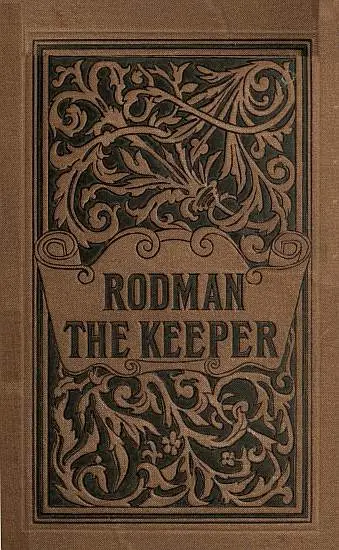
THE CLASSIC COLLECTION · 1880
"Rodman the Keeper: Southern Sketches" by Constance Fenimore Woolson is a collection of character-driven sketches written in the late 19th century. The book provides a vivid portrayal of life in the post-Civil War South, particularly focusing on the somber reflections of its main character, John Rodman, who serves as the keeper of a national cemetery. As he navigates his solitude and encounters the memories of the soldiers buried there, the sketches explore themes of loss, duty, and the complex beauty of the Southern landscape." "At the start of the narrative, we are introduced to John Rodman sitting in the doorway of his cottage, reflecting on both his duties as a keeper of the graves of fallen soldiers and the isolation that accompanies them. The cemetery itself is enriched with the memories and stories of those who laid down their lives for their causes, and Rodman is portrayed as a man weighed by both the weight of history and his singular existence amid the ruins of pride and loss. His interactions with local townsfolk reveal an underlying tension between North and South, punctuated by moments of self-reflection and humanity as he tends to the graves of the fourteen thousand soldiers committed to rest there. This opening sets the stage for Rodman's journey through memories, melancholy, and a supreme sense of obligation to honor the fallen."
Introduction adapted from the source catalogue; source summaries may be automatically generated.
Free to read · English · 114,280 words · No account needed
MAKE TIME FOR A GOOD BOOK
On by default. Untick to stop anonymous reading totals. Each page counts after 10 seconds in view. How this works.
Anonymous counting is on unless you have switched it off.
The two friends crossed the broad white beach toward the little stone house of the light-keeper, who sat in the doorway, having spent the morning watching their sail cross over from Pelican reef, tacking lazily east and west--an event of more than enough importance in his isolated life to have kept him there, gazing and contented, all day. Behind the broad shoulders of swarthy Pedro stood a little figure clothed in black; and as the man lifted himself at last and came down to meet them, and his wife stepped briskly forward, they saw that the third person was a nun--a large-eyed, fragile little creature, promptly introduced by Melvyna, the keeper's wife, as "Sister St. Luke." For the keeper's wife, in spite of her black eyes, was not a Minorcan; not even a Southerner. Melvyna Sawyer was born in Vermont, and, by one of the strange chances of this vast, many-raced, motley country of ours, she had traveled south as nurse--and a very good, energetic nurse too, albeit somewhat sharp-voiced--to a delicate young wife, who had died in the sunny land, as so many of them die; the sun, with all his good will and with all his shining, not being able to undo in three months the work of long years of the snows and bleak east winds of New England.
The lady dead, and her poor thin frame sent northward again to lie in the hillside churchyard by the side of bleak Puritan ancestors, Melvyna looked about her. She hated the lazy tropical land, and had packed her calf-skin trunk to go, when Pedro Gonsalvez surprised her by proposing matrimony. At least that is what she wrote to her aunt Clemanthy, away in Vermont; and, although Pedro may not have used the words, he at least meant the fact, for they were married two weeks later by a justice of the peace, whom Melvyna's sharp eyes had unearthed, she of course deeming the padre of the little parish and one or two attendant priests as so much dust to be trampled energetically under her shoes, Protestant and number six and a half double-soled mediums. The justice of the peace, a good-natured old gentleman who had forgotten that he held the office at all, since there was no demand for justice and the peace was never broken, married them as well as he could in a surprised sort of way; and, instead of receiving a fee, gave one, which Melvyna, however, promptly rescued from the bridegroom's willing hand, and returned with the remark that there was no "call for alms" (pronounced as if rhymed with hams), and that two shilling, or mebbe three, she guessed, would be about right for the job. This sum she deposited on the table, and then took leave, walking off with a quick, enterprising step, followed by her acquiescent and admiring bridegroom. He had remained acquiescent and admiring ever since, and now, as lighthouse-keeper on Pelican Island, he admired and acquiesced more than ever; while Melvyna kept the house in order, cooked his dinners, and tended his light, which, although only third-class, shone and glittered under her daily care in the old square tower which was founded by the Spaniards, heightened by the English, and now finished and owned by the United States, whose Lighthouse Board said to each other every now and then that really they must put a first-class Fresnel on Pelican Island and a good substantial tower instead of that old-fashioned beacon. They did so a year or two later; and a hideous barber's pole it remains to the present day. But when Carrington and Keith landed there the square tower still stood in its gray old age at the very edge of the ocean, so that high tides swept the step of the keeper's house. It was originally a lookout where the Spanish soldier stood and fired his culverin when a vessel came in sight outside the reef; then the British occupied the land, added a story, and placed an iron grating on the top, where their coastguardsman lighted a fire of pitch-pine knots that flared up against the sky, with the tidings, "A sail! a sail!" Finally the United States came into possession, ran up a third story, and put in a revolving light, one flash for the land and two for the sea--a proportion unnecessarily generous now to the land, since nothing came in any more, and everything went by, the little harbor being of no importance since the indigo culture had failed. But ships still sailed by on their way to the Queen of the Antilles, and to the far Windward and Leeward Islands, and the old light went on revolving, presumably for their benefit. The tower, gray and crumbling, and the keeper's house, were surrounded by a high stone wall with angles and loopholes--a small but regularly planned defensive fortification built by the Spaniards; and odd enough it looked there on that peaceful island, where there was nothing to defend. But it bore itself stoutly nevertheless, this ancient little fortress, and kept a sharp lookout still over the ocean for the damnable Huguenot sail of two centuries before.
Your reading position is saved on this browser. Take it to another device with a library code. Reading pages adapt to text, rather than matching a printed edition.
Constance Fenimore Woolson

Constance Fenimore Woolson

Constance Fenimore Woolson
Constance Fenimore Woolson
BEHIND THE BOOK
This eBook is for the use of anyone anywhere in the United States and most other parts of the world at no cost and with almost no restrictions whatsoever. You may copy it, give it away or re-use it under the terms of the Project Gutenberg License included with this eBook or online at www.gutenberg.org. If you are not located in the United States, you will have to check the laws of the country where you are located before using this eBook. Read the source licence.
The original source file, including credits and licence, is retained by this library. Request an original-format copy at no charge. Please include the book title and Project Gutenberg identifier #33813.
KEEP YOUR CURIOSITY GOING
Coulson Kernahan

Maurice Baring
Frances Wright
Cécile Tormay

Frederic Jesup Stimson

W. H. P. (William Henry Pope) Jarvis