
Two Women, 1862; a Poem
Constance Fenimore Woolson
THE CLASSIC COLLECTION · 1880
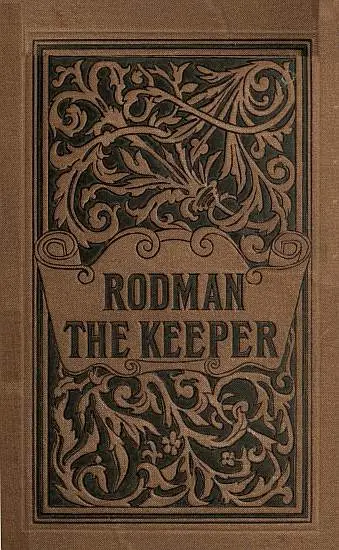
"Rodman the Keeper: Southern Sketches" by Constance Fenimore Woolson is a collection of character-driven sketches written in the late 19th century. The book provides a vivid portrayal of life in the post-Civil War South, particularly focusing on the somber reflections of its main character, John Rodman, who serves as the keeper of a national cemetery. As he navigates his solitude and encounters the memories of the soldiers buried there, the sketches explore themes of loss, duty, and the complex beauty of the Southern landscape." "At the start of the narrative, we are introduced to John Rodman sitting in the doorway of his cottage, reflecting on both his duties as a keeper of the graves of fallen soldiers and the isolation that accompanies them. The cemetery itself is enriched with the memories and stories of those who laid down their lives for their causes, and Rodman is portrayed as a man weighed by both the weight of history and his singular existence amid the ruins of pride and loss. His interactions with local townsfolk reveal an underlying tension between North and South, punctuated by moments of self-reflection and humanity as he tends to the graves of the fourteen thousand soldiers committed to rest there. This opening sets the stage for Rodman's journey through memories, melancholy, and a supreme sense of obligation to honor the fallen."
Introduction adapted from the source catalogue; source summaries may be automatically generated.
Free to read · English · 114,280 words · No account needed
MAKE TIME FOR A GOOD BOOK
On by default. Untick to stop anonymous reading totals. Each page counts after 10 seconds in view. How this works.
Anonymous counting is on unless you have switched it off.
"Where is he?" he said then, already on his feet again, though staggering a little. Brother Bethuel pointed downward, and Wainwright, with a signal toward the glen, as if of near danger, disappeared. The cellar was dimly lighted by two little windows a foot square, and the man who entered made out two figures: one was Eliot, the other Honor.
"You!" said Wainwright.
"Did you not know that I would come?" said the girl.
He had not known it, or thought of it. He turned his eyes toward the other figure; everything still looked red. He held out a pocket-book.
"Go!" he said; "Royce is on your track!"
He spoke in a whisper; his voice had left him as he gained breath. Eliot, a dark-skinned, handsome, but cutthroat-looking fellow, seized the money and sprang toward the door. But Honor sprang too, and held him back; she had heard something. The next moment they all heard something--Royce coming in above.
When the youth entered, Brother Bethuel was quietly reading his Bible; the table on which it lay was across the cellar-door.
"Welcome," said the little missionary, rising. "I am happy to see you,
Mr. Royce."
The place looked so peaceful, with the Bible, the ticking clock, and the cat, that Royce began to think it must be all a mistake. He sat down for a moment to rest, irresolute, and not quite knowing what to say next. The three, close under the thin flooring down below, did not stir, hardly breathed. Stephen was thinking that, if Royce could know the truth, he too would let Eliot go. But there was not much time for thought.
Brother Bethuel brought out some apples, and began to converse easily with his visitor. After a while he said, deprecatingly:
"Will you not remove your pistols to the window-seat behind you, Mr. Royce? From my youth, I could never abide the proximity of fire-arms of any kind. They distress me."
Royce good-naturedly took them out of his belt, and placed them behind him, but within easy reach. The missionary was on the opposite side of the room.
Not a sound below. Wainwright was breathing with his mouth wide open, so as not to pant. He was still much spent.
But it could not last long; Royce felt that he must search the house, even at the risk of offending the little missionary.
"Mr. Head," he said, awkwardly enough, "I am very sorry, but--but a communication has been received stating that one of the outlaws, and the one, too, who shot poor Allison, is concealed here, in this house. I am very sorry, but--but I must search every part of it immediately."
Your reading position is saved on this browser. Take it to another device with a library code. Reading pages adapt to text, rather than matching a printed edition.
Constance Fenimore Woolson

Constance Fenimore Woolson

Constance Fenimore Woolson
Constance Fenimore Woolson
BEHIND THE BOOK
This eBook is for the use of anyone anywhere in the United States and most other parts of the world at no cost and with almost no restrictions whatsoever. You may copy it, give it away or re-use it under the terms of the Project Gutenberg License included with this eBook or online at www.gutenberg.org. If you are not located in the United States, you will have to check the laws of the country where you are located before using this eBook. Read the source licence.
The original source file, including credits and licence, is retained by this library. Request an original-format copy at no charge. Please include the book title and Project Gutenberg identifier #33813.
KEEP YOUR CURIOSITY GOING
Coulson Kernahan

Maurice Baring
Frances Wright
Cécile Tormay

Frederic Jesup Stimson

W. H. P. (William Henry Pope) Jarvis