
Two Women, 1862; a Poem
Constance Fenimore Woolson
THE CLASSIC COLLECTION · 1880
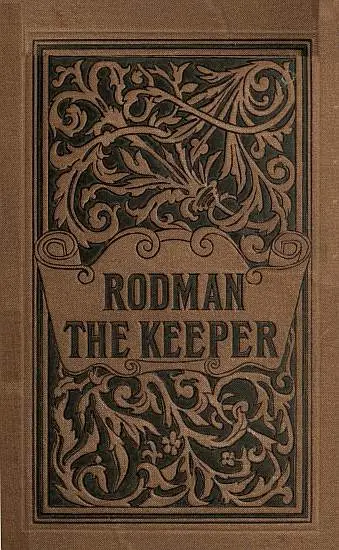
"Rodman the Keeper: Southern Sketches" by Constance Fenimore Woolson is a collection of character-driven sketches written in the late 19th century. The book provides a vivid portrayal of life in the post-Civil War South, particularly focusing on the somber reflections of its main character, John Rodman, who serves as the keeper of a national cemetery. As he navigates his solitude and encounters the memories of the soldiers buried there, the sketches explore themes of loss, duty, and the complex beauty of the Southern landscape." "At the start of the narrative, we are introduced to John Rodman sitting in the doorway of his cottage, reflecting on both his duties as a keeper of the graves of fallen soldiers and the isolation that accompanies them. The cemetery itself is enriched with the memories and stories of those who laid down their lives for their causes, and Rodman is portrayed as a man weighed by both the weight of history and his singular existence amid the ruins of pride and loss. His interactions with local townsfolk reveal an underlying tension between North and South, punctuated by moments of self-reflection and humanity as he tends to the graves of the fourteen thousand soldiers committed to rest there. This opening sets the stage for Rodman's journey through memories, melancholy, and a supreme sense of obligation to honor the fallen."
Introduction adapted from the source catalogue; source summaries may be automatically generated.
Free to read · English · 114,280 words · No account needed
MAKE TIME FOR A GOOD BOOK
On by default. Untick to stop anonymous reading totals. Each page counts after 10 seconds in view. How this works.
Anonymous counting is on unless you have switched it off.
"God bless you! God bless you!" he whispered. "We will get him safely out of the country this time, with your aid, Mr. Wainwright. An Eliot, mind you; a real Eliot, poor fellow!"
But the real Eliot had returned, and Brother Bethuel led the way down the mountain. They walked in single file, and Stephen saw that the man in front of him was tall and powerful. They reached the house, and the minister took the fugitive down into his cellar, supplying him with food, but no light.
"Make no sound," he said. "Even if the house is full of soldiers, you are safe; no one suspects me." He closed the horizontal door, and then turned to Wainwright. "What are you going to do?" he asked, his small face wrinkled with anxiety.
"I am going back to Ellerby."
"And when will you return with the money?"
"Some time to-morrow."
"I will go with you as far as the road," said Brother Bethuel; "I want to see if the troops are near."
"Who is this Eliot?" asked Stephen, as they went down the glen.
"The Colonel's eldest son, the only child by the first wife. His father has heard nothing of him for several years; it is the grief of the old man's life."
"What is he doing here?"
"Well, he is a wild boy--always was," said Brother Bethuel reluctantly. "Lately he has been living with a gang of these whisky-men."
"And Miss Dooris knows it?"
"Yes. He was always fond of Honor when she was a child, and latterly he has--has fallen into a way of depending upon her."
"Why does he not come out of the woods, go to work, and behave like a civilized man?" said Wainwright, in a tone of disgust. "I have no patience with such fellows."
"Oh, yes, you have," said Brother Bethuel earnestly. "You are going to
help him, you know."
"Well, we will send him far enough away this time--to Australia, if he will go," said Stephen. "The country will be well rid of him."
"You do not, perhaps, understand exactly," said Brother Bethuel timidly, after a moment's silence. "Eliot fought all through the war--fought bravely, nobly. But, when peace came, there seemed to be no place for him. He was not adapted to--to commerce; he felt it a degradation. Hence his present position. But he did not choose it voluntarily; he--he drifted into it."
"Yes, as you say, drifted," said Stephen dryly. "Will the other men get
away in time?"
Your reading position is saved on this browser. Take it to another device with a library code. Reading pages adapt to text, rather than matching a printed edition.
Constance Fenimore Woolson

Constance Fenimore Woolson

Constance Fenimore Woolson
Constance Fenimore Woolson
BEHIND THE BOOK
This eBook is for the use of anyone anywhere in the United States and most other parts of the world at no cost and with almost no restrictions whatsoever. You may copy it, give it away or re-use it under the terms of the Project Gutenberg License included with this eBook or online at www.gutenberg.org. If you are not located in the United States, you will have to check the laws of the country where you are located before using this eBook. Read the source licence.
The original source file, including credits and licence, is retained by this library. Request an original-format copy at no charge. Please include the book title and Project Gutenberg identifier #33813.
KEEP YOUR CURIOSITY GOING
Coulson Kernahan

Maurice Baring
Frances Wright
Cécile Tormay

Frederic Jesup Stimson

W. H. P. (William Henry Pope) Jarvis