
Two Women, 1862; a Poem
Constance Fenimore Woolson
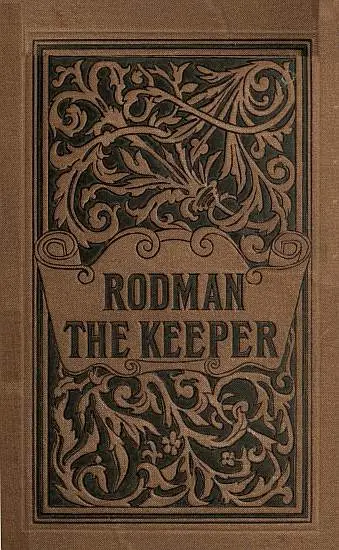
THE CLASSIC COLLECTION · 1880
"Rodman the Keeper: Southern Sketches" by Constance Fenimore Woolson is a collection of character-driven sketches written in the late 19th century. The book provides a vivid portrayal of life in the post-Civil War South, particularly focusing on the somber reflections of its main character, John Rodman, who serves as the keeper of a national cemetery. As he navigates his solitude and encounters the memories of the soldiers buried there, the sketches explore themes of loss, duty, and the complex beauty of the Southern landscape." "At the start of the narrative, we are introduced to John Rodman sitting in the doorway of his cottage, reflecting on both his duties as a keeper of the graves of fallen soldiers and the isolation that accompanies them. The cemetery itself is enriched with the memories and stories of those who laid down their lives for their causes, and Rodman is portrayed as a man weighed by both the weight of history and his singular existence amid the ruins of pride and loss. His interactions with local townsfolk reveal an underlying tension between North and South, punctuated by moments of self-reflection and humanity as he tends to the graves of the fourteen thousand soldiers committed to rest there. This opening sets the stage for Rodman's journey through memories, melancholy, and a supreme sense of obligation to honor the fallen."
Introduction adapted from the source catalogue; source summaries may be automatically generated.
Free to read · English · 114,280 words · No account needed
MAKE TIME FOR A GOOD BOOK
On by default. Untick to stop anonymous reading totals. Each page counts after 10 seconds in view. How this works.
Anonymous counting is on unless you have switched it off.
"And she prays for him," said Wainwright, beginning to descend as the stage stopped at the door of the village inn.
"She prays for all," replied Brother Bethuel, leaning over, and following him down with the words, delivered in a full undertone. Brother Bethuel had a good voice; he had preached under the open sky among the great peaks too long to have any feeble tones left.
"I do not believe anybody ever prays for me," was Wainwright's last thought before he came sharply into personal contact with the discomforts of the inn. And, as his mother died when he was born, perhaps he was right.
The next morning he wandered about and gazed at the superb sweep of the mountains. Close behind him rose the near wall of the Blue Ridge; before him stretched the line of the Alleghanies going down toward Georgia, the Iron Mountains, the Bald Mountains, and the peaks of the Great Smoky, purple and soft in the distance. A chain of giant sentinels stretched across the valley from one range to the other, and on these he could plainly see the dark color given by the heavy, unmixed growth of balsam-firs around and around up to the very top, a hue which gives the name Black Mountain to so many of these peaks.
It was Sunday, and when the three little church-bells rang, making a tinkling sound in the great valley, he walked over to the Episcopal church. He had a curiosity to see that girl's eyes again by daylight. Even there, in that small house of God where so few strangers ever came, he was hardly noticed. He took his seat on one of the benches, and looked around. Colonel Eliot was there, in a black broadcloth coat seventeen years old, but well brushed, and worn with an air of unshaken dignity. The whole congregation heard him acknowledge every Sunday that he was a miserable sinner; but they were as proud of him on his one leg with his crutch under his arm as if he had been a perfected saint, and they would have knocked down any man who had dared to take him at his Sunday word. The Colonel's placid, dimpled wife was there, fanning herself with the slowly serene manner of her youth; and two benches were full of children. On the second bench was Honor, and the man of the world watched her closely in his quiet, unobserved way. This was nothing new: Wainwright spent his life in watching people. He had studied hundreds of women in the same way, and he formed his conclusions with minutest care. He judged no one by impulse or intuition, or even by liking or disliking. What persons said was not of the slightest importance to him in any way: he noted what they did. The service was in progress, and Honor was down upon her knees. He saw her confess her sins; he saw her bow her head to receive the absolution; he saw her repeat the psalms; he watched her through every word of the Litany; he heard her sing; and he noted her clasped hands and strong effort of recollection throughout the recital of the Commandments. Then he settled himself anew, and began to watch her through the sermon. He had seen women attentive through the service before now: they generally became neutral during the sermon. But this girl never swerved. She sat with folded arms looking at the preacher fixedly, a slight compression about the mouth showing that the attention was that of determination. The preacher was uninteresting, he was tautological; still the girl followed him. "What a narrow little round of words and phrases it is!" thought the other, listening too, but weary. "How can she keep up with him?" And then, still watching her, he fell to noticing her dress and attitude. Poor Honor wore a gown of limp black alpaca, faithful, long-enduring servant of small-pursed respectability; on her head was a small black bonnet which she had fashioned herself, and not very successfully. A little linen collar, a pair of old gloves, and her prayer-book completed the appointments of her costume. Other young girls in the congregation were as poorly dressed as she, but they had a ribbon, a fan, an edge of lace here and there, or at least a rose from the garden to brighten themselves withal; this girl alone had nothing. She was tall and well rounded, almost majestic, but childishly young in face. Her dark hair, which grew very thickly--Wainwright could see it on the temples--seemed to have been until recently kept short, since the heavy braid behind made only one awkward turn at the back of the head. She had a boldly cut profile, too marked for regular beauty, yet pleasant to the eye owing to the delicate finish of the finer curves and the distinct arch of the lips. Her cheeks were rather thin. She had no grace; she sat stiffly on the bench, and resolutely listened to the dull discourse. "A good forehead," thought Wainwright, "and, thank Fortune! not disfigured by straggling ends of hair. 'Reflections on the Book of Job,' did he say? Poor little soul!"
Your reading position is saved on this browser. Take it to another device with a library code. Reading pages adapt to text, rather than matching a printed edition.
Constance Fenimore Woolson

Constance Fenimore Woolson

Constance Fenimore Woolson
Constance Fenimore Woolson
BEHIND THE BOOK
This eBook is for the use of anyone anywhere in the United States and most other parts of the world at no cost and with almost no restrictions whatsoever. You may copy it, give it away or re-use it under the terms of the Project Gutenberg License included with this eBook or online at www.gutenberg.org. If you are not located in the United States, you will have to check the laws of the country where you are located before using this eBook. Read the source licence.
The original source file, including credits and licence, is retained by this library. Request an original-format copy at no charge. Please include the book title and Project Gutenberg identifier #33813.
KEEP YOUR CURIOSITY GOING
Coulson Kernahan

Maurice Baring
Frances Wright
Cécile Tormay

Frederic Jesup Stimson

W. H. P. (William Henry Pope) Jarvis