
Two Women, 1862; a Poem
Constance Fenimore Woolson
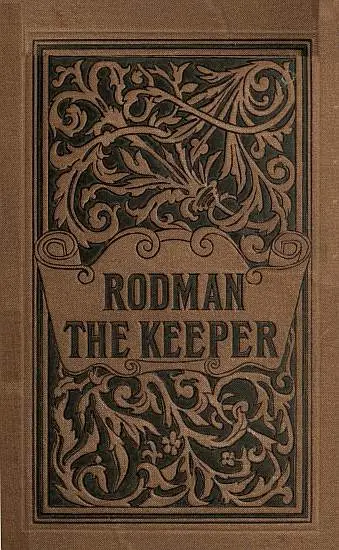
THE CLASSIC COLLECTION · 1880
"Rodman the Keeper: Southern Sketches" by Constance Fenimore Woolson is a collection of character-driven sketches written in the late 19th century. The book provides a vivid portrayal of life in the post-Civil War South, particularly focusing on the somber reflections of its main character, John Rodman, who serves as the keeper of a national cemetery. As he navigates his solitude and encounters the memories of the soldiers buried there, the sketches explore themes of loss, duty, and the complex beauty of the Southern landscape." "At the start of the narrative, we are introduced to John Rodman sitting in the doorway of his cottage, reflecting on both his duties as a keeper of the graves of fallen soldiers and the isolation that accompanies them. The cemetery itself is enriched with the memories and stories of those who laid down their lives for their causes, and Rodman is portrayed as a man weighed by both the weight of history and his singular existence amid the ruins of pride and loss. His interactions with local townsfolk reveal an underlying tension between North and South, punctuated by moments of self-reflection and humanity as he tends to the graves of the fourteen thousand soldiers committed to rest there. This opening sets the stage for Rodman's journey through memories, melancholy, and a supreme sense of obligation to honor the fallen."
Introduction adapted from the source catalogue; source summaries may be automatically generated.
Free to read · English · 114,280 words · No account needed
MAKE TIME FOR A GOOD BOOK
On by default. Untick to stop anonymous reading totals. Each page counts after 10 seconds in view. How this works.
Anonymous counting is on unless you have switched it off.
"Our service to you, sah, all de same," continued Scipio, with a grand bow of ceremony; "but you hab nebber quite unnerstan us, sah, nebber quite; an' you can nebber do much fo' us, sah, on 'count ob dat fack--ef you'll scuse my saying so. But it is de trouf. We give you our t'anks and our congratturrurlations, an' we hopes you'll go j'yful back to your own people, an' be a shining light to 'em for ebbermore."
"A shinin' light for ebbermore," echoed the rest. One old woman, inspired apparently by the similarity of words, began a hymn about "the shining shore," and the whole assembly, thinking no doubt that it was an appropriate and complimentary termination to the proceedings, joined in with all their might, and sang the whole six verses through with fervor.
"I should like to shake hands with you all as you go out," said the master, when at last the song was ended, "and--and I wish, my friends, that you would all remember me in your prayers to-night before you sleep."
What a sight was that when the pale Caucasian, with the intelligence of generations on his brow, asked for the prayers of these sons of Africa, and gently, nay, almost humbly, received the pressure of their black, toil-hardened hands as they passed out! They had taught him a great lesson, the lesson of a failure.
The schoolmaster went home, and sat far into the night, with his head bowed upon his hands. "Poor worm!" he thought--"poor worm! who even went so far as to dream of saying, 'Here am I, Lord, and these brethren whom thou hast given me!'"
The day came for him to go; he shouldered his bag and started away. At a turn in the road, some one was waiting for him; it was dull-faced Esther with a bunch of flowers, the common flowers of her small garden-bed. "Good-by, Esther," said the master, touched almost to tears by the sight of the solitary little offering.
"Good-by, mars," said Esther. But she was not moved; she had come out into the woods from a sort of instinct, as a dog follows a little way down the road to look after a departing carriage.
"David King has come back home again, and taken the district school," said one village gossip to another.
"Has he, now? Didn't find the blacks what he expected, I guess."
"Every rose, you sang, has its thorn;
But this has none, I know."
She clasped my rival's rose
Over her breast of snow.
Your reading position is saved on this browser. Take it to another device with a library code. Reading pages adapt to text, rather than matching a printed edition.
Constance Fenimore Woolson

Constance Fenimore Woolson

Constance Fenimore Woolson
Constance Fenimore Woolson
BEHIND THE BOOK
This eBook is for the use of anyone anywhere in the United States and most other parts of the world at no cost and with almost no restrictions whatsoever. You may copy it, give it away or re-use it under the terms of the Project Gutenberg License included with this eBook or online at www.gutenberg.org. If you are not located in the United States, you will have to check the laws of the country where you are located before using this eBook. Read the source licence.
The original source file, including credits and licence, is retained by this library. Request an original-format copy at no charge. Please include the book title and Project Gutenberg identifier #33813.
KEEP YOUR CURIOSITY GOING
Coulson Kernahan

Maurice Baring
Frances Wright
Cécile Tormay

Frederic Jesup Stimson

W. H. P. (William Henry Pope) Jarvis