
Two Women, 1862; a Poem
Constance Fenimore Woolson
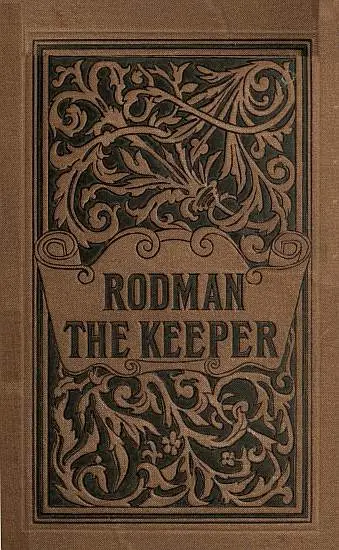
THE CLASSIC COLLECTION · 1880
"Rodman the Keeper: Southern Sketches" by Constance Fenimore Woolson is a collection of character-driven sketches written in the late 19th century. The book provides a vivid portrayal of life in the post-Civil War South, particularly focusing on the somber reflections of its main character, John Rodman, who serves as the keeper of a national cemetery. As he navigates his solitude and encounters the memories of the soldiers buried there, the sketches explore themes of loss, duty, and the complex beauty of the Southern landscape." "At the start of the narrative, we are introduced to John Rodman sitting in the doorway of his cottage, reflecting on both his duties as a keeper of the graves of fallen soldiers and the isolation that accompanies them. The cemetery itself is enriched with the memories and stories of those who laid down their lives for their causes, and Rodman is portrayed as a man weighed by both the weight of history and his singular existence amid the ruins of pride and loss. His interactions with local townsfolk reveal an underlying tension between North and South, punctuated by moments of self-reflection and humanity as he tends to the graves of the fourteen thousand soldiers committed to rest there. This opening sets the stage for Rodman's journey through memories, melancholy, and a supreme sense of obligation to honor the fallen."
Introduction adapted from the source catalogue; source summaries may be automatically generated.
Free to read · English · 114,280 words · No account needed
MAKE TIME FOR A GOOD BOOK
On by default. Untick to stop anonymous reading totals. Each page counts after 10 seconds in view. How this works.
Anonymous counting is on unless you have switched it off.
Marion colored highly, but said nothing. Her incisiveness seemed to fail her when with Lawrence Vickery. And, as he was never more than half in earnest, it was as hard to use real weapons against him as to fence with the summer wind. The young man seemed to have taken a fancy to Bro; he spent an hour or two at the saw-mill almost every day, and Cæsar had become quite accustomed to his voice shouting for the boat. But the old negro liked him, and came across cheerfully, even giving him voluntarily the title "marse," which the blacks withheld whenever they pleased now, and tenaciously. Vickery took Bro over to see his grandfather, the old house, and the wastes which were once their cotton-fields. He had no pride about the old gentleman's lowly office; he had roamed about the world too much for that. And, when Bro suggested that he should take the position himself and relieve his grandfather, he answered carelessly that his grandfather did not want to be relieved, which was true--old Mr. Vickery deriving the only amusement of his life now in plans for outwitting, in various small ways, the spirited superintendent.
"However," said Lawrence, "I could not in any case; I have plans of
importance waiting for me."
"Where?" asked Bro.
"Well--abroad. I don't mind telling you," said Vickery; "but it is a
secret at present."
"Then you do not intend to stay here?"
"Here? Bless you, no! The place is a howling, one-horse desert. I only came back awhile to see the old man."
The "while" lasted all winter, Young Vickery exhausted the town, the island, and the whole district; he was "hail fellow" with everybody, made acquaintance with the lighthouse-keeper, knew the captains of all the schooners, and even rode on the hand-car and was admitted to the friendship of the superintendent. But, in the way of real intimacy, the cottage and the saw-mill were his favorite haunts. He was with Marion a part of every day; he teased her, laughed at her flowers, mimicked her precise pronunciation, made caricatures of her friend Miss Drough, and occasionally walked by with Nannie Barr, the most consummate little flirt in the town. Marion changed--that is, inwardly. She was too proud to alter her life outwardly, and, beyond putting away the chess-problem book, and walking with Miss Drough in quiet paths through the andromeda and smilax thickets, or out on the barrens among the saw-palmettoes, rather than through the streets of the town, what she did was the same as usual. But she was not what she had been. She seemed to have become timid, almost irresolute; she raised her eyes quickly and dropped them as quickly: the old calm, steady gaze was gone; her color came and went. She was still erect as ever: she could not change that; but she seemed disposed to sit more in the shadow, or half behind the curtain, or to withdraw to her own room, where the bolt was now often used which had formerly rusted in its place. Bro noticed all this. Marion's ways had not been changeable like those of most girls, and he had grown into knowing them exactly: being a creature of precise habit himself, he now felt uncomfortable and restless because she was so. At last he spoke to her mother. "She is certainly changed: do you think there is any danger of fever?" he asked uneasily. But Mrs. Manning only blinked and nodded smilingly back in answer, holding up her finger to signify that Marion was within hearing. Supposing that he had comprehended her, of course, and glad to have a confidant, she now blinked and nodded at him from all sides--from behind doors, from over Marion's head, from out of the windows, even throwing her confidential delight to him across the river as he stood in the saw-mill doorway. Marion, then, was going through something--something not to be mentioned, but only mysteriously nodded--which was beneficial to her; what could it be? She had taken to going very frequently to church lately, in spite of her dislike to "the worm," who still occupied the pulpit. Bro went back to the experience of his youth in the up-country, the only experience he had to go back to, and decided that she must be having what they used to call there "a change of heart." Upon mentioning this in a furtive tone to Mrs. Manning, she laughed heartily, rather to his surprise, for he was a reverent sort of non-churchgoing pagan, and said, "Very good, Bro--very good, indeed!"
Your reading position is saved on this browser. Take it to another device with a library code. Reading pages adapt to text, rather than matching a printed edition.
Constance Fenimore Woolson

Constance Fenimore Woolson

Constance Fenimore Woolson
Constance Fenimore Woolson
BEHIND THE BOOK
This eBook is for the use of anyone anywhere in the United States and most other parts of the world at no cost and with almost no restrictions whatsoever. You may copy it, give it away or re-use it under the terms of the Project Gutenberg License included with this eBook or online at www.gutenberg.org. If you are not located in the United States, you will have to check the laws of the country where you are located before using this eBook. Read the source licence.
The original source file, including credits and licence, is retained by this library. Request an original-format copy at no charge. Please include the book title and Project Gutenberg identifier #33813.
KEEP YOUR CURIOSITY GOING
Coulson Kernahan

Maurice Baring
Frances Wright
Cécile Tormay

Frederic Jesup Stimson

W. H. P. (William Henry Pope) Jarvis