
Two Women, 1862; a Poem
Constance Fenimore Woolson
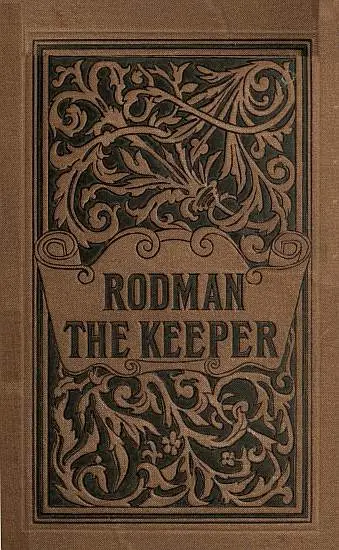
THE CLASSIC COLLECTION · 1880
"Rodman the Keeper: Southern Sketches" by Constance Fenimore Woolson is a collection of character-driven sketches written in the late 19th century. The book provides a vivid portrayal of life in the post-Civil War South, particularly focusing on the somber reflections of its main character, John Rodman, who serves as the keeper of a national cemetery. As he navigates his solitude and encounters the memories of the soldiers buried there, the sketches explore themes of loss, duty, and the complex beauty of the Southern landscape." "At the start of the narrative, we are introduced to John Rodman sitting in the doorway of his cottage, reflecting on both his duties as a keeper of the graves of fallen soldiers and the isolation that accompanies them. The cemetery itself is enriched with the memories and stories of those who laid down their lives for their causes, and Rodman is portrayed as a man weighed by both the weight of history and his singular existence amid the ruins of pride and loss. His interactions with local townsfolk reveal an underlying tension between North and South, punctuated by moments of self-reflection and humanity as he tends to the graves of the fourteen thousand soldiers committed to rest there. This opening sets the stage for Rodman's journey through memories, melancholy, and a supreme sense of obligation to honor the fallen."
Introduction adapted from the source catalogue; source summaries may be automatically generated.
Free to read · English · 114,280 words · No account needed
MAKE TIME FOR A GOOD BOOK
On by default. Untick to stop anonymous reading totals. Each page counts after 10 seconds in view. How this works.
Anonymous counting is on unless you have switched it off.
"Pray, don't give it up, but stick to that opinion, Miss Marion," said the young man, with a merry glint in his eyes. Ah! yes, young Vickery had wandered, there was no doubt of it; he used contractions, and such words as "stick." Mrs. Manning and Marion had never said "don't" or "can't" in their lives.
"I do not know what you mean," replied Marion, a slight color rising in her cheeks. "It is not a matter of opinion one way or the other, but of fact. You either have lived in Bohemia, or you have not."
"Well, then, I have," said Vickery, laughing.
"There! Marion," exclaimed Mrs. Manning triumphantly.
Vickery, overcome by mirth, turned to Bro, as if for relief; Bro was at
least a man.
But Bro returned his gaze mildly, comprehending nothing.
"Going over to the mill?" said Vickery. "I'll go with you, and have a
look about."
They went off together, and Vickery examined the mill from top to bottom; he measured the logs, inspected the engine, chaffed the negroes, climbed out on the roof, put his head into Bro's cell-like bedroom, and came at last to the locked door.
"What have we here?" he asked.
"Only a little workshop of mine, which I keep locked," replied Bro.
"So I see. But what's inside?"
"Nothing of much consequence--as yet," replied the other, unable to
resist adding the adverb.
"You must let me in," said Vickery, shaking the door. "I never could abide a secret. Come, Bro; I won't tell. Let me in, or I shall climb up at night and break in," he added gayly.
Bro stood looking at him in silence. Eleven years had he labored there alone, too humble to speak voluntarily of his labors; too insignificant, apparently, for questions from others. Although for the most part happy over his work, there were times when he longed for a friendly ear to talk to, for other eyes to criticise, the sympathy of other minds, the help of other hands. At these moments he felt drearily lonely over his valve and register; they even seemed to mock him. He was not imaginative, yet occasionally they acted as if moved by human motives, and, worse still, became fairly devilish in their crooked perverseness. Nobody had ever asked before to go into that room. Should he? Should he not? Should he? Then he did.
Your reading position is saved on this browser. Take it to another device with a library code. Reading pages adapt to text, rather than matching a printed edition.
Constance Fenimore Woolson

Constance Fenimore Woolson

Constance Fenimore Woolson
Constance Fenimore Woolson
BEHIND THE BOOK
This eBook is for the use of anyone anywhere in the United States and most other parts of the world at no cost and with almost no restrictions whatsoever. You may copy it, give it away or re-use it under the terms of the Project Gutenberg License included with this eBook or online at www.gutenberg.org. If you are not located in the United States, you will have to check the laws of the country where you are located before using this eBook. Read the source licence.
The original source file, including credits and licence, is retained by this library. Request an original-format copy at no charge. Please include the book title and Project Gutenberg identifier #33813.
KEEP YOUR CURIOSITY GOING
Coulson Kernahan

Maurice Baring
Frances Wright
Cécile Tormay

Frederic Jesup Stimson

W. H. P. (William Henry Pope) Jarvis