
Two Women, 1862; a Poem
Constance Fenimore Woolson
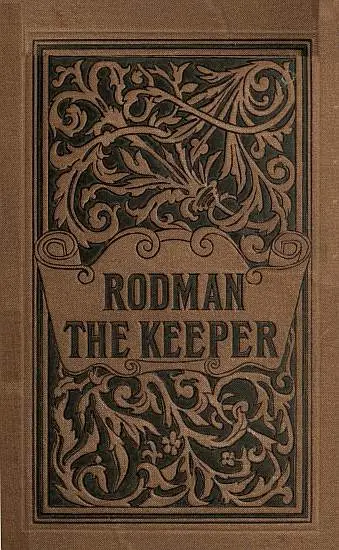
THE CLASSIC COLLECTION · 1880
"Rodman the Keeper: Southern Sketches" by Constance Fenimore Woolson is a collection of character-driven sketches written in the late 19th century. The book provides a vivid portrayal of life in the post-Civil War South, particularly focusing on the somber reflections of its main character, John Rodman, who serves as the keeper of a national cemetery. As he navigates his solitude and encounters the memories of the soldiers buried there, the sketches explore themes of loss, duty, and the complex beauty of the Southern landscape." "At the start of the narrative, we are introduced to John Rodman sitting in the doorway of his cottage, reflecting on both his duties as a keeper of the graves of fallen soldiers and the isolation that accompanies them. The cemetery itself is enriched with the memories and stories of those who laid down their lives for their causes, and Rodman is portrayed as a man weighed by both the weight of history and his singular existence amid the ruins of pride and loss. His interactions with local townsfolk reveal an underlying tension between North and South, punctuated by moments of self-reflection and humanity as he tends to the graves of the fourteen thousand soldiers committed to rest there. This opening sets the stage for Rodman's journey through memories, melancholy, and a supreme sense of obligation to honor the fallen."
Introduction adapted from the source catalogue; source summaries may be automatically generated.
Free to read · English · 114,280 words · No account needed
MAKE TIME FOR A GOOD BOOK
On by default. Untick to stop anonymous reading totals. Each page counts after 10 seconds in view. How this works.
Anonymous counting is on unless you have switched it off.
Mrs. Manning was poor; but everybody was poor at Wilbarger, and nobody minded it much. Marion was the housekeeper and house-provider, and everything went on like clock-work. Marion was like her father, it was said; but nobody remembered him very clearly. He was a Northerner, who had come southward seeking health, and finding none. But he found Miss Forsythe instead, and married her. How it happened that Ambrose Cranch, not a relative but a nondescript, should be living in a household presided over by Forsythe blood, was as follows: First, he had put out years before a fire in Mrs. Manning's kitchen which would otherwise have burned the wooden house to the ground; that began the acquaintance. Second, learning that her small property was in danger of being swept away entirely, owing to unpaid taxes and mismanagement, he made a journey to the capital of the State in her behalf, and succeeded after much trouble in saving a part of it for her. It was pure kindness on his part in a time of general distress, and from another man would have been called remarkable; but nothing could be called remarkable in Ambrose Cranch: he had never been of any consequence in Wilbarger or his life. Mrs. Manning liked him, and, after a while, asked him to come and take his meals at the cottage: the saw-mill was directly opposite, and it would be neighborly. Ambrose, who had always eaten his dinners at the old Wilbarger Hotel, in the dark, crooked dining-room, which had an air of mystery not borne out by anything, unless it might be its soups, gladly accepted, and transferred his life to the mainland point and the cottage opposite, with the row-boat as a ferry between. He was so inoffensive and willing, and so skillful with his hands, that he was soon as much a part of the household as old Dinah herself; he mended and repaired, praised the good dishes, watered the flowers, and was an excellent listener. It would be amusing to know how much the fact of being, or securing, a good listener has to do with our lives. Mrs. Manning, fond of reminiscence and long narratives which were apt to run off at random, so that, whereas you began with the Browns, you ended with something about the Smiths, and never heard the Brown story at all, actually retained Ambrose Cranch at her table for eleven years because he listened well. But she did not realize it; neither did he. A simpler, more unplotting soul never existed than that in the saw-miller's body. A word now as to that body: it had a good deal to do with its owner's life, and our story. (O brothers and sisters, if Justice holds the balance, how handsome some of us are going to be in the next life!) Ambrose Cranch was tall and thin, what is called rawboned; all his joints were large and prominent, from his knuckles to his ankles. He had large, long feet and hands, and large, long ears; his feet shambled when he walked, his arms dangled from the shoulders like the arms of a wooden doll, and he had a long, sinewed throat, which no cravat or collar could hide, though he wore them up to his ears. Not that he did so wear them, however: he had no idea that his throat was ugly; he never thought about it at all. He had a long face, small, mild blue eyes, thin, lank brown hair, a large mouth, and long, narrow nose; he was, also, the most awkward man in the world. Was there no redeeming point? Hardly. His fingers were nicely finished at the ends, and sometimes he had rather a sweet smile. But in the contemplation of his joints, shoulders, elbows, wrists, and knuckles, even the student of anatomy hardly got as far as his finger-ends; and as to the smile, nobody saw it but the Mannings, who did not care about it. In origin he was, as before mentioned, a nondescript, having come from the up-country, where Southern ways shade off into mountain roughness; which again gives place to the river-people, and they, farther on, to the Hoosiers and Buckeyes, who are felicitously designated by the expressive title of "Western Yankees." He had inherited the saw-mill from an uncle, who had tried to make something of it, failed, and died. Ambrose, being a patient man, and one of smallest possible personal expenditure, managed to live, and even to save a little money--but only a little. He had been there twelve years, and was now thirty-eight years old. All this the whole town of Wilbarger knew, or might have known; it was no secret. But the saw-mill had a secret of its own, besides. Up stairs, in the back part, was a small room with a lock on the door, and windows with red cloth nailed over them in place of glass. Here Ambrose spent many moments of his day, and all of his evenings, quite alone. His red lights shone across the marsh, and could be seen from Vickery Island and the drawbridge; but they were not visible on the Wilbarger side, and attracted, therefore, no attention. However, it is doubtful whether they would have attracted attention anyway. Wilbarger people did not throw away their somewhat rarely excited interest upon Ambrose Cranch, who represented to them the flattest commonplace. They knew when his logs came, they knew the quantity and quality of his boards, they saw him superintending the loading of the schooner that bore them away, and that was all. Even the two negroes who worked in the mill--one bright, young, and yellow; the other old, slow, and black--felt no curiosity about the locked room and Cranch's absences; it was but a part of his way.
Your reading position is saved on this browser. Take it to another device with a library code. Reading pages adapt to text, rather than matching a printed edition.
Constance Fenimore Woolson

Constance Fenimore Woolson

Constance Fenimore Woolson
Constance Fenimore Woolson
BEHIND THE BOOK
This eBook is for the use of anyone anywhere in the United States and most other parts of the world at no cost and with almost no restrictions whatsoever. You may copy it, give it away or re-use it under the terms of the Project Gutenberg License included with this eBook or online at www.gutenberg.org. If you are not located in the United States, you will have to check the laws of the country where you are located before using this eBook. Read the source licence.
The original source file, including credits and licence, is retained by this library. Request an original-format copy at no charge. Please include the book title and Project Gutenberg identifier #33813.
KEEP YOUR CURIOSITY GOING
Coulson Kernahan

Maurice Baring
Frances Wright
Cécile Tormay

Frederic Jesup Stimson

W. H. P. (William Henry Pope) Jarvis