
Two Women, 1862; a Poem
Constance Fenimore Woolson
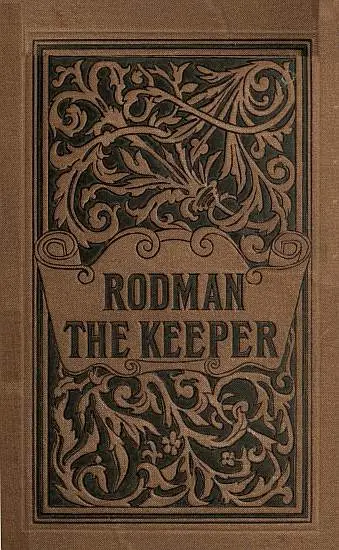
THE CLASSIC COLLECTION · 1880
"Rodman the Keeper: Southern Sketches" by Constance Fenimore Woolson is a collection of character-driven sketches written in the late 19th century. The book provides a vivid portrayal of life in the post-Civil War South, particularly focusing on the somber reflections of its main character, John Rodman, who serves as the keeper of a national cemetery. As he navigates his solitude and encounters the memories of the soldiers buried there, the sketches explore themes of loss, duty, and the complex beauty of the Southern landscape." "At the start of the narrative, we are introduced to John Rodman sitting in the doorway of his cottage, reflecting on both his duties as a keeper of the graves of fallen soldiers and the isolation that accompanies them. The cemetery itself is enriched with the memories and stories of those who laid down their lives for their causes, and Rodman is portrayed as a man weighed by both the weight of history and his singular existence amid the ruins of pride and loss. His interactions with local townsfolk reveal an underlying tension between North and South, punctuated by moments of self-reflection and humanity as he tends to the graves of the fourteen thousand soldiers committed to rest there. This opening sets the stage for Rodman's journey through memories, melancholy, and a supreme sense of obligation to honor the fallen."
Introduction adapted from the source catalogue; source summaries may be automatically generated.
Free to read · English · 114,280 words · No account needed
MAKE TIME FOR A GOOD BOOK
On by default. Untick to stop anonymous reading totals. Each page counts after 10 seconds in view. How this works.
Anonymous counting is on unless you have switched it off.
"I thought you wanted to go, child?" I said, a little impatiently; for I was reading aloud, and these small irruptions were disturbing.
"Yes," said Felipa, "I want to go; and still--Perhaps if the gracious señora would kiss me again--"
Christine only patted her cheek and told her to run away: she obeyed, but there was a wistful look in her eyes, and, even after the boat had started, her face, watching us from the stem, haunted me.
"Now that the little monkey has gone, I may be able at last to catch and fix a likeness of her," I said; "in this case a recollection is better than the changing quicksilver reality."
"You take it as a study of ugliness?"
"Do not be hard upon the child, Christine."
"Hard? Why, she adores me," said my friend, going off to her hammock
under the tree.
Several days passed, and the boat returned not. I accomplished a fine amount of work, and Christine a fine amount of swinging in the hammock and dreaming. At length one afternoon I gave my final touch, and carried my sketch over to the pre-Raphaelite lady for criticism. "What do you see?" I said.
"I see a wild-looking child with yellow eyes, a mat of curly black hair, a lank little bodice, her two thin brown arms embracing a gaunt old dog with crooked legs, big feet, and turned-in toes."
"Is that all?"
"All."
"You do not see latent beauty, courage, and a possible great gulf of love in that poor wild little face?"
"Nothing of the kind," replied Christine decidedly. "I see an ugly
little girl; that is all."
The next day the boat returned, and brought back five persons, the old grandfather, Felipa, Drollo, Miguel of the island, and--Edward Bowne.
"Already?" I said.
"Tired of the Madre, Kitty; thought I would come up here and see you for a while. I knew you must be pining for me."
"Certainly," I replied; "do you not see how I have wasted away?"
He drew my arm through his and raced me down the plank-walk toward the shore, where I arrived laughing and out of breath.
"Where is Christine?" he asked.
I came back into the traces at once. "Over there in the hammock. You wish to go to the house first, I suppose?"
"Of course not."
"But she did not come to meet you, Edward, although she knew you had
landed."
"Of course not, also."
"I do not understand you two."
"And of course not, a third time," said Edward, looking down at me with a smile. "What do peaceful little artists know about war?"
"Is it war?"
Your reading position is saved on this browser. Take it to another device with a library code. Reading pages adapt to text, rather than matching a printed edition.
Constance Fenimore Woolson

Constance Fenimore Woolson

Constance Fenimore Woolson
Constance Fenimore Woolson
BEHIND THE BOOK
This eBook is for the use of anyone anywhere in the United States and most other parts of the world at no cost and with almost no restrictions whatsoever. You may copy it, give it away or re-use it under the terms of the Project Gutenberg License included with this eBook or online at www.gutenberg.org. If you are not located in the United States, you will have to check the laws of the country where you are located before using this eBook. Read the source licence.
The original source file, including credits and licence, is retained by this library. Request an original-format copy at no charge. Please include the book title and Project Gutenberg identifier #33813.
KEEP YOUR CURIOSITY GOING
Coulson Kernahan

Maurice Baring
Frances Wright
Cécile Tormay

Frederic Jesup Stimson

W. H. P. (William Henry Pope) Jarvis