THE CLASSIC COLLECTION✦An outlaw’s diary: the CommuneCLASSIC FREE BOOKS
An outlaw’s diary: the Commune
Cécile Tormay
THE CLASSIC COLLECTION · 1899
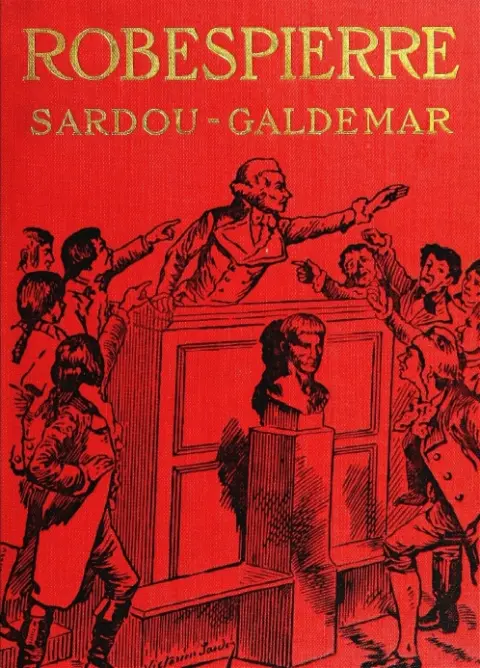
"Robespierre" by Ange Galdemar is a historical novel written in the late 19th century. The book is based on Victorien Sardou's play and explores the complex life of Maximilien Robespierre, a leading figure of the French Revolution. It delves into themes of power, ambition, and personal sacrifice amid the tumultuous backdrop of revolutionary France, focusing on characters such as Robespierre himself, Monsieur de Pontivy, and Clarisse. The opening of "Robespierre" introduces readers to the Hôtel de Pontivy, where we meet Monsieur de Pontivy as he searches for a lost document important for a secret debate in Parliament. Here, the reader is introduced to his daughter Clarisse, who navigates a sheltered life and shares a complicated relationship with both her father and Robespierre, her father's secretary. The tension rises as it becomes apparent that their lives are entwined through shared ambitions and the unacknowledged consequences of their interactions. The initial chapter sets the stage for the unfolding drama, hinting at themes of love, betrayal, and the heavy burdens of honor and reputation that will develop as the story progresses.
Introduction adapted from the source catalogue; source summaries may be automatically generated.
Free to read · English · 71,073 words · No account needed
MAKE TIME FOR A GOOD BOOK
On by default. Untick to stop anonymous reading totals. Each page counts after 10 seconds in view. How this works.
Anonymous counting is on unless you have switched it off.
"I implore you! ... my child! ... I do implore you!"
At that moment some one appeared with a light.
"Ah! there's the lantern!" cried the concierge.
When the man had explained that he had not been able to find any matches, the Recorder began to read the paper--
"Sourdeval!" he cried out.
Other lanterns were now lighting up the courtyard and the distracted crowd, and every eye was turned in the direction of the prisoner who had been named.
"Here I am!" cried a voice.
And a man advanced, his head erect, calm and impassive, without casting a single glance on the spectators, knowing no one perhaps. He crossed the line of gendarmes, and disappeared behind the grating to fetch his belongings.
The Recorder proceeded with his grim and gloomy task, drawing tears from some, heart-rending cries from others, and interrupted by murmurs of pity or defiance.
The young de Maillé, who was called among the first, stopped playing with the children to go to his death. An old man, Monsieur de Mauclère, at the sound of his name fainted away, and was carried out. Madame de Narbonne, called also, confided her little daughter to Madame de Choiseul.
"Where are you going, mamma?" asked the child.
And Madame de Narbonne had the courage to reply--
"I shall be back in a moment, my darling."
"Don't go, mamma! ... don't go! ... I don't want you to go!"
Madame de Narbonne hurried away to hide her tears, then, breaking down entirely, leant on the grating and sobbed aloud.
The Maleyssie family, father, mother, and two young girls, threw themselves into each other's arms, thanking heaven they were not to be separated in this supreme hour, and would walk hand in hand to the scaffold. An old couple with white hair, the Maréchal and Maréchale de Mouchy, worn with age, each walking with the aid of a stick, were called together. At once she took his arm, and so they made their way with calm courage through the prisoners, who bared their heads in reverence before such sublime resignation. Another couple drew forth cries of admiration: the Comte and Comtesse de Lavergne. The Comte, alone named, was taking leave of his wife, who, after assuring herself she was not on the list, implored the Recorder to include her. On his replying that he had no orders to do so, she uttered the cry of sedition punishable by death: "Vive le Roi!" and was inscribed forthwith on the fatal list.
Your reading position is saved on this browser. Take it to another device with a library code. Reading pages adapt to text, rather than matching a printed edition.
BEHIND THE BOOK
This eBook is for the use of anyone anywhere in the United States and most other parts of the world at no cost and with almost no restrictions whatsoever. You may copy it, give it away or re-use it under the terms of the Project Gutenberg License included with this eBook or online at www.gutenberg.org. If you are not located in the United States, you will have to check the laws of the country where you are located before using this eBook. Read the source licence.
The original source file, including credits and licence, is retained by this library. Request an original-format copy at no charge. Please include the book title and Project Gutenberg identifier #71538.
KEEP YOUR CURIOSITY GOING
Cécile Tormay

Moritz Busch
Coulson Kernahan
John L. Ransom

Maurice Baring
Frances Wright