THE CLASSIC COLLECTION✦An outlaw’s diary: the CommuneCLASSIC FREE BOOKS
An outlaw’s diary: the Commune
Cécile Tormay
THE CLASSIC COLLECTION · 1899
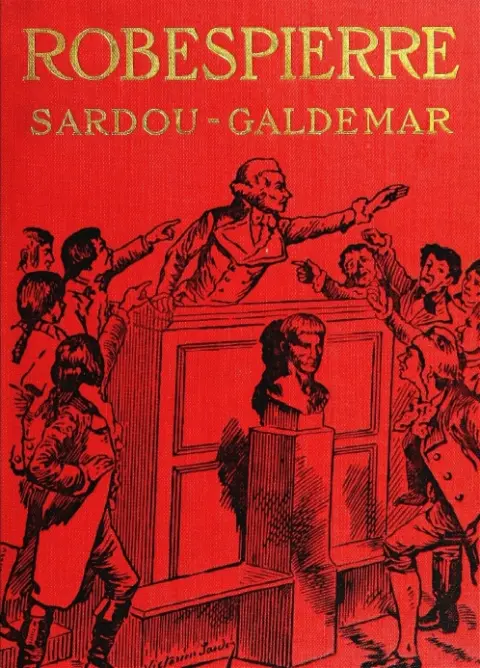
"Robespierre" by Ange Galdemar is a historical novel written in the late 19th century. The book is based on Victorien Sardou's play and explores the complex life of Maximilien Robespierre, a leading figure of the French Revolution. It delves into themes of power, ambition, and personal sacrifice amid the tumultuous backdrop of revolutionary France, focusing on characters such as Robespierre himself, Monsieur de Pontivy, and Clarisse. The opening of "Robespierre" introduces readers to the Hôtel de Pontivy, where we meet Monsieur de Pontivy as he searches for a lost document important for a secret debate in Parliament. Here, the reader is introduced to his daughter Clarisse, who navigates a sheltered life and shares a complicated relationship with both her father and Robespierre, her father's secretary. The tension rises as it becomes apparent that their lives are entwined through shared ambitions and the unacknowledged consequences of their interactions. The initial chapter sets the stage for the unfolding drama, hinting at themes of love, betrayal, and the heavy burdens of honor and reputation that will develop as the story progresses.
Introduction adapted from the source catalogue; source summaries may be automatically generated.
Free to read · English · 71,073 words · No account needed
MAKE TIME FOR A GOOD BOOK
On by default. Untick to stop anonymous reading totals. Each page counts after 10 seconds in view. How this works.
Anonymous counting is on unless you have switched it off.
"You will shudder when I tell you that the soldiery is under the unscrupulous control of that man who has the audacity to place at the head of the section-men and artillery of the city the degraded Hauriot, and that without consulting you at all, solely according to his own will, for he listens to no other dictates. He has, he says, deserted the Committees because they oppressed him. He lies!"
Robespierre rises, his lips quivering at the insult, and attempts to
reply from his place.
"Yes, you lie!" continues Billaud. "You left us because you did not find among us either partisans, flatterers, or accomplices in your infamous projects against Liberty. Your sole aim has been to sow dissension, to disunite us that you might attack us singly and remain in power at the head of drunkards and debauchees, like that secretary who stole a hundred and fifty thousand livres, and whom you took under your wing, you, the Incorruptible, you who make such boast of your strict virtue and integrity!"
Laughter, mixed with some applause is heard, but Robespierre shrugs his shoulders contemptuously at such vulgar abuse. Fouché, from his bench, laughs loudly with the rest, and leaning towards his neighbour, whispers--
"Clever tactics! ... Billaud is splendid!"
The speaker, in conclusion, appeals to the patriotism of the assembly, and implores the members to watch over its safety. If they do not take energetic measures against this madman, he says, the Convention is lost, for he only speaks of purifying it that he may send to the scaffold all those who stand in the way of his personal ambition. It is, he insists, the preservation of the Convention which is at stake, the safety of the Republic, the salvation of their country.
"I demand," so runs his peroration, "that the Convention sit permanently until it has baffled the plans of this new Catiline, whose only aim is to cross the trench which still separates him from supremacy by filling it with our heads!"
Thunders of applause greet Billaud-Varennes' words; shouts, cheers, and waving of hands which continue long after he has left the tribune.
Robespierre now leaves his seat in great agitation, crying--
"It is all false, and I will prove it!"
But his words are again drowned in an uproar of voices, and cries of
"Silence! Silence!"
"I will give the traitor his answer!" exclaims Robespierre, trying to make himself heard above the tumult which increases at every word he utters, so that his voice is now completely lost. Some of the members rush into the semicircle, forming a living rampart round the tribune.
The din is dominated by a new voice from the presidential chair.
Your reading position is saved on this browser. Take it to another device with a library code. Reading pages adapt to text, rather than matching a printed edition.
BEHIND THE BOOK
This eBook is for the use of anyone anywhere in the United States and most other parts of the world at no cost and with almost no restrictions whatsoever. You may copy it, give it away or re-use it under the terms of the Project Gutenberg License included with this eBook or online at www.gutenberg.org. If you are not located in the United States, you will have to check the laws of the country where you are located before using this eBook. Read the source licence.
The original source file, including credits and licence, is retained by this library. Request an original-format copy at no charge. Please include the book title and Project Gutenberg identifier #71538.
KEEP YOUR CURIOSITY GOING
Cécile Tormay

Moritz Busch
Coulson Kernahan
John L. Ransom

Maurice Baring
Frances Wright