THE CLASSIC COLLECTION✦An outlaw’s diary: the CommuneCLASSIC FREE BOOKS
An outlaw’s diary: the Commune
Cécile Tormay
THE CLASSIC COLLECTION · 1899
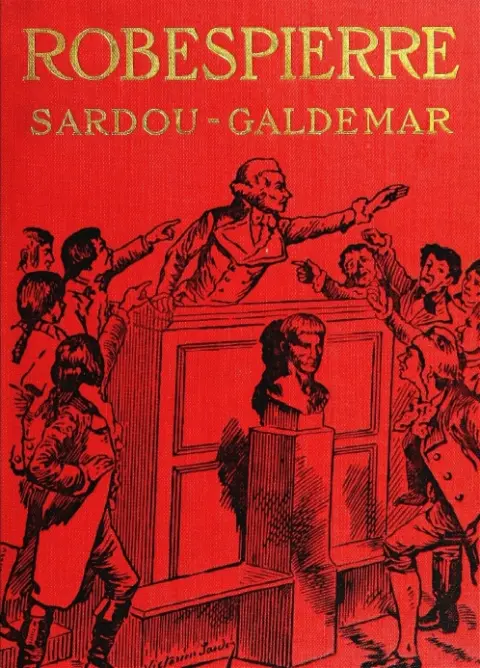
"Robespierre" by Ange Galdemar is a historical novel written in the late 19th century. The book is based on Victorien Sardou's play and explores the complex life of Maximilien Robespierre, a leading figure of the French Revolution. It delves into themes of power, ambition, and personal sacrifice amid the tumultuous backdrop of revolutionary France, focusing on characters such as Robespierre himself, Monsieur de Pontivy, and Clarisse. The opening of "Robespierre" introduces readers to the Hôtel de Pontivy, where we meet Monsieur de Pontivy as he searches for a lost document important for a secret debate in Parliament. Here, the reader is introduced to his daughter Clarisse, who navigates a sheltered life and shares a complicated relationship with both her father and Robespierre, her father's secretary. The tension rises as it becomes apparent that their lives are entwined through shared ambitions and the unacknowledged consequences of their interactions. The initial chapter sets the stage for the unfolding drama, hinting at themes of love, betrayal, and the heavy burdens of honor and reputation that will develop as the story progresses.
Introduction adapted from the source catalogue; source summaries may be automatically generated.
Free to read · English · 71,073 words · No account needed
MAKE TIME FOR A GOOD BOOK
On by default. Untick to stop anonymous reading totals. Each page counts after 10 seconds in view. How this works.
Anonymous counting is on unless you have switched it off.
Tallien, one of the conspirators, breaks in upon Saint-Just violently.
"Enough of these vague accusations!" he cries. "The names! Let us
have the names!"
Saint-Just, encouraged by a look from Robespierre, simply shrugs his shoulders, and continues. But his voice is immediately drowned in a thundering clamour, and in spite of the vehement protestations of Robespierre, he is unable to finish his speech. The anti-Robespierrist cabal are playing their part well. They simply roar.
Billaud-Varennes demands a hearing. He is already in the tribune, greeted by sustained applause.
Robespierre, growing excited, protests and persists in speaking, but his voice is drowned in cries of "Silence! Silence! Let Billaud-Varennes speak!" Collot d'Herbois rings the president's bell, and adds to the noise under the pretext of repressing it.
"Let Billaud-Varennes speak! Let Billaud-Varennes speak!"
But Robespierre continues to protest--
"Don't listen to that man! His words are but poisonous drivel!"
Immediately loud cries are heard--
"Order! Order! Robespierre is not in the tribune! Billaud-Varennes is in the tribune! Silence! Silence!"
And Robespierre, with a shrug of contempt, returns to his place.
Silence being gradually restored, Billaud-Varennes begins to speak.
"I was at the Jacobins' yesterday; the room was crowded with men posted there to insult the National representatives, and to calumniate the Committee of Public Safety which devotes its days and nights to kneading bread for you, to forging arms and raising armies for you, to sending them forth to victory!"
A voice is heard in approval, and fresh applause breaks out; but the gaze of the orator is fixed on that part of the assembly called the Mountain. He seems to recognise some one, at whom he points with lifted arm.
"I see yonder, on the Mountain, one of the wretches who insulted us yesterday. There he stands!"
This is the signal for renewed uproar. Several members spring up and turn round towards the person indicated.
"Yes, yes, behold him!" cries Billaud.
The agitation increases. Cries of "To the door with him! Turn him out!" are heard. The man pleads innocence, and tries to weather the storm, but seeing the majority against him escapes as best he can, mixes with the crowd and disappears. Silence is with difficulty restored among the infuriated members.
The orator continues, throwing violent and insidious phrases broadcast among the assembly like lighted fire-brands. His thrusts strike nearer home now; he accuses Robespierre openly to his face.
Your reading position is saved on this browser. Take it to another device with a library code. Reading pages adapt to text, rather than matching a printed edition.
BEHIND THE BOOK
This eBook is for the use of anyone anywhere in the United States and most other parts of the world at no cost and with almost no restrictions whatsoever. You may copy it, give it away or re-use it under the terms of the Project Gutenberg License included with this eBook or online at www.gutenberg.org. If you are not located in the United States, you will have to check the laws of the country where you are located before using this eBook. Read the source licence.
The original source file, including credits and licence, is retained by this library. Request an original-format copy at no charge. Please include the book title and Project Gutenberg identifier #71538.
KEEP YOUR CURIOSITY GOING
Cécile Tormay

Moritz Busch
Coulson Kernahan
John L. Ransom

Maurice Baring
Frances Wright