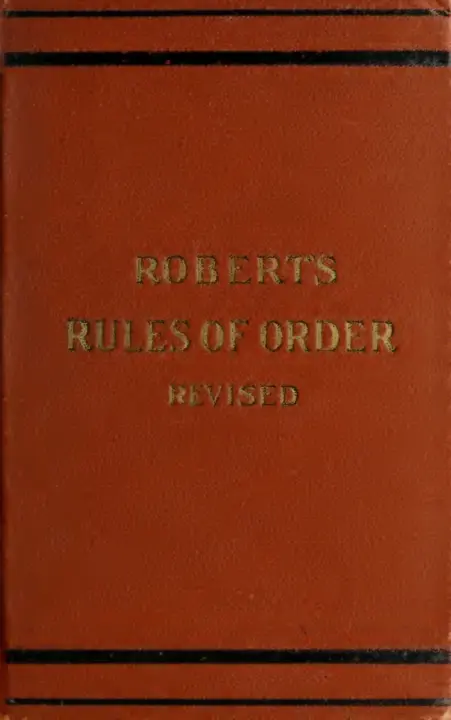
Robert’s rules of order revised
Henry M. (Henry Martyn) Robert
THE CLASSIC COLLECTION · 1876
"Robert's Rules of Order" by Henry M. Robert is a manual of parliamentary procedure first published in 1876. Created by a U.S. Army officer who witnessed chaotic meetings in San Francisco, it adapts congressional rules for voluntary organizations. The book has become the most widely used parliamentary guide in the United States, governing meetings for churches, nonprofits, school boards, and countless other groups. Robert published four editions before his death in 1923, creating a standard that brought order to democratic assemblies nationwide.
Introduction adapted from the source catalogue; source summaries may be automatically generated.
Free to read · English · 37,153 words · No account needed
MAKE TIME FOR A GOOD BOOK
On by default. Untick to stop anonymous reading totals. Each page counts after 10 seconds in view. How this works.
Anonymous counting is on unless you have switched it off.
Adjourn, motion to ……………………………………… 11, 63b when in order ………………………………………… 11, 64 effect upon unfinished business ………………………… 11, 69 motion to “fix the time to which to adjourn” ……………… 10, 63 Amendment, motion to “amend” ……………………………. 23, 56a by “adding” or “striking out” ………………………….. 23, 56a by “striking out and inserting” ………………………… 23, 56a by “substituting” …………………………………….. 23, 56a by “dividing the question” ………………………….. 4, 23, 56a of an amendment ………………………………………. 23, 56a in committee ………………………………………….. 28, 53 in committee of the whole …………………………………. 32 of reports or propositions with several paragraphs ……….. 44, 48b of Rules of Order, By-Laws and Constitutions ……………… 45, 73 motions that cannot be amended …………………………. 23, 56a Announcing the vote. See Forms. Appeal from the decision of the chair …………………….. 14, 61e Apply, meaning of (Introduction, page 14). Assembly, how organized ………………………………. 46, 47, 48 the word to be replaced by Society, Convention, etc., when it occurs in forms of questions, p 16. legal rights of, pp. 158-163. right to punish members, p. 158. right to eject persons from their room, p. 159. trial of members, p. 160. Ayes and Noes. See Yeas and Nays, § 38. Ballot …………………………………………………….. 38 Blanks, filling of ………………………………………….. 25 in balloting, not to be counted …………………………….. 38 Boards of Trustees, Managers, etc., their reports in order when reports of standing committees are made ………… 44, 72 (See Quorum.) Business, introduction of ……………………………….. 1-5, 54 order of ……………………………………………… 44, 72 unfinished, effect of an adjournment upon ………………… 11, 69 [See Priority of Business.] By-Laws, what they should contain …………………………….. 49 adoption of ……………………………………………… 46a amendment of ………………………………………….. 45, 73 Chairman, duties of ……………………………………… 40, 50 election of ……………………………………………… 46a temporary …………………………………………….. 40, 47 of a committee ………………………………………… 28, 53 of committee of the whole ……………………………………. 32 Change of Vote allowed before result is announced ………………. 38 Classification of Motions according to their object …………….. 55 into Privileged, Incidental, Subsidiary, etc. ……………….. 6-9 Clerk, duties of ………………………………………… 41, 51 additional duties of when receiving money ……………………. 52 election of ……………………………………………… 46a Commit, motion to ………………………………………. 22, 56b Committees, appointment of ………………………………. 22, 46c how they should be composed …………………………….. 22, 53 object of …………………………………………….. 28, 53 manner of conducting business in ………………………… 28, 53 Reports of, their form …………………………………. 29, 53 their reception …………………………………….. 30, 46c their adoption ……………………………………… 31, 46c their place in the order of business …………………… 44, 72 common errors in acting upon (note) …………………… 30, 46c Minority Reports of, their form …………………………. 29, 53 to be acted upon must be moved as a substitute for the committee’s report ………………………….. 28, 53 of the whole ……………………………………………… 32 as if in committee of the whole …………………………….. 33 Congress, rules of, the basis of this work, pp. 10-12. Consideration of a question, objection to …………………. 15, 59a Constitutions, what they should contain ……………………….. 49 adoption of by a society ………………………………….. 48b amendment of ………………………………………….. 45, 73 Convention, manner of organizing and conducting a meeting of …………………………………………….. 47 Credentials of delegates …………………………………….. 47 Debate, what precedes …………………………………….. 3, 54 no member to speak but twice in same …………………….. 34, 65 no member to speak longer than ten minutes at one time ……………………………………………….. 34, 65 a majority can extend the number and length of speeches allowed ……………………………………. 34, 65 number of speeches and time allowed in Congress (note) ……………………………………………… 34, 65 member introducing measure has right to close ………………… 34 list of undebatable questions …………………………… 35, 66 motions that open the main question to ………………………. 35 principles regulating the extent of (see note) ……………….. 35 decorum in ……………………………………………. 36, 65 closing or limiting ……………………………………. 37, 58 Decorum in debate ……………………………………….. 36, 65 Definitions of various terms [Introduction, p. 15]. Delegates, organization of a meeting of ……………………….. 47 Division of the assembly …………………………………….. 38 of questions [see Amendment] ……………………………. 4, 56a Ecclesiastical Tribunals, legal rights of, p. 159. Election of Officers ……………………………………. 46a, 47 Fix the time to which to Adjourn, motion to ……………….. 10, 63a Floor, how to obtain ……………………………………… 2, 54 Forms of making motions ………………………………….. 46, 54 of stating and putting questions ………………………… 38, 67 of announcing the result of a vote ………………………. 38, 54 of reports of committees ……………………………….. 29, 53 of treasurers’ reports …………………………………….. 52 of minutes of a meeting ………………………………… 41, 51 of conducting an occasional or mass meeting ………………….. 46 of conducting a meeting of delegates ………………………… 47 of conduction a meeting to organize a society ………………… 48 of conducting an ordinary meeting of a society ………………. 48b Incidental questions …………………………………………. 8 Indefinite postponement …………………………………. 24, 59b Informal consideration of a question ………………………….. 33 Introduction of Business ………………………………… 1-5, 54 Journal, or minutes ……………………………………… 41, 51 Legal Rights. See Assembly and Ecclesiastical Tribunals. Lie on the table, motion to …………………………. 19, 57b, 59c Main question ……………………………………………….. 6 Majority. See Two-thirds and Quorum. Meeting, distinction between it and session ………………… 42, 70 [See also Introduction, page 15.] how to conduct. See Forms. Members not to be present during a debate or vote concerning themselves ……………………………………… 36 trial of, p. 160. Minority Report. See Committees. Minutes, form and contents of …………………………….. 41, 51 Moderator. See Chairman. Modification of a motion by the mover ………………………….. 5 Motions, list of. [For details, see each motion in the Index.] Adjourn ……………………………………………… 11, 63b Adjourn, Fix the time to which to ………………………. 10, 63a Amend ……………………………………………….. 23, 56a Adopt a report (same as accept or agree to) ……………… 31, 46c Appeal ………………………………………………. 14, 61e Blanks, filling …………………………………………… 25 Call to order ………………………………………… 14, 61d Close debate ………………………………………….. 37, 58 Commit ………………………………………………. 22, 56b Consideration of a question, objection to ………………. 15, 59a Divide the question ………………………………… 4, 23, 56a Extend the limits of debate …………………………….. 34, 65 Fix the time to which to adjourn ……………………….. 10, 63a Incidental motions or questions ……………………………… 8 Indefinitely postpone …………………………………. 24, 59b Informal consideration of a question ………………………… 33 Leave to continue speech when guilty of indecorum …………….. 36 Leave to withdraw a motion …………………………….. 17, 62b Lie on the table …………………………………. 19, 57b, 59c Limit Debate …………………………………………. 37, 58b Main motions or questions …………………………………… 6 Objection to the consideration of a question …………….. 15, 59a Order, questions of …………………………………… 14, 61d Orders of the day …………………………………….. 13, 61a Orders, special ………………………………………….. 61b Postpone to a certain day ……………………………… 21, 57a Postpone indefinitely …………………………………. 24, 59b Previous question …………………………………….. 20, 58a Principal motions or questions ………………………………. 6 Priority of Business, questions relating to ………………….. 35 Privileged motions or questions ……………………………… 9 Privilege, questions of ……………………………….. 12, 62c Reading papers ………………………………………… 16, 62 Reception of a report [see Committees] ………………….. 30, 46c Recommit [same as Commit] ………………………………. 22, 56 Reconsider ……………………………………………. 27, 60 Refer [same as Commit] ………………………………… 22, 56b Renewal of a motion ……………………………………. 26, 60 Rise [in committee, equals adjourn] ……………………… 11, 32 Shall the question be considered? [or discussed] …………. 15, 59a Special Order, to make a ………………………………….. 61b Strike out [see Amendment] …………………………….. 23, 56a Subsidiary motions or questions ……………………………… 7 Substitute (same as Amendment, which see) ……………….. 23, 56a Suspension of the Rules ……………………………….. 18, 61c Take from the table [see Lie on the table] ………………. 19, 57b Take up a question out of its proper order ……………….. 44, 72 Withdrawal of a motion …………………………………. 17, 62 Motions, tabular view of rules relating to, page 166. classified according to their object ………………………… 55 classified into Privileged, Incidental, Subsidiary, etc. ……… 6-9 order of precedence of [see each motion, §§ 10-27] ……………. 64 how to be made …………………………………… 1, 2, 46, 54 a second required (with certain exceptions) ……………….. 3, 67 to be stated by chairman before being discussed ……………. 3, 54 when to be in writing …………………………………… 4, 54 how to be divided ………………………………………….. 4 how to be modified by the mover ……………………….. 3, 5, 17 how to be stated and put to the question …………………. 38, 67 that cannot be amended ………………………………… 23, 56a that cannot be debated …………………………………. 35, 66 that open main question to debate …………………………… 35 that require two-thirds vote for their adoption …………… 39, 68 Nominations, how treated ………………………………… 25, 46a Numbers of paragraphs to be corrected by clerk without a vote …………………………………………………… 23 Objection to the consideration (discussion or introduction of a question ………………………………………… 15, 59a Officers of an assembly. See Chairman, Clerk, Treasurer and Vice-Presidents. Order, questions of and a call to ………………………… 14, 61d of business …………………………………………… 44, 72 of the day …………………………………………… 13, 61a distinction between, and rules of the assembly (note) ………. 61a special …………………………………………………. 61b of precedence of motions. See Precedence. Organization of an occasional or mass meeting …………………. 46a of a convention or assembly of delegates …………………….. 47 of a permanent society …………………………………….. 48 Papers and documents, reading of ………………………….. 16, 62 in custody of clerk ……………………………………. 41, 51 Parliamentary Law, its origin, etc., (Introduction. p. 9.) Plan of the Manual, (Introduction, page 12.) of Part I, Rules of Order, (Introduction, page 13.) of Part II, Organization and Conduct of Business, (Introduction, page 14.) Postpone to a certain time ………………………………. 21, 57a indefinitely …………………………………………. 24, 59b Preamble, considered after the rest of a paper …………………. 44 Precedence of motions [see each motion, §§ 10-27] ………………. 64 meaning of, (Introduction, page 14.) Presiding Officer. See Chairman. Previous Question ………………………………………. 20, 58a Principal (or main) question ………………………………….. 6 Priority of Business, questions relating to are undebatable ……… 35 Privilege, questions of …………………………………. 12, 62c Privileged questions …………………………………………. 9 Putting the question, form of …………………………….. 38, 67 Questions. See Forms, Motions, Privilege and Order. Quorum, when there is no rule, consists of a majority …………… 43 committees and boards cannot decide upon …………………….. 43 Reading of Papers ……………………………………….. 16, 62 Reception of a report. See Committees. Re-commit (same as Commit) ………………………………. 22, 56b Reconsider ……………………………………………… 27, 60 Record, or minutes ………………………………………. 41, 51 Recording officer. See Clerk. Refer [same as Commit] ………………………………….. 22, 56b Renewal of a motion ……………………………………… 26, 60 Reports of committees. See Committees. Rights of assemblies. See Assembly. of ecclesiastical tribunals, p. 159. Rise, motion to, in committee, equals adjourn ………………. 11, 32 Rules of debate. See Debate. of Order, amendment of …………………………………. 45, 73 of Order, what they should contain ………………………….. 49 standing, what they should contain ………………………….. 49 suspension of ………………………………………… 18, 61c relating to motions, tabular view of p. 166. Seconding, motions that do not require ……………………… 3, 67 Secretary. See Clerk. Session [See also Meeting] ……………………………….. 42, 70 Shall the question be considered (or discussed) ……………. 15, 59a Speaking, rules of, See Debate. Special Order ……………………………………………… 61b Standing Rules ……………………………………………… 49 Stating a question, form of ………………………………. 38, 67 Strike out (see Amendment) ………………………………. 23, 56a Subsidiary motions or questions ……………………………….. 7 Substitute (see Amendment) ………………………………. 23, 56a Sum, largest, first put ……………………………………… 25 Suspension of the rules …………………………………. 18, 61c Table of Rules relating to motions, p. 166. Take from the table, motion to …………………………… 19, 57b Time, longest, first put …………………………………….. 25 Treasurer, duties of ………………………………………… 52 Trial of Members, p. 160. Two-thirds vote, motions requiring ………………………… 39, 68 Undebatable Questions ……………………………………. 35, 66 Unfinished business, effect of adjournment upon …………….. 11, 69 its place in the order of business ………………………. 44, 72 Vice-Presidents ……………………………………………. 46d Vote, form of announcing [see also Forms] ………………….. 38, 54 motions requiring more than a majority …………………… 39, 68 change of, permitted before result is announced ………………. 38 Voting, various methods of …………………………………… 38 Withdrawal of a motion …………………………………… 17, 62 Yeas and Nays, voting by …………………………………….. 38 Yields, meaning of, (Introduction, page 14.)
Your reading position is saved on this browser. Take it to another device with a library code. Reading pages adapt to text, rather than matching a printed edition.
Henry M. (Henry Martyn) Robert
BEHIND THE BOOK
This eBook is for the use of anyone anywhere in the United States and most other parts of the world at no cost and with almost no restrictions whatsoever. You may copy it, give it away or re-use it under the terms of the Project Gutenberg License included with this eBook or online at www.gutenberg.org. If you are not located in the United States, you will have to check the laws of the country where you are located before using this eBook. Read the source licence.
The original source file, including credits and licence, is retained by this library. Request an original-format copy at no charge. Please include the book title and Project Gutenberg identifier #9097.
KEEP YOUR CURIOSITY GOING

Charles G. (Charles Griffith) Ross
Hannah Webster Foster

Emily Lawless
Edwin Hamlin Carr

Charles De Lano Hine
Andrew Ure