THE CLASSIC COLLECTION✦An outlaw’s diary: the CommuneCLASSIC FREE BOOKS
An outlaw’s diary: the Commune
Cécile Tormay
THE CLASSIC COLLECTION · 1901
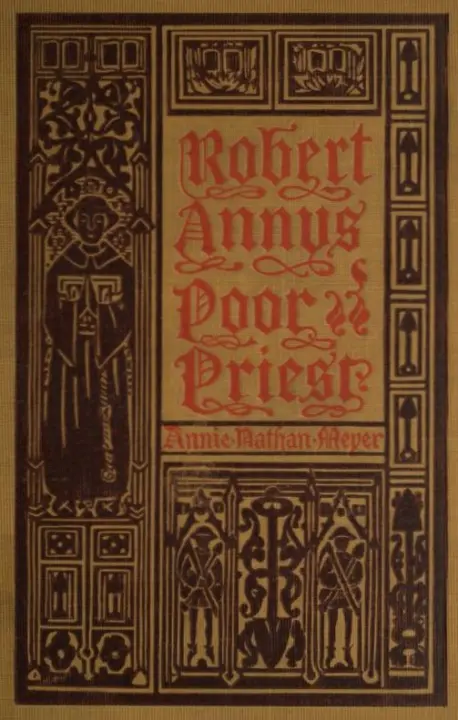
"Robert Annys: Poor Priest. A Tale of the Great Uprising" by Annie Nathan Meyer is a historical novel written in the early 20th century. The story revolves around Robert Annys, a poor priest who becomes embroiled in the tensions and injustices of 14th-century England amidst the backdrop of social upheaval and revolutionary ideas. The narrative explores themes of faith, social justice, and the crisis within the Church as Annys grapples with his convictions and the realities of the world around him. The opening of the book introduces Robert Annys standing before the majestic Ely Minster on a November evening in 1379. He is depicted as a solitary figure in rough clothing, reflecting on his commitment to the poor and the teachings of his mentor, John Wyclif. Annys, who dedicates his life to spreading the Gospel among the impoverished, is increasingly disillusioned by the oppressive structures of the Church and society. He experiences a moment of awakening as he witnesses the stark contrast between the grandeur of the Minster and the harsh realities of his people's lives. The chapter sets the stage for his internal conflict, his admiration for the sentiments of the revolutionary priest John Ball, and his eventual decision to embrace his role as a reformer for the oppressed, marking a significant turning point in the narrative.
Introduction adapted from the source catalogue; source summaries may be automatically generated.
Free to read · English · 72,126 words · No account needed
MAKE TIME FOR A GOOD BOOK
On by default. Untick to stop anonymous reading totals. Each page counts after 10 seconds in view. How this works.
Anonymous counting is on unless you have switched it off.
"Thou art unhappy. Tell me what has happened. And where is Robert
Annys?"
"Said I not already that he was in Kent?" she whispered.
"Nay," he said impatiently, "thy face is far too dear to me to permit
it to deceive."
As she did not reply to this, he gazed at her in gloomy silence for a while, and then spoke with a certain stern deliberateness.
"He is not in Kent."
She quivered. "How should I know more than I have said?" she asked
plaintively.
"'How should I know,'" he mocked; "I left thee on the eve of wedding Robert Annys. Art thou his wife?"
"Nay!"
"Art thou betrothed?"
"Nay!"
"What? not even betrothed?" Then in a low, trembling voice, "Has he
wronged thee?"
"Oh, Richard, for shame! for shame!"
"When did he go away?"
"The second day of the Stourbridge Fair."
"And thou hast not seen him since?" he asked in amazement.
"Nay, I have not seen him since."
He paced up and down a few times, and then he came back to her and looked down on her, sullen, uncertain, not knowing what to think. "Listen!" at last he broke out, "I return and find thee unhappy. He must have caused this. Tell me the truth and the whole truth, or I shall seek him if it be to the end of the earth, and I shall wring the truth from him if it has to be from his dying lips. Dost understand?"
She understood. But before she would speak, she made him promise solemnly not to reveal his whereabouts. It was a promise given most reluctantly, nevertheless she felt certain it would not be broken.
He received the news with amazement and incredulity just as she had done. Impossible! Robert Annys a Benedictine? Impossible! "What is it that thou art keeping from me? What drove him to this?"
He paced up and down in deep thought. Suddenly he stood before her again and asked abruptly, "Where is Rose?"
In a few words she told him of Rose's flight and the death of her
grandmother.
"When did Rose go?"
"The second day of the Stourbridge Fair," she said.
Meryl's face darkened. "How? the very day he went? What is this that
thou art telling me?"
The blood leapt to her cheeks, she looked up into his stormy eyes, protesting, denying--she scarce knew what--"Nay, nay, Richard! How canst thou? Believe me, thou art quite wrong--She"--but the long strain of the past months had worn on her and her self-control was at an end. She fled into the house, weeping bitterly, while he left in a turmoil, angry, sore at heart.
Your reading position is saved on this browser. Take it to another device with a library code. Reading pages adapt to text, rather than matching a printed edition.
BEHIND THE BOOK
This eBook is for the use of anyone anywhere in the United States and most other parts of the world at no cost and with almost no restrictions whatsoever. You may copy it, give it away or re-use it under the terms of the Project Gutenberg License included with this eBook or online at www.gutenberg.org. If you are not located in the United States, you will have to check the laws of the country where you are located before using this eBook. Read the source licence.
The original source file, including credits and licence, is retained by this library. Request an original-format copy at no charge. Please include the book title and Project Gutenberg identifier #46519.
KEEP YOUR CURIOSITY GOING
Cécile Tormay

Moritz Busch
Coulson Kernahan
John L. Ransom

Maurice Baring
Frances Wright