THE CLASSIC COLLECTION✦An outlaw’s diary: the CommuneCLASSIC FREE BOOKS
An outlaw’s diary: the Commune
Cécile Tormay
THE CLASSIC COLLECTION · 1901
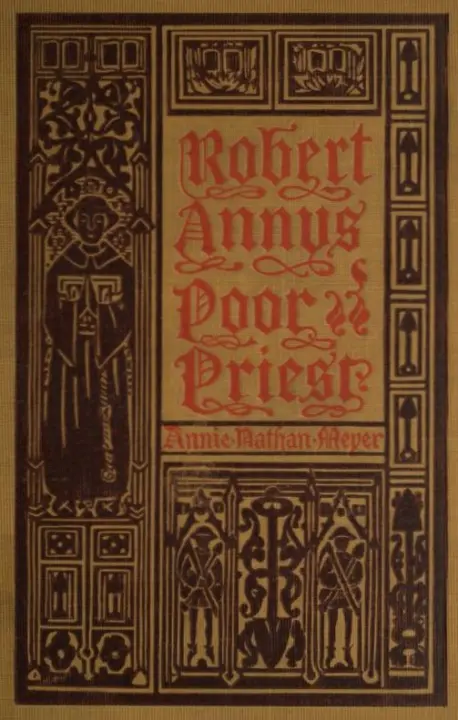
"Robert Annys: Poor Priest. A Tale of the Great Uprising" by Annie Nathan Meyer is a historical novel written in the early 20th century. The story revolves around Robert Annys, a poor priest who becomes embroiled in the tensions and injustices of 14th-century England amidst the backdrop of social upheaval and revolutionary ideas. The narrative explores themes of faith, social justice, and the crisis within the Church as Annys grapples with his convictions and the realities of the world around him. The opening of the book introduces Robert Annys standing before the majestic Ely Minster on a November evening in 1379. He is depicted as a solitary figure in rough clothing, reflecting on his commitment to the poor and the teachings of his mentor, John Wyclif. Annys, who dedicates his life to spreading the Gospel among the impoverished, is increasingly disillusioned by the oppressive structures of the Church and society. He experiences a moment of awakening as he witnesses the stark contrast between the grandeur of the Minster and the harsh realities of his people's lives. The chapter sets the stage for his internal conflict, his admiration for the sentiments of the revolutionary priest John Ball, and his eventual decision to embrace his role as a reformer for the oppressed, marking a significant turning point in the narrative.
Introduction adapted from the source catalogue; source summaries may be automatically generated.
Free to read · English · 72,126 words · No account needed
MAKE TIME FOR A GOOD BOOK
On by default. Untick to stop anonymous reading totals. Each page counts after 10 seconds in view. How this works.
Anonymous counting is on unless you have switched it off.
"Ah, but you will not know the correct proportions, and without that the virtue of the compound is not there," replied the man, no whit disconcerted.
"Ointments, ointments, rare and precious ointments," cried a rival, "musks, vermillion lip salves, clothes of pure scarlet dye to keep the cheeks ever young. Ah, lass, just approach here and see if a touch of this on thy cheeks does not make thy fellow come hurrying back to thee."
"Waters of daffodils," from the other side.
"Grape juice and tarragon mixed, sweet waters of oranges, roses, jessamine," flung back from opposite.
And at last they heard about them the kind of talk that showed they had reached their destination.
"Nay, I have rubbed my fingers off me and the skin yet keeps pale. I tell ye 'tis rotten, and I'll none of it."
"Why, man, look you, pull on that wool, and you could not tear it, had you the strength of Hercules."
"If the hoar frost of the morning melt on the wool, be sure there is an unnatural heat somewhere."
"I tell you the veins under the eyes are white. Do you need further
proof?"
"And I tell thee a ruby could not be redder."
Yet with all the talk going on about them of sheep and their distempers, men nevertheless found opportunity to greet one another with the secret signal which showed that they were members of the Great Society.
"June the twelfth, then?"
"So long?"
"Plenty to do 'twixt now and then."
"Hush!"
"And I tell thee what to do with a sheep that dies."
"The whole country is to rise. There will not remain one man at the plough--as I was saying, soak the flesh well in water and keep it there from daybreak till nones, and--"
"Wot ye, whether the men of Hertforshire are with us?"
"And keep it and drain it thoroughly and salt it and dry it, and it
will do for your laborers."
"Ha, ha, ha!"
"Ho, ho, ho!"
"Yea, there be not one man who is not ready to join in the march."
"And if there be one unready, we know an argument or two that will
bring him around."
"Here be Robert Annys and Jack the smith."
The greetings exchanged were hearty.
The men spoke cautiously among themselves, every now and then interjecting some talk of sheep into their conversation when one approached who did not give the signal.
"I tell you, from Lincolnshire to Sussex the country is like dry timber ready to ignite at a spark."
"Ay, come next Whitsunday, please God, the lords will know who are the
real masters."
"The land will not groan under so many sheriffs."
Your reading position is saved on this browser. Take it to another device with a library code. Reading pages adapt to text, rather than matching a printed edition.
BEHIND THE BOOK
This eBook is for the use of anyone anywhere in the United States and most other parts of the world at no cost and with almost no restrictions whatsoever. You may copy it, give it away or re-use it under the terms of the Project Gutenberg License included with this eBook or online at www.gutenberg.org. If you are not located in the United States, you will have to check the laws of the country where you are located before using this eBook. Read the source licence.
The original source file, including credits and licence, is retained by this library. Request an original-format copy at no charge. Please include the book title and Project Gutenberg identifier #46519.
KEEP YOUR CURIOSITY GOING
Cécile Tormay

Moritz Busch
Coulson Kernahan
John L. Ransom

Maurice Baring
Frances Wright