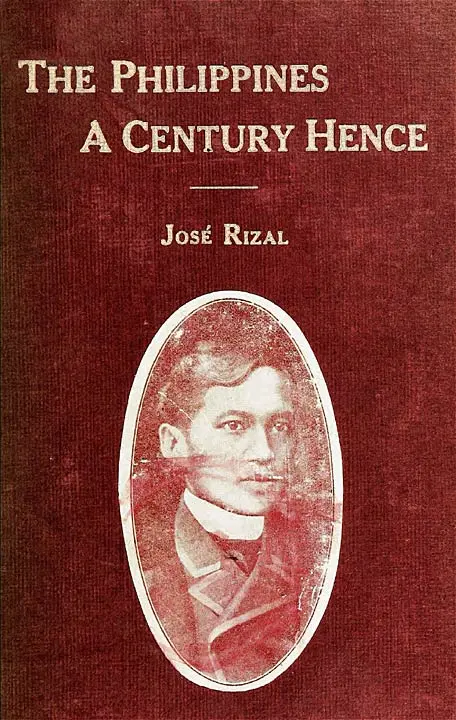
The Philippines a Century Hence
José Rizal
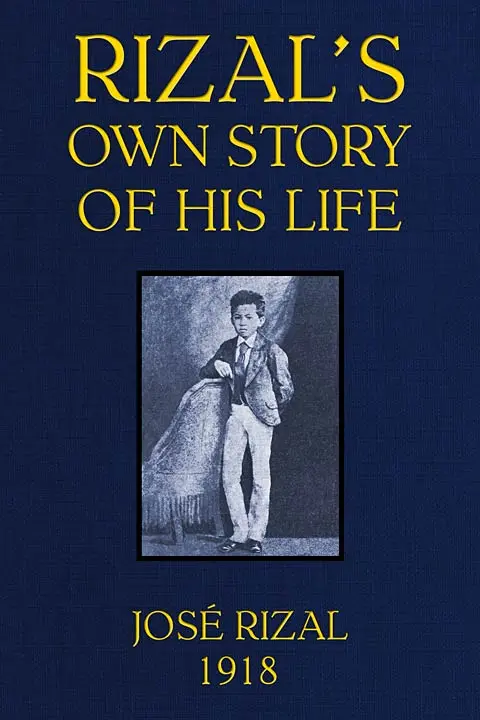
THE CLASSIC COLLECTION · 1918
"Rizal's Own Story of His Life" by José Rizal is a biography written in the early 20th century, specifically in the years right after 1918. The book presents the life and experiences of José Rizal, a prominent Filipino nationalist and revolutionary whose writings and ideas played a pivotal role in the fight for Philippine independence from Spanish colonial rule. Through his own narration, Rizal delves into his childhood, education, and the societal issues of his time, showcasing his intellectual growth and aspirations. The narrative unfolds with a blend of personal anecdotes and historical context, as Rizal recounts his birth in Kalamba, his early schooling experiences, family dynamics, and formative moments that shaped his character. He reflects on the injustices faced by his family, notably the wrongful imprisonment of his mother and the oppressive environment under Spanish rule. Highlighting his literary pursuits and educational journey, the book also reveals Rizal's deep patriotism and his vision for the Philippines. His captured thoughts on labor, ethics, and national identity resonate throughout, making this work not only a chronicle of his life but also a profound commentary on the Filipino experience during a critical juncture in history.
Introduction adapted from the source catalogue; source summaries may be automatically generated.
Free to read · English · 12,658 words · No account needed
MAKE TIME FOR A GOOD BOOK
On by default. Untick to stop anonymous reading totals. Each page counts after 10 seconds in view. How this works.
Anonymous counting is on unless you have switched it off.
Dec. 15.--Wrote an address to insurgent Filipinos to lay down their arms because their insurrection was at that time hopeless. Address not made public but added to the charges against him.
Dec. 26.--Formally condemned to death by Spanish court martial.
Pi y Margall, who had been president of the Spanish Republic, pleaded with the Prime Minister for Rizal's life, but the Queen Regent could not forgive his having referred in one of his writings to the murder by, and suicide of, her relative, Crown Prince Rudolph of Austria.
Dec. 30.--Married in Fort Santiago death cell to Josephine Bracken, Irish, the adopted daughter of a blind American who came to Dapitan for treatment.
Age 35 years, 6 months, 11 days. Shot on the Luneta, Manila, at 7:30 a. m., and buried in a secret grave in Paco Cemetery. (Entry of death made on back flyleaf of Paco Church Register, among suicides.)
1897, Jan.--Commemorated by Spanish Freemasons who dedicated a tablet to his memory, in their Grand Lodge hall in Madrid, as a martyr to Liberty.
1898, Aug.--Grave sought, immediately after the American capture of Manila, by Filipinos who placed over it, in Paco cemetery, a cross inscribed simply "December 30, 1896." Since his death his name had never been spoken by his countrymen, but all references had been to "The Dead" (El Difunto).
Dec. 30.--Memorial services held by Filipinos, and American soldiers on duty carried their arms reversed.
1911, June 19.--Birth semi-centennial observed in all public schools by act of Philippine Legislature.
1912, Dec. 30.--Ashes transferred to the Rizal Mausoleum on the Luneta with impressive public ceremonies.
RIZAL, JOSÉ.--The Monkey and the Tortoise. A Tagalog tale told in English and illustrated by Rizal. Manila, 1912.
--Elias and Salome. An unpublished chapter from the original Noli Me
Tangere manuscript.
--The Whole Truth. (La Verdad para Todos.) A defense of the Filipinos.
--By Telephone (Por Teléfono). A satire.
--The Philippines A Century Hence (Filipinas Dentro de Cien Años). A
forecast of the future.
--The Indolence of the Filipino (La Indolencia de los Filipinos). An
answer to criticism.
--My Last Thought and other Poems. Translations by Charles Derbyshire
and A. P. Fergusson.
--Mariang Makiling. A folk tale.
(These titles are in the Noli Me Tangere Quarter-Centennial Series, edited by Austin Craig. Translations are by Charles Derbyshire.) Manila, 1912.
--An Eagle Flight: A Filipino Novel. Adapted from Noli Me Tangere, with a short sketch of Rizal's life. Anonymous translator. New York, 1900.
--Friars and Filipinos. An abridged translation of Noli Me Tangere by F.E. Gannett. New York, 1900.
--The Social Cancer. Charles Derbyshire's translation of Noli Me Tangere. Manila and New York, 1912.
--The Reign of Greed. Charles Derbyshire's translation of El Filibusterismo. Manila and New York, 1912.
Your reading position is saved on this browser. Take it to another device with a library code. Reading pages adapt to text, rather than matching a printed edition.
José Rizal
José Rizal
José Rizal
BEHIND THE BOOK
This eBook is for the use of anyone anywhere in the United States and most other parts of the world at no cost and with almost no restrictions whatsoever. You may copy it, give it away or re-use it under the terms of the Project Gutenberg License included with this eBook or online at www.gutenberg.org. If you are not located in the United States, you will have to check the laws of the country where you are located before using this eBook. Read the source licence.
The original source file, including credits and licence, is retained by this library. Request an original-format copy at no charge. Please include the book title and Project Gutenberg identifier #48438.
KEEP YOUR CURIOSITY GOING
Cécile Tormay

Moritz Busch
John L. Ransom
Frances Wright
Cécile Tormay

Mabel Potter Daggett