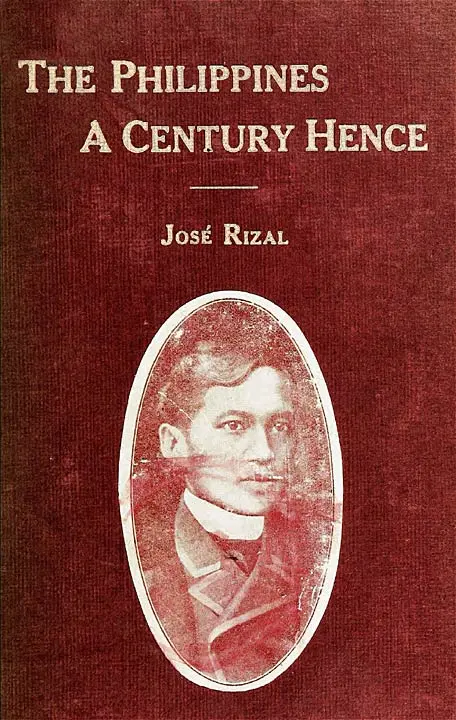
The Philippines a Century Hence
José Rizal
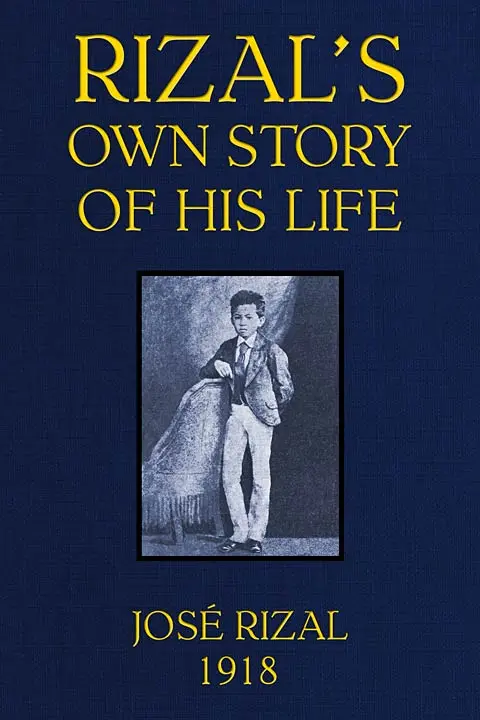
THE CLASSIC COLLECTION · 1918
"Rizal's Own Story of His Life" by José Rizal is a biography written in the early 20th century, specifically in the years right after 1918. The book presents the life and experiences of José Rizal, a prominent Filipino nationalist and revolutionary whose writings and ideas played a pivotal role in the fight for Philippine independence from Spanish colonial rule. Through his own narration, Rizal delves into his childhood, education, and the societal issues of his time, showcasing his intellectual growth and aspirations. The narrative unfolds with a blend of personal anecdotes and historical context, as Rizal recounts his birth in Kalamba, his early schooling experiences, family dynamics, and formative moments that shaped his character. He reflects on the injustices faced by his family, notably the wrongful imprisonment of his mother and the oppressive environment under Spanish rule. Highlighting his literary pursuits and educational journey, the book also reveals Rizal's deep patriotism and his vision for the Philippines. His captured thoughts on labor, ethics, and national identity resonate throughout, making this work not only a chronicle of his life but also a profound commentary on the Filipino experience during a critical juncture in history.
Introduction adapted from the source catalogue; source summaries may be automatically generated.
Free to read · English · 12,658 words · No account needed
MAKE TIME FOR A GOOD BOOK
On by default. Untick to stop anonymous reading totals. Each page counts after 10 seconds in view. How this works.
Anonymous counting is on unless you have switched it off.
Clinical assistant to Dr. L. de Weckert, a Paris oculist.
Visited Universities of Heidelberg, Leipzig, and Berlin.
1887, Feb. 21. Age 26--Finished novel Noli Me Tangere in Berlin.
Travelled in Austria, Switzerland and Italy.
July 3.--Sailed from Marseilles.
Aug. 5.--Arrived in Manila. Travelled in nearby provinces with a Spanish lieutenant, detailed by the Governor-General, as escort.
1888, Feb.--Sailed for Japan via Hongkong.
Feb. 28.-Apr. 13. Age 27--A guest at Spanish Legation, Tokyo, and
travelling in Japan.
April-May.--Travelling in the United States.
May 24.--In London, studying in the British Museum to edit Morga's
1609 Philippine History.
1889, March. Age 28.--In Paris, publishing Morga's History. Published "The Philippines A Century Hence" in La Solidaridad, a Filipino fortnightly review, first of Barcelona and later of Madrid.
1890, Feb.-July. Age 29.--In Belgium and Holland, finishing El
Filibusterismo (The Reign of Greed), which is the sequel to Noli
Me Tangere.
Published "The Indolence of the Filipino" in La Solidaridad.
Aug. 4.--Returned to Madrid to confer with countrymen on the Philippine situation, then constantly growing worse.
1891, Jan. 27.--Left Madrid for France.
Nov. Age 30.--Arranging for a Filipino agricultural colony in British
North Borneo.
Practiced medicine in Hongkong.
1892, June 26. Age 31--Returned to Manila under Governor-General
Despujol's safe conduct.
Organized mutual aid economic society Liga Filipina.
July 6.--Ordered deported to Dapitan, but the decree and charges were
kept secret from him.
Taught school and conducted a hospital during exile, patients coming from China coast ports for treatment. Fees thus earned were used to beautify the town. Arranged a water system and had the plaza lighted.
1896, Aug. 1. Age 35--Left Dapitan en route to Spain as a volunteer surgeon for the Cuban yellow fever hospitals. Carried letters of recommendation from Governor-General Blanco.
Aug. 7.-Sept. 3.--On Spanish cruiser Castilla in Manila Bay.
Sailed for Spain on Spanish mail steamer and just after leaving Port Said was confined to cabin as a prisoner on cabled order from Manila. (Governor-General Blanco's promotion had been purchased by Rizal's enemies to secure appointment of a governor-general subservient to them, the servile Polavieja.)
Oct. 5.--Placed in Montjuich Castle dungeon on arrival in Barcelona and the same day re-embarked for Manila. Friends and countrymen in London by cable made an unsuccessful effort for a Habeas Corpus writ at Singapore. On arrival in Manila was placed in Fort Santiago dungeon.
Dec. 3.--Charged with treason, sedition and forming illegal societies, the prosecution arguing that he was responsible for the deeds of those who read his writings.
Dec. 12.--Wrote poem "My Last Farewell" and concealed it in an alcohol cooking lamp, after appearing in a courtroom where the judges made no effort to check those who cried out for his death.
Your reading position is saved on this browser. Take it to another device with a library code. Reading pages adapt to text, rather than matching a printed edition.
José Rizal
José Rizal
José Rizal
BEHIND THE BOOK
This eBook is for the use of anyone anywhere in the United States and most other parts of the world at no cost and with almost no restrictions whatsoever. You may copy it, give it away or re-use it under the terms of the Project Gutenberg License included with this eBook or online at www.gutenberg.org. If you are not located in the United States, you will have to check the laws of the country where you are located before using this eBook. Read the source licence.
The original source file, including credits and licence, is retained by this library. Request an original-format copy at no charge. Please include the book title and Project Gutenberg identifier #48438.
KEEP YOUR CURIOSITY GOING
Cécile Tormay

Moritz Busch
John L. Ransom
Frances Wright
Cécile Tormay

Mabel Potter Daggett