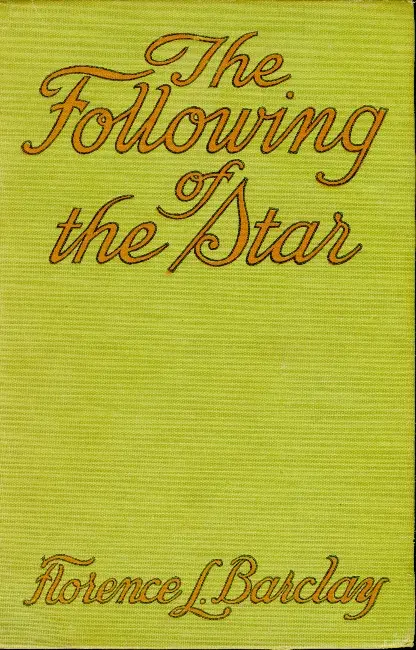
The Following of the Star: A Romance
Florence L. (Florence Louisa) Barclay
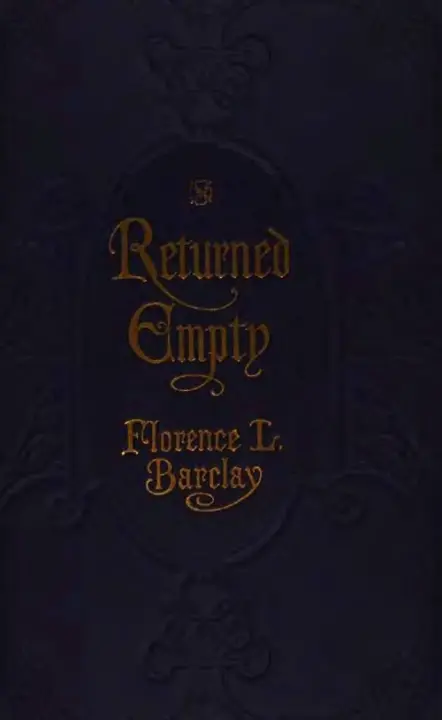
THE CLASSIC COLLECTION · 1920
"Returned Empty" by Florence L. Barclay is a novel written in the early 20th century. The story follows the life of Luke Sparrow, a lonely man who has struggled with feelings of emptiness and a yearning for belonging since his infancy, when he was abandoned as a baby. The book explores profound themes of identity, love, and the quest for a true home as Luke navigates his existence, encapsulating his inner turmoil and relentless search for connection. The opening of the novel paints a vivid picture of Luke's life, beginning with a reflective scene on his thirtieth birthday. Alone and contemplating his life, he remembers the label tied to him as a baby, "Returned Empty," a phrase that underscores the essence of his existence. As he swims near a mysterious house, he becomes an unexpected observer of a family scene that evokes a deep sense of longing within him—an encounter that ignites his desire to find a place he can call home. This moment marks the beginning of his journey toward understanding himself and potentially reclaiming the connections he has lost, suggesting that his story will unfold with a mix of poignant introspection and romantic intrigue.
Introduction adapted from the source catalogue; source summaries may be automatically generated.
Free to read · English · 28,273 words · No account needed
MAKE TIME FOR A GOOD BOOK
On by default. Untick to stop anonymous reading totals. Each page counts after 10 seconds in view. How this works.
Anonymous counting is on unless you have switched it off.
The man in the chair slipped his brown hands into the pockets of his coat. He did not lift his eyes from the floor.
“I remember nothing,” he said, very low.
“Then I must shew you your letter, which no eye save my own has ever
seen.”
She unlocked the despatch-box, took from it a small jewel-case, opened this with a gold key hanging from a chain around her wrist; then, from a sealed envelope, drew some half-dozen sheets of closely written manuscript. Leaning forward, she held them toward him.
Slowly, with evident reluctance, the lean brown hand came out of the
coat pocket.
He took them from her, and let his eyes rest on the first page.
There followed moments of tense silence.
The tall clock, in a corner of the room, ticked loudly.
Out seaward, a nightbird screeched.
An owl in the fir wood behind the house, hooted thrice.
The fire fell together, and shot up tongues of flame.
At last he lifted hunted eyes to her face.
“It is my handwriting,” he said, “or something very like it. But it is dated August 12th, 1882, thirteen months before my birth.”
“Read it,” said Lady Tintagel.
“I cannot.”
“You must.”
She rose, placed a shaded electric lamp on the table at his elbow; then switched off all other lights.
Seated in shadow on the couch, she watched the dark face, so fine in its stern intentness, bending over the paper; the strong, nervous hand waiting to turn each page; the dark hair, from which no cropping could cut the curl.
“God in heaven,” she sighed, “he has come back to me in answer to the insistence of my frantic prayer; but he has returned emptied of all memory. Oh, of Thine infinite mercy, let there rise in his mind the floodtide of remembrance.”
Thus she prayed and yearned and hoped, while the man in the chair slowly read the letter, written, in his own handwriting, a year before his birth.
“August 12th, 1882.
“You and I are so full of happy, buoyant life, that it seems a strange anomaly that I should sit down to write to you of death: we are so intimately one in heart and mind, so wedded in each moment of our perfect life together, that there seems no need to face the possibility of parting. Yet, lately, there has come to me a chill presentiment that, in the very midst of life and joy, a sudden death may come with one swift stroke; that you and I, belovèd, counting on fifty blissful years together, may, in one fatal moment, be wrenched apart.
Your reading position is saved on this browser. Take it to another device with a library code. Reading pages adapt to text, rather than matching a printed edition.
Florence L. (Florence Louisa) Barclay
Florence L. (Florence Louisa) Barclay
Florence L. (Florence Louisa) Barclay
Florence L. (Florence Louisa) Barclay
BEHIND THE BOOK
This eBook is for the use of anyone anywhere in the United States and most other parts of the world at no cost and with almost no restrictions whatsoever. You may copy it, give it away or re-use it under the terms of the Project Gutenberg License included with this eBook or online at www.gutenberg.org. If you are not located in the United States, you will have to check the laws of the country where you are located before using this eBook. Read the source licence.
The original source file, including credits and licence, is retained by this library. Request an original-format copy at no charge. Please include the book title and Project Gutenberg identifier #60307.
KEEP YOUR CURIOSITY GOING
Coulson Kernahan

Maurice Baring
Frances Wright
Cécile Tormay

Frederic Jesup Stimson

W. H. P. (William Henry Pope) Jarvis