
Last letters from the living dead man
David Patterson (Spirit) Hatch
THE CLASSIC COLLECTION · 1759
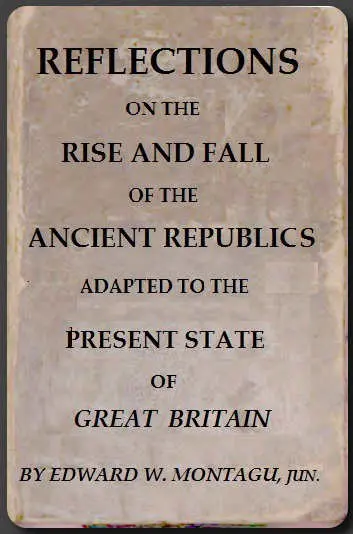
"Reflections on the Rise and Fall of the Ancient Republicks" by Edward W. Montagu is a historical account written in the early 19th century. The work examines the ancient republics such as Sparta, Athens, and Rome, drawing lessons that relate to the political climate of Great Britain at the time. Montagu aims to explore the factors that contributed to the rise and decline of these states, suggesting that contemporary issues in Britain resonate with those of the past. The opening portion of the book sets the stage for Montagu's exploration by introducing the historical context of various republics, particularly focusing on the governance of Sparta under Lycurgus. It discusses how Lycurgus addressed the deep-rooted issues of civil strife and inequality in Spartan society, ultimately leading to his significant reforms that promoted equality and a strong sense of civic duty among citizens. Montagu emphasizes the importance of unity and public virtue to maintain a free state, warning against the disunity that plagued ancient republics as a precursor to their downfall. The narrative establishes a foundation for Montagu's reflections, highlighting the dangers of neglecting the lessons of history in the face of contemporary political turmoil.
Introduction adapted from the source catalogue; source summaries may be automatically generated.
Free to read · English · 84,030 words · No account needed
MAKE TIME FOR A GOOD BOOK
On by default. Untick to stop anonymous reading totals. Each page counts after 10 seconds in view. How this works.
Anonymous counting is on unless you have switched it off.
[277] Pauci potentes, quorum in gratia plerique concesserant, sub honesto patrum, aut plebis nomine dominationes affectabant, bonique et mali cives appellati, non ob merita in rempublicam (omnibus pariter corruptis) sed uti quisque locupletissimus et injuria validior, quia præsentia defendebat, pro bono ducebatur. Frag. p. 139.
[278] Iidem illi factiosi regunt, dant, adimunt quæ lubet; innocentes circumveniunt: suos ad honorem extollunt. Non facinus, non probrum, aut flagitium obstat, quo minus magistratus expetant: quod commodum est, trahunt, rapiunt: postremo tamquam urbe capta, lubidine ac licentia sua pro legibus utuntur. Sall. Or. 2. ad Cæsar. p. 196.
[279] Divitiis, quas honeste habere licebat, per turpitudinem abuti properabant. Lubido stupri, ganeæ, cæterique cultus non minor incesserat.... Vescendi causa, terra mariq; omnia exquirere; dormire priusquam somni cupido esset: non famam, aut sitim, neq; frigus, neq; lassitudinem operiri; sed ea omnia luxu ante capere. Hæc juventutem, ubi familiares opes defecerant, ad facinora incedebant. Animus imbutus malis artibus haud facile lubidinibus carebat: eo profusius omnibus modis quæstui atque sumtui deditus erat. Sall. de Bell. Cat. p. 9.
[280] Ubi divitiæ claræ habentur, ibi omnia bona vilia sunt,
fides, probitas, pudor, pudicitia. Sall. Orat. 2. ad Cæs. p.
199.
[281] Itaque omnes concessere jam in paucorum dominationem, qui per militare nomen, ærarium, exercitum, regnum, provincias occupavere, et arcem habent ex spoliis vestris: cum interim more pecudum vos multitudo singulis habendos, fruendosque præbetis, exsuti omnibus, quæ majores reliquere: nisi quia vosmet ipsi per suffragia, uti præsides olim, nunc dominos destinatis. Salt. Frag. Orat. Lepid. ad Pleb. p. 160.
[282] Διαφθειρομένου δὲ τοῦ δήμου ταῖς δωροδοκίαις ὑπὸ τῶν φιλαρχούντων, καὶ χρωμένων τῷ δεκάζεσθαι καθάπερ ἐργασίᾳ συνήθει τῶν πολλῶν, βουλόμενος ἐκκόψαι παντάπασι τὸ νόσημα τοῦτο τῆς πόλεως, ἔπεισε δόγμα θέσθαι τὴν σύγκλητον, ὅπως οἱ κατασταθέντες ἄρχοντες, εἰ μηδένα κατήγορον ἔχοιεν, αὐτοὶ παριόντες ἐξ ἀνάγκης εἰς ἔνορκον δικαστήριον εὐθύνας διδῶσιν. Plut. in Vit. Cat. p. 126.
[283] Ἕωθεν οὖν ἐπὶ τὸ βῆμα τοῦ Κάτωνος, προελθόντος, ἀθρόοι προσπεσόντες ἐβόων, ἐβλασφήμουν, ἔβαλλον. Plut. ibid.
Hinc rapti fasces pretio: sectorque favoris
Ipse sui populus: lethalisque ambitus urbi
Annua venali referens certamina campo.
Lucan. Pharsal. lib. 1. Edit. 1506.
[285] Mala sua, quod malorum ultimum est, amant ... et definit esse remedio locus, ubi quæ fuerant vitia, mores sunt. Senec. Ep. 39. p. 100.
[286] In tanta tamque corrupta civitate, Catilina omnium flagitiosorum, atque facinorosorum circum se, tamquam stipatorum catervas habebat. Sall. de Bell. Cat. p. 9.
[287] Καίσαρος]——τὰ νοσοῦντα καὶ διεφθαρμένα τῆς πολιτείας μέρη ταράττοντος καὶ συνάγοντος πρὸς αὑτὸν. Plut. in Vit. Cat. Min. p. 241.
[288] Peculatus ærarii, et per vim sociis ereptæ pecuniæ, quæ quamquam gravia sunt, tamen consuetudine jam pro nihilo habentur. Sall. de Bell. Jug. p. 73.
[289] Adeo juventus luxu atque avaritia corrupta est, uti merito dicatur, genitos esse, qui neque ipsi habere possent res familiares, neque alios pati. Sall. Frag. pag. 139.
[290] Popilius to Antiochus Epiph. Livy. lib. 45. p. 672.
[291] Juv. Sat. 4.
... Ex quo suffragia nulli
Vendimus, effugit Curas. Nam qui dabat olim
Imperium, fasces, legiones, omnia, nunc se
Continet, atque duas tantum res anxius optat
Panem et Circenses.
Juv. Sat. 10. lin. 77.
Otium cum servitio.
Sall. Frag. p. 341.
[293] Ludi Scenici.
[294] Histriones.
[295] Etenim cum artifex ejusmodi sit; ut solus dignus videatur esse, qui in scena spectetur: tum vir ejusmodi est, ut solus dignus videatur, qui eo non accedat. Orat. pro Rosc. Edit. Glasg. p. 43.
Your reading position is saved on this browser. Take it to another device with a library code. Reading pages adapt to text, rather than matching a printed edition.
BEHIND THE BOOK
This eBook is for the use of anyone anywhere in the United States and most other parts of the world at no cost and with almost no restrictions whatsoever. You may copy it, give it away or re-use it under the terms of the Project Gutenberg License included with this eBook or online at www.gutenberg.org. If you are not located in the United States, you will have to check the laws of the country where you are located before using this eBook. Read the source licence.
The original source file, including credits and licence, is retained by this library. Request an original-format copy at no charge. Please include the book title and Project Gutenberg identifier #45592.
KEEP YOUR CURIOSITY GOING
David Patterson (Spirit) Hatch
Cécile Tormay

Moritz Busch
Coulson Kernahan
John L. Ransom

Ralph Waldo Emerson