THE CLASSIC COLLECTION✦A journey in search of ChristmasCLASSIC FREE BOOKS
A journey in search of Christmas
Owen Wister
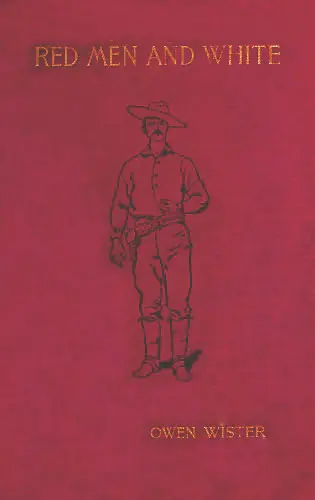
THE CLASSIC COLLECTION · 1895
"Red Men and White" by Owen Wister is a collection of short stories written in the late 19th century. The narrative explores the complexities of life on the Western frontier, particularly focusing on the interactions between white settlers and Native American tribes. The stories are connected thematically and feature overlapping characters, suggesting a rich and intertwined tapestry of life during a pivotal time in American history. The opening of the collection sets the stage for these narratives by highlighting the dynamic circumstances of the Crow Indians and their evolving relationship with white settlers and soldiers. It introduces characters like young Cheschapah, a Crow Indian who struggles between his ambition for leadership and duty to his people, and Lieutenant Stirling whose observations about the Indians reveal deeper nuances. As tensions arise with the Sioux tribe visiting the Crows and the calculations of superstitions that could ignite conflict, a stark portrait of life on the frontier is painted—a world of fragile peace overshadowed by the threat of violence, cultural misunderstanding, and the quest for identity and recognition. This sets the tone for a thoughtful exploration of the intersections of cultures, conflict, and human ambition that defines the Wild West.
Introduction adapted from the source catalogue; source summaries may be automatically generated.
Free to read · English · 79,787 words · No account needed
MAKE TIME FOR A GOOD BOOK
On by default. Untick to stop anonymous reading totals. Each page counts after 10 seconds in view. How this works.
Anonymous counting is on unless you have switched it off.
[Footnote A: Let me no longer pervert General Crook's military tactics. It was a dismounted charge that he ordered on this occasion, as a friend who was present has written me since the first publication of this story.
Mr. Remington's illustration was made to suit the text in its original form.--Publisher's Note.]
After cutting the Gazelle's throat, Drylyn had gone out of her tent, secure and happy in choosing the skilful moment. They would think it was the other man--the unknown one. There were his boot-prints this fine morning, marking his way from the tent down the hill into the trees. He was not an inhabitant of the camp. This was his first visit, cautiously made, and nobody had seen him come or go except Drylyn.
The woman was proprietor of the dance-hall at Salvation Gap, and on account of her beauty and habits had been named the American Beer Gazelle by a travelling naturalist who had education, and was interested in the wild animals of all countries. Drylyn's relations with the Gazelle were colored with sentiment. The sentiment on his part was genuine; so genuine that the shrewd noticing camp joked Drylyn, telling him he had grown to look young again under the elixir of romance. One of the prospectors had remarked fancifully that Drylyn's "rusted mustache had livened up; same ez flow'rs ye've kerried a long ways when yer girl puts 'em in a pitcher o' water." Being the sentiment of a placer miner, the lover's feeling took no offence or wound at any conduct of the Gazelle's that was purely official; it was for him that she personally cared. He never thought of suspecting anything when, after one of her trips to Folsom, she began to send away some of the profits--gold, coined sometimes, sometimes raw dust--that her hall of entertainment earned for her. She mentioned to him that her mother in San Anton' needed it, and simple-minded Drylyn believed. It did not occur to him to ask, or even wonder, how it came that this mother had never needed money until so lately, or why the trips to Folsom became so constant. Counting her middle-aged adorer a fool, the humorous Gazelle had actually once, on being prevented from taking the journey herself, asked him to carry the package to Folsom for her, and deliver it there to a certain shot-gun messenger of the express company, who would see that it went to the right place. A woman's name and an address at San Antonio were certainly scrawled on the parcel. The faithful Drylyn waited till the stage came in, and handed over his treasure to the messenger, who gave him one amazed look that he did not notice. He ought to have seen that young man awhile afterwards, the package torn open, a bag of dust on his knee, laughing almost to tears over a letter he had found with the gold inside the wrapping. But Drylyn was on the road up to Salvation Gap at that time. The shot-gun messenger was twenty-three; Drylyn was forty-five. Gazelles are apt to do this sort of thing. After all, though, it was silly, just for the sake of a laugh, to let the old lover learn the face of his secret rival. It was one of those early unimagined nails people sometimes drive in their own coffins. An ancient series of events followed: continued abject faith and passion on the miner's part; continued presents of dust from him to the lady; on her part continued trips to Folsom, a lessened caution, and a brag of manner based upon her very just popularity at the Gap; next, Drylyn's first sickening dawn of doubt, jealousy equipping him with a new and alien slyness; the final accident of his seeing the shot-gun messenger on his very first visit to the Gap come out of the Gazelle's tent so early in the morning; the instant blaze of truth and fury that turned Drylyn to a clever, calculating wild beast. So now her throat was cut, and she was good and dead. He had managed well. The whole game had shown instantly like a picture on his brain, complete at a stroke, with every move clear. He had let the man go down the hill--just for the present. The camp had got up, eaten its breakfast, and gone out to the ditches, Drylyn along with the rest. Owing to its situation, neighbors could not see him presently leave his claim and walk back quickly to the Gap at an hour when the dance-hall was likely to be lonely. He had ready what to say if the other women should be there; but they were away at the creek below, washing, and the luxurious, unsuspecting Gazelle was in bed in her own tent, not yet disturbed. The quiet wild beast walked through the deserted front entrance of the hall in the most natural manner, and so behind among the empty bottles, and along the plank into the tent; then, after a while, out again. She would never be disturbed now, and the wild beast was back at his claim, knee-deep, and busy among the digging and the wetness, in another pair of overalls just like the ones that were now under some stones at the bottom of a mud-puddle. And then one very bad long scream came up to the ditches, and Drylyn knew the women had returned from their washing.
Your reading position is saved on this browser. Take it to another device with a library code. Reading pages adapt to text, rather than matching a printed edition.
Owen Wister
Owen Wister

Caspar Whitney & George Bird Grinnell & Owen Wister
Owen Wister
BEHIND THE BOOK
This eBook is for the use of anyone anywhere in the United States and most other parts of the world at no cost and with almost no restrictions whatsoever. You may copy it, give it away or re-use it under the terms of the Project Gutenberg License included with this eBook or online at www.gutenberg.org. If you are not located in the United States, you will have to check the laws of the country where you are located before using this eBook. Read the source licence.
The original source file, including credits and licence, is retained by this library. Request an original-format copy at no charge. Please include the book title and Project Gutenberg identifier #28675.
KEEP YOUR CURIOSITY GOING
Coulson Kernahan

Maurice Baring
Frances Wright
Cécile Tormay

Frederic Jesup Stimson

W. H. P. (William Henry Pope) Jarvis