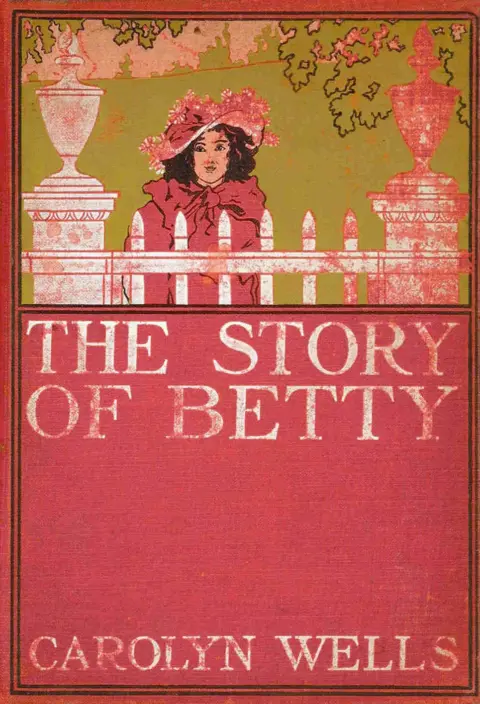
The story of Betty
Carolyn Wells
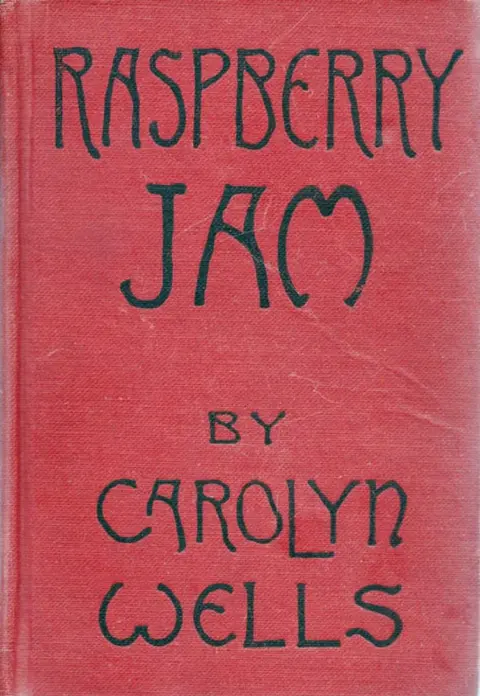
THE CLASSIC COLLECTION · 1920
"Raspberry Jam" by Carolyn Wells is a fictional novel likely written in the early 20th century. The story revolves around the characters Eunice Embury and her eccentric Aunt Abby Ames, who is excited about attending a performance by a man known as Hanlon, who claims to possess the extraordinary ability of mind-reading or telepathy. The novel hints at themes of family dynamics, skepticism towards the supernatural, and various social interactions. At the start of the narrative, the scene is set in the luxurious New York apartment of the Emburys, presenting a lively and somewhat contentious dialogue between Eunice and Aunt Abby. Aunt Abby passionately stresses her desire to see Hanlon's performance, while Eunice expresses her disapproval and skepticism of both the event and her aunt’s interests in the occult. The characters’ personalities come through in their interaction, with Eunice being more practical and composed, in stark contrast to her aunt's whimsical enthusiasm. This introductory clash sets the stage for a story rich with character development and the exploration of belief versus skepticism as they navigate their social world surrounding the intriguing performance.
Introduction adapted from the source catalogue; source summaries may be automatically generated.
Free to read · English · 62,672 words · No account needed
MAKE TIME FOR A GOOD BOOK
On by default. Untick to stop anonymous reading totals. Each page counts after 10 seconds in view. How this works.
Anonymous counting is on unless you have switched it off.
Embury sat motionless, his face pale and stern, and when they arrived at their own house, he assisted her from the car, quite as usual, dismissed the chauffeur, with a word of orders for the next day, and then the pair went into the house.
Ferdinand met them at their door, and performed his efficient and
accustomed services.
And then, after a glance at her husband, Eunice went into her own room
and closed the door.
Embury smoked a cigarette or two, and at last went to his room.
Ferdinand attended him, and the concerned expression on the old servant’s face showed, though he tried to repress it, an anxiety as to the very evident trouble that was brewing.
But he made no intrusive remark or implication, though a furtive glance at his master betokened a resentment of his treatment of Eunice, the idol of Ferdinand’s heart.
Dismissed, he left Embury’s room, and closed the door softly behind
him.
The door between the rooms of Embury and his wife stood a little ajar, and as his hand fell on it to shut it, he heard a stifled gasp of “Sanford!”
He looked in, and saw Eunice, in a very white heat of rage. In all their married life he had never seen her so terribly angry as she looked then. Speechless from very fury, she stood, with clenched hands, trying to command her voice.
She looked wonderfully beautiful like some statue of an avenging angel--he almost fancied he could see a flaming sword!
As he looked, she took a step toward him, her eyes burning with a glance of hate. Judith might have looked so, or Jael. Not exactly frightened, but alarmed, lest she might fly into a passion of rage that would really injure her, Embury closed the door, practically in her very face. Indeed, practically, he slammed it, with all the audible implication of which a slammed door is capable.
The next morning Ferdinand waited for the usual summons from Embury’s bedroom. The tea tray was ready, the toast crisp and hot, but the summons of the bell was unusually delayed.
When the clock pointed to fifteen minutes past the hour Ferdinand tapped on Embury’s door. A few moments later he tapped again, rapping louder.
Several such attempts brought no response, and the valet tried the door. It would not open, so Ferdinand went to Eunice’s door and knocked there.
Jumping from her bed, and throwing a kimono round her, Eunice opened her
own door.
Ferdinand started at sight of her white face, but recovered himself, and said, “Mr. Embury, ma’am. He doesn’t answer my knock. Can he be ill?”
Your reading position is saved on this browser. Take it to another device with a library code. Reading pages adapt to text, rather than matching a printed edition.
Carolyn Wells
Carolyn Wells & Harry Persons Taber

Carolyn Wells
Carolyn Wells
BEHIND THE BOOK
This eBook is for the use of anyone anywhere in the United States and most other parts of the world at no cost and with almost no restrictions whatsoever. You may copy it, give it away or re-use it under the terms of the Project Gutenberg License included with this eBook or online at www.gutenberg.org. If you are not located in the United States, you will have to check the laws of the country where you are located before using this eBook. Read the source licence.
The original source file, including credits and licence, is retained by this library. Request an original-format copy at no charge. Please include the book title and Project Gutenberg identifier #5335.
KEEP YOUR CURIOSITY GOING
Coulson Kernahan

Maurice Baring
Frances Wright
Cécile Tormay

Frederic Jesup Stimson

W. H. P. (William Henry Pope) Jarvis