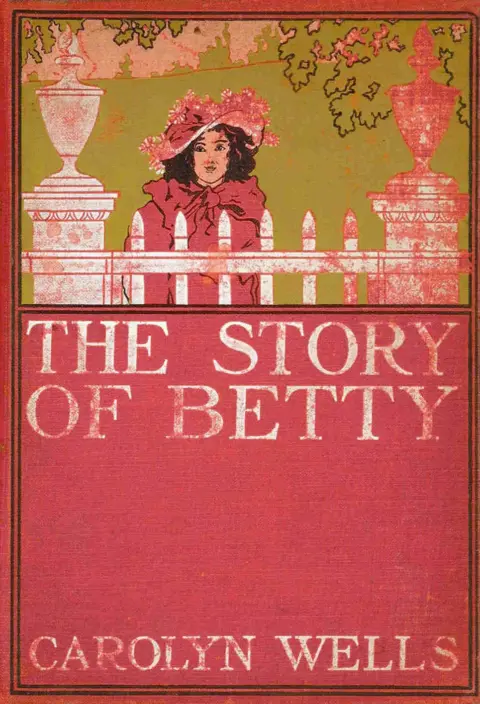
The story of Betty
Carolyn Wells
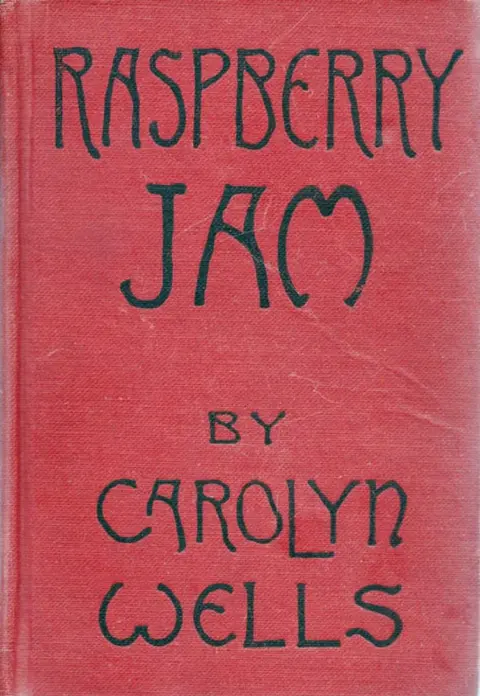
THE CLASSIC COLLECTION · 1920
"Raspberry Jam" by Carolyn Wells is a fictional novel likely written in the early 20th century. The story revolves around the characters Eunice Embury and her eccentric Aunt Abby Ames, who is excited about attending a performance by a man known as Hanlon, who claims to possess the extraordinary ability of mind-reading or telepathy. The novel hints at themes of family dynamics, skepticism towards the supernatural, and various social interactions. At the start of the narrative, the scene is set in the luxurious New York apartment of the Emburys, presenting a lively and somewhat contentious dialogue between Eunice and Aunt Abby. Aunt Abby passionately stresses her desire to see Hanlon's performance, while Eunice expresses her disapproval and skepticism of both the event and her aunt’s interests in the occult. The characters’ personalities come through in their interaction, with Eunice being more practical and composed, in stark contrast to her aunt's whimsical enthusiasm. This introductory clash sets the stage for a story rich with character development and the exploration of belief versus skepticism as they navigate their social world surrounding the intriguing performance.
Introduction adapted from the source catalogue; source summaries may be automatically generated.
Free to read · English · 62,672 words · No account needed
MAKE TIME FOR A GOOD BOOK
On by default. Untick to stop anonymous reading totals. Each page counts after 10 seconds in view. How this works.
Anonymous counting is on unless you have switched it off.
Smiling and debonair as he entered the drawingroom, he greeted the hostess and asked for his wife.
“Oh, don’t disturb her, dear Mr. Embury,” begged the vivacious Fifi; “she’s out for blood! She’s in the den, with three of our wizards and the sky’s their limit!”
“Tut, tut! What naughtiness!” Embury’s manner was just the right degree of playful reproach, and his fine poise and distinguished air attracted attention from many of the players.
The rooms were filled, without being crowded, and a swift mental stock-taking of the appointments and atmosphere convinced the newcomer that his preconception of the place was about right.
“I must take her away before she cleans out the bunch,” he laughed, and made progress toward the ‘den.’
“Here you are,” he said lightly, as he came upon Eunice, with another woman and two men, all of whom were silently concentrating on what was quite evidently a stiff game.
“Yes, here I am,” she returned; “don’t speak please, until I
finish this hand.”
Eunice was playing the hand, and though her face paled, and a spot of bright color appeared on either cheek she did not lose her head, and carried the hand through to a successful conclusion.
“Game and rubber!” she cried, triumphantly, and the vanquished pair
nodded regretfully.
“And the last game, please, for my wife,” Embury said, in calm,
courteous tones. “You can get a substitute, of course. Come,
Eunice!”
There was something icy in his tones that made Eunice shiver, though it was not noticeable to strangers, and she rose, smiling, with a few gay words of apology.
“Perfectly awful of me to leave, when I’m winning,” she said, “but there are times, you know, when one remembers the ‘obey’ plank in the matrimonial platform! Dear Fifi, forgive me--”
She moved about gracefully, saying a word or two of farewell, and then disappeared to get her wrap, with as little disturbance as possible of the other players.
“You naughty man!” and Mrs. Desternay shook her finger at Embury;
“if you weren’t so good-looking I should put you in my black
books!”
“That would at least keep me in your memory,” he returned, but his smile was now quite evidently a forced one.
And his words of farewell were few, as he led Eunice from the house and
down to the car.
He handed her in, and then sat beside her, as the chauffeur turned
homeward.
Not a word was spoken by either of them during the whole ride.
Several times Eunice decided to break the silence, but concluded not to. She was both angry and frightened, but the anger predominated.
Your reading position is saved on this browser. Take it to another device with a library code. Reading pages adapt to text, rather than matching a printed edition.
Carolyn Wells
Carolyn Wells & Harry Persons Taber

Carolyn Wells
Carolyn Wells
BEHIND THE BOOK
This eBook is for the use of anyone anywhere in the United States and most other parts of the world at no cost and with almost no restrictions whatsoever. You may copy it, give it away or re-use it under the terms of the Project Gutenberg License included with this eBook or online at www.gutenberg.org. If you are not located in the United States, you will have to check the laws of the country where you are located before using this eBook. Read the source licence.
The original source file, including credits and licence, is retained by this library. Request an original-format copy at no charge. Please include the book title and Project Gutenberg identifier #5335.
KEEP YOUR CURIOSITY GOING
Coulson Kernahan

Maurice Baring
Frances Wright
Cécile Tormay

Frederic Jesup Stimson

W. H. P. (William Henry Pope) Jarvis