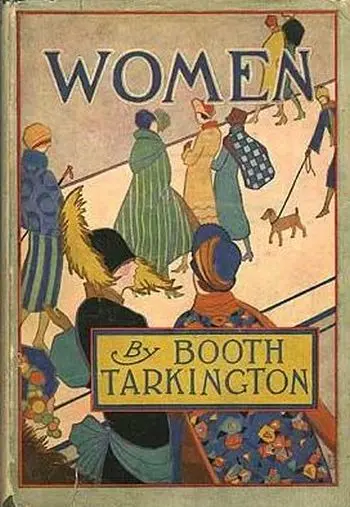
Women
Booth Tarkington
THE CLASSIC COLLECTION · 1919
"Ramsey Milholland" by Booth Tarkington is a novel written in the early 20th century that portrays the life and experiences of a young boy named Ramsey. The story explores themes of childhood, war, and the transition to adolescence, as seen through Ramsey's interactions with his grandfather, peers, and his own developing identity. The narrative unfolds against the backdrop of a small town in America, steeped in the traditions and lessons of the past, particularly centering around the solemnity of war commemorations and the innocence of youth. The opening of the novel introduces us to Ramsey Milholland and his grandfather, who are watching a Decoration Day parade together. Through their conversation, we witness the innocent curiosity of Ramsey as he questions his grandfather about the Civil War, showcasing his youthful bravado and naivety. The grandfather reflects on his war experience, revealing complexities in the perspectives of both soldiers and their valor. This blend of earnest dialogue and comedic interludes sets the stage for Ramsey's journey through childhood, where themes of loyalty, bravery, and the bittersweet nature of growing up begin to emerge. As Ramsey transitions into school life, the narrative foreshadows the trials he will face in navigating friendships and crushes, especially with a girl named Dora Yocum, establishing a groundwork for his development in the story.
Introduction adapted from the source catalogue; source summaries may be automatically generated.
Free to read · English · 40,571 words · No account needed
MAKE TIME FOR A GOOD BOOK
On by default. Untick to stop anonymous reading totals. Each page counts after 10 seconds in view. How this works.
Anonymous counting is on unless you have switched it off.
When Johnnie comes marching home again,
Hurrah! Hurrah!
We'll give him a hearty welcome then,
Hurrah! Hurrah!
The men with the cheers, the boys with shouts,
The ladies they will all turn out,
And we'll all feel gay, when Johnnie comes marching home again!
The old man and the little boy, his grandson, sat together in the shade of the big walnut tree in the front yard, watching the “Decoration Day Parade,” as it passed up the long street; and when the last of the veterans was out of sight the grandfather murmured the words of the tune that came drifting back from the now distant band at the head of the procession.
“Yes, we'll all feel gay when Johnnie comes marching home again,” he finished, with a musing chuckle.
“Did you, Grandpa?” the boy asked.
“Did I what?”
“Did you all feel gay when the army got home?”
“It didn't get home all at once, precisely,” the grandfather explained. “When the war was over I suppose we felt relieved, more than anything else.”
“You didn't feel so gay when the war was, though, I guess!” the boy
ventured.
“I guess we didn't.”
“Were you scared, Grandpa? Were you ever scared the Rebels would win?”
“No. We weren't ever afraid of that.”
“Not any at all?”
“No. Not any at all.”
“Well, weren't you ever scared yourself, Grandpa? I mean when you were
in a battle.”
“Oh, yes; then I was.” The old man laughed. “Scared plenty!”
“I don't see why,” the boy said promptly. “I wouldn't be scared in a
battle.”
“Wouldn't you?”
“'Course not! Grandpa, why don't you march in the Decoration Day Parade? Wouldn't they let you?”
“I'm not able to march any more. Too short of breath and too shaky in the legs and too blind.”
“I wouldn't care,” said the boy. “I'd be in the parade anyway, if I was you. They had some sittin' in carriages, 'way at the tail end; but I wouldn't like that. If I'd been in your place, Grandpa, and they'd let me be in that parade, I'd been right up by the band. Look, Grandpa! Watch me, Grandpa! This is the way I'd be, Grandpa.”
He rose from the garden bench where they sat, and gave a complex imitation of what had most appealed to him as the grandeurs of the procession, his prancing legs simulating those of the horse of the grand marshal, while his upper parts rendered the drums and bugles of the band, as well as the officers and privates of the militia company which had been a feature of the parade. The only thing he left out was the detachment of veterans.
Your reading position is saved on this browser. Take it to another device with a library code. Reading pages adapt to text, rather than matching a printed edition.
Booth Tarkington
Booth Tarkington
Booth Tarkington
Booth Tarkington
BEHIND THE BOOK
This eBook is for the use of anyone anywhere in the United States and most other parts of the world at no cost and with almost no restrictions whatsoever. You may copy it, give it away or re-use it under the terms of the Project Gutenberg License included with this eBook or online at www.gutenberg.org. If you are not located in the United States, you will have to check the laws of the country where you are located before using this eBook. Read the source licence.
The original source file, including credits and licence, is retained by this library. Request an original-format copy at no charge. Please include the book title and Project Gutenberg identifier #2595.
KEEP YOUR CURIOSITY GOING
Coulson Kernahan

Maurice Baring
Frances Wright
Cécile Tormay

Frederic Jesup Stimson

W. H. P. (William Henry Pope) Jarvis