THE CLASSIC COLLECTION✦Eline VereCLASSIC FREE BOOKS
Eline Vere
Louis Couperus
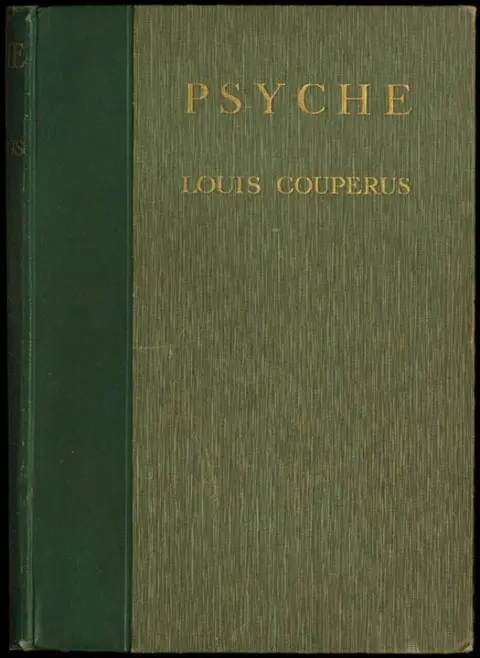
THE CLASSIC COLLECTION · 1908
"Psyche" by Louis Couperus is a novel written in the early 20th century. The story follows Psyche, the youngest princess of the Kingdom of the Past, who possesses delicate wings but yearns for the freedom of flight that eludes her. The opening chapters introduce Psyche's longing for adventure and her interactions with her two sisters, Emeralda and Astra, revealing themes of beauty, longing, and the burdens of royal expectations. At the start of the novel, we find Psyche wandering the vast battlements of her father's castle, peering into the unknown world below and dreaming of the freedom to explore beyond her confines. Despite the castle's towering grandeur and the beauty of her surroundings, she feels profoundly lonely, often escaping from her busy, beautiful sisters who embody the traits she lacks. The narrative weaves a fantastical atmosphere that hints at Psyche's inner turmoil and desires, setting the stage for her eventual encounters with the Chimera, a magnificent winged horse she admires. The opening chapters set up Psyche's conflict between her longing for liberation and the oppressive nature of her royal life, establishing a rich backdrop for her journey of self-discovery and love.
Introduction adapted from the source catalogue; source summaries may be automatically generated.
Free to read · English · 33,682 words · No account needed
MAKE TIME FOR A GOOD BOOK
On by default. Untick to stop anonymous reading totals. Each page counts after 10 seconds in view. How this works.
Anonymous counting is on unless you have switched it off.
The night was pitch dark, when she stood before the awful gate and
asked admittance.
And the guards let her in because she wore a holy dress. The halberdiers took her to the hall, where they slept or kept watch, and invited her to rest.
She sat down on a rude bench, she ate their brown soldier's bread, she drank a drop of their wine.
Then she offered them a ruby for their hospitality and evening meal.
And while they wondered that a pilgrim possessed such a beautiful jewel, she said in her strange voice, weak, tired, and yet commanding:
"I have still more topazes and rubies and dark purple carbuncles. Tell the princess that I have come to do her homage and give her my jewels."
The message was sent to Emeralda, and the queen asked the pilgrim to come. She sent pages to conduct her to the throne where she sat.
And Psyche understood that Emeralda was afraid of treachery, afraid of the approach of soul, and therefore was so surrounded by armed men.
She passed between the pages, up the steps, over passages; then iron gates were opened, and a curtain was drawn aside.
And Psyche stepped into the golden hall of the tower.
There sat Emeralda in the light of a thousand candles, on a throne, under a canopy, surrounded by a great retinue.
"Holy pilgrim!" said Emeralda, "be welcome! You have come to bring
me jewels?"
A cold shiver ran like a serpent over Psyche's limbs, when she heard Emeralda's voice. She had not thought that she would be afraid any more of her proud sister, but now when she saw her and heard her voice, she almost fainted from fear.
For her look was most terrible.
Emeralda had grown older, but she was still beautiful. Yet her beauty was horrible. In the hall, lit up with thousands of candles, a hall of gold and enamel, sat Emeralda like an idol on her throne of agate, in a niche of jasper. There was nothing more human about her; she was like a great jewel. She had become petrified, as it were, into a jewel. Her eyes of sharp emerald looked out from her face, that was ivory white, like chalcedony; from her crown of beryl there hung down her face six red plaits of hair, as inflexible as gold-wire, and stiffly interwoven with emeralds. Her mouth was a split ruby, her teeth glittered like brilliants. Her voice sounded harsh and creaking, like the noise of a machine. Her hands and inflexible fingers, stiff with rings, were opal-white, with blue veins such as run through the opal. Her bosom, opal, chalcedonic, was enclosed in a bodice of violet amethyst--and over the bodice she wore a tunic of precious stones. Her dress was no longer brocade, but composed of jewels. All the arabesque was jewels; her mantle was jewelled so stiffly that the stuff could not bend, but hung straight down from her shoulders like a long jewelled clock.
Your reading position is saved on this browser. Take it to another device with a library code. Reading pages adapt to text, rather than matching a printed edition.
BEHIND THE BOOK
This eBook is for the use of anyone anywhere in the United States and most other parts of the world at no cost and with almost no restrictions whatsoever. You may copy it, give it away or re-use it under the terms of the Project Gutenberg License included with this eBook or online at www.gutenberg.org. If you are not located in the United States, you will have to check the laws of the country where you are located before using this eBook. Read the source licence.
The original source file, including credits and licence, is retained by this library. Request an original-format copy at no charge. Please include the book title and Project Gutenberg identifier #38005.
KEEP YOUR CURIOSITY GOING
Coulson Kernahan

Maurice Baring
Frances Wright
Cécile Tormay
Francis Greenleaf Allinson & Anne C. E. (Anne Crosby Emery) Allinson

Frederic Jesup Stimson