THE CLASSIC COLLECTION✦Duologues and scenes from the novels of Jane AustenCLASSIC FREE BOOKS
Duologues and scenes from the novels of Jane Austen
Rosina Filippi & Jane Austen
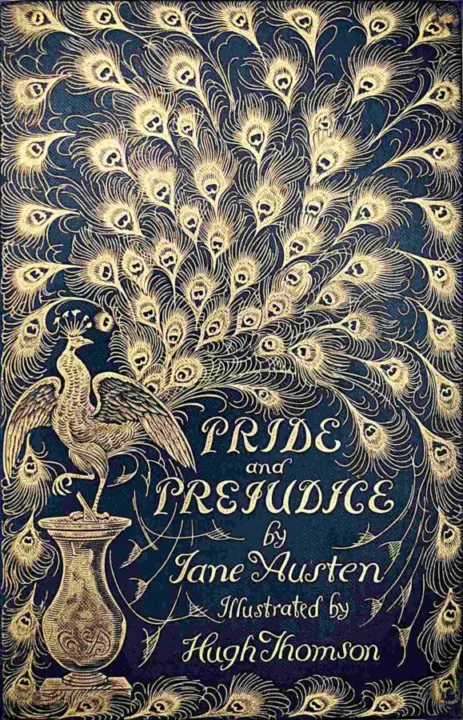
THE CLASSIC COLLECTION · 1813
"Pride and Prejudice" by Jane Austen is a novel published in 1813. It follows Elizabeth Bennet, who must learn to see past first impressions and hasty judgments. With five daughters and an estate that can only pass to male heirs, the Bennet family faces financial pressure to marry well. When wealthy Mr. Darcy arrives in their countryside neighborhood, his pride and Elizabeth's prejudice set the stage for misunderstandings, hidden truths, and unexpected revelations about character and love.
Introduction adapted from the source catalogue; source summaries may be automatically generated.
Free to read · English · 128,111 words · No account needed
MAKE TIME FOR A GOOD BOOK
On by default. Untick to stop anonymous reading totals. Each page counts after 10 seconds in view. How this works.
Anonymous counting is on unless you have switched it off.
The day passed much as the day before had done. Mrs. Hurst and Miss Bingley had spent some hours of the morning with the invalid, who continued, though slowly, to mend; and, in the evening, Elizabeth joined their party in the drawing-room. The loo table, however, did not appear. Mr. Darcy was writing, and Miss Bingley, seated near him, was watching the progress of his letter, and repeatedly calling off his attention by messages to his sister. Mr. Hurst and Mr. Bingley were at piquet, and Mrs. Hurst was observing their game.
Elizabeth took up some needlework, and was sufficiently amused in attending to what passed between Darcy and his companion. The perpetual commendations of the lady either on his hand-writing, or on the evenness of his lines, or on the length of his letter, with the perfect unconcern with which her praises were received, formed a curious dialogue, and was exactly in unison with her opinion of each.
“How delighted Miss Darcy will be to receive such a letter!”
He made no answer.
“You write uncommonly fast.”
“You are mistaken. I write rather slowly.”
“How many letters you must have occasion to write in the course of a year! Letters of business, too! How odious I should think them!”
“It is fortunate, then, that they fall to my lot instead of to yours.”
“Pray tell your sister that I long to see her.”
“I have already told her so once, by your desire.”
“I am afraid you do not like your pen. Let me mend it for you. I mend
pens remarkably well.”
“Thank you--but I always mend my own.”
“How can you contrive to write so even?”
He was silent.
“Tell your sister I am delighted to hear of her improvement on the harp, and pray let her know that I am quite in raptures with her beautiful little design for a table, and I think it infinitely superior to Miss Grantley’s.”
“Will you give me leave to defer your raptures till I write again? At present I have not room to do them justice.”
“Oh, it is of no consequence. I shall see her in January. But do you always write such charming long letters to her, Mr. Darcy?”
“They are generally long; but whether always charming, it is not for me
to determine.”
“It is a rule with me, that a person who can write a long letter with ease cannot write ill.”
“That will not do for a compliment to Darcy, Caroline,” cried her brother, “because he does not write with ease. He studies too much for words of four syllables. Do not you, Darcy?”
“My style of writing is very different from yours.”
Your reading position is saved on this browser. Take it to another device with a library code. Reading pages adapt to text, rather than matching a printed edition.
Rosina Filippi & Jane Austen
Steele, Mrs. MacKaye & Jane Austen
Jane Austen
Jane Austen
BEHIND THE BOOK
This eBook is for the use of anyone anywhere in the United States and most other parts of the world at no cost and with almost no restrictions whatsoever. You may copy it, give it away or re-use it under the terms of the Project Gutenberg License included with this eBook or online at www.gutenberg.org. If you are not located in the United States, you will have to check the laws of the country where you are located before using this eBook. Read the source licence.
The original source file, including credits and licence, is retained by this library. Request an original-format copy at no charge. Please include the book title and Project Gutenberg identifier #1342.
KEEP YOUR CURIOSITY GOING
Coulson Kernahan

Maurice Baring
Frances Wright
Cécile Tormay

Frederic Jesup Stimson

W. H. P. (William Henry Pope) Jarvis