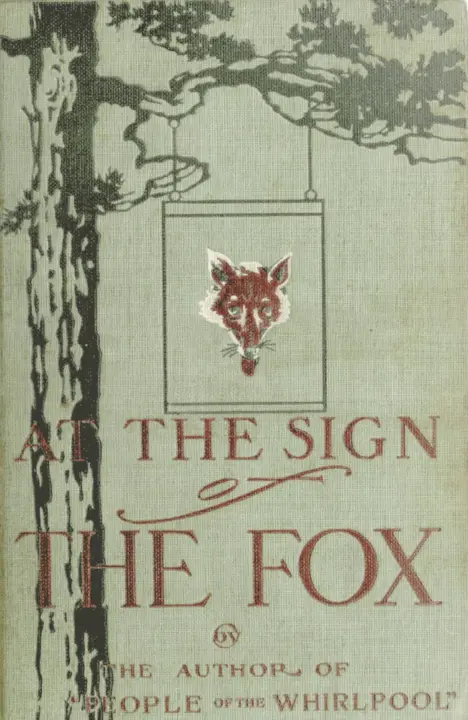
At the Sign of the Fox: A Romance
Mabel Osgood Wright
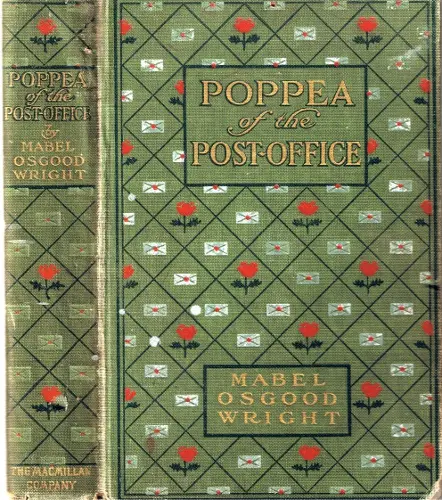
THE CLASSIC COLLECTION · 1909
"Poppea of the Post-Office" by Mabel Osgood Wright is a novel written in the early 20th century. The book unfolds in a small town during a turbulent historical backdrop, specifically the American Civil War. It centers around Oliver Gilbert, the postmaster, who discovers a baby girl abandoned at his post office, prompting a series of events that delve into themes of family, loss, and community. The opening of the novel introduces Oliver Gilbert anxiously awaiting the delayed evening mail amid a snowstorm, highlighting the post office's role as a social hub in the town. As he and the local men discuss the war and its impacts, Gilbert's mundane life is interrupted when a baby is left on his doorstep, wrapped in a buffalo robe. The child, soon dubbed "the lady baby," stirs deep emotions in Gilbert, who reminisces about his own lost daughter. The narrative hints at the mystery behind the child's abandonment, setting the stage for explorations of connection, responsibility, and the longing for companionship amidst the chaos of war.
Introduction adapted from the source catalogue; source summaries may be automatically generated.
Free to read · English · 92,755 words · No account needed
MAKE TIME FOR A GOOD BOOK
On by default. Untick to stop anonymous reading totals. Each page counts after 10 seconds in view. How this works.
Anonymous counting is on unless you have switched it off.
"It is customary to have some others than the parents of the child to stand, as it were, in their place of responsibility in case of need; under these circumstances, surely no one can be more suitable than Mrs. Pegrim and yourself, neighbor Gilbert."
"I couldn't stand for any such strange customs or their results," said Satira, closing her jaws quickly; she had been reading the sentences of promise in the prayer-book that Mr. Latimer had marked. "I couldn't go further than to agree to keep her in clothes, her body clean and well fed, and to say, 'Now I lay me.'"
"As I am in the eye of the law her father, the choice must be outside of me, parson," Gilbert said slowly. "Who is usually asked?"
"Near kin, or friends upon whom one can rely to take a true interest in
the child."
"Then I ask you, Miss Emmy, and you, 'Lisha Potts."
"I'm Baptist born, but no church-member," said Potts, his words forced
out as by some explosive.
"And I am a Channing Unitarian and therefore an arch dissenter," said Miss Emmy; yet at the same time, through the yearning of her eyes, she already had the lady baby in her arms.
Stephen Latimer looked from one to the other, an expression of satisfaction stealing over his features as if he saw some special significance in this strange combination, then whispered to Miss Emmy that upon her devolved the duty of holding the child, who began to fret strangely and pucker her face for tears.
Latimer said something to little Hugh, his music pupil, and going to the melodeon, covered and silent these many years, threw back the lid, coaxed the fitful breath and reluctant keys to speak again, so gently that there was no discord, only a far-away voice as of memory. Then the two, the childish treble and the baritone, sang,
"Saviour, Who Thy flock art feeding
With the shepherd's tenderest care,
All the feeble gently leading,
While the lambs Thy bosom share."
"That was her tune, Mary's, the last she sang to Marygold. How did you know?" asked Gilbert when the hymn ended, his voice sinking unconsciously to an awed whisper.
"I did not, but God does not forget."
Slowly and clearly Latimer read the brief service of private baptism, ending with the sentence, "If thou art not already baptized, Julia Poppea, I baptize thee in the Name of the Father, Son, and Holy Ghost--Amen."
"Is that in the book?" asked Gilbert; "then if it is, there are enough other children named that 'tisn't known about where or when, so that she isn't the only one."
Your reading position is saved on this browser. Take it to another device with a library code. Reading pages adapt to text, rather than matching a printed edition.
Mabel Osgood Wright
Mabel Osgood Wright
Mabel Osgood Wright
Mabel Osgood Wright
BEHIND THE BOOK
This eBook is for the use of anyone anywhere in the United States and most other parts of the world at no cost and with almost no restrictions whatsoever. You may copy it, give it away or re-use it under the terms of the Project Gutenberg License included with this eBook or online at www.gutenberg.org. If you are not located in the United States, you will have to check the laws of the country where you are located before using this eBook. Read the source licence.
The original source file, including credits and licence, is retained by this library. Request an original-format copy at no charge. Please include the book title and Project Gutenberg identifier #41440.
KEEP YOUR CURIOSITY GOING
Cécile Tormay

Moritz Busch
Coulson Kernahan
John L. Ransom

Maurice Baring
Frances Wright