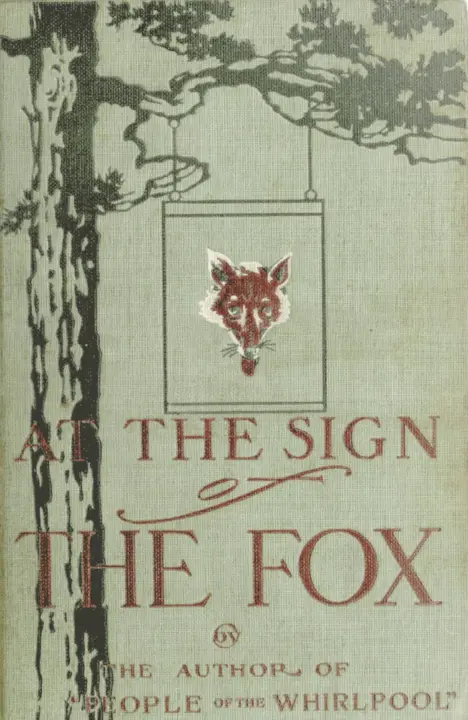
At the Sign of the Fox: A Romance
Mabel Osgood Wright
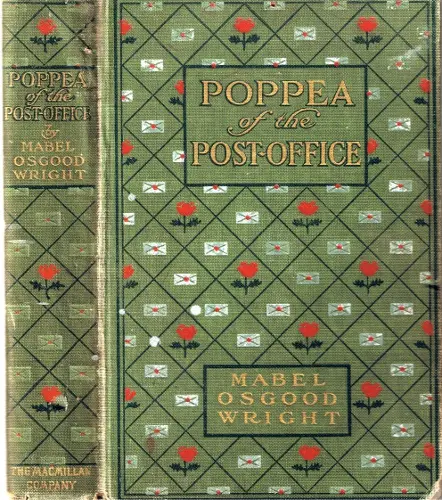
THE CLASSIC COLLECTION · 1909
"Poppea of the Post-Office" by Mabel Osgood Wright is a novel written in the early 20th century. The book unfolds in a small town during a turbulent historical backdrop, specifically the American Civil War. It centers around Oliver Gilbert, the postmaster, who discovers a baby girl abandoned at his post office, prompting a series of events that delve into themes of family, loss, and community. The opening of the novel introduces Oliver Gilbert anxiously awaiting the delayed evening mail amid a snowstorm, highlighting the post office's role as a social hub in the town. As he and the local men discuss the war and its impacts, Gilbert's mundane life is interrupted when a baby is left on his doorstep, wrapped in a buffalo robe. The child, soon dubbed "the lady baby," stirs deep emotions in Gilbert, who reminisces about his own lost daughter. The narrative hints at the mystery behind the child's abandonment, setting the stage for explorations of connection, responsibility, and the longing for companionship amidst the chaos of war.
Introduction adapted from the source catalogue; source summaries may be automatically generated.
Free to read · English · 92,755 words · No account needed
MAKE TIME FOR A GOOD BOOK
On by default. Untick to stop anonymous reading totals. Each page counts after 10 seconds in view. How this works.
Anonymous counting is on unless you have switched it off.
"I think you are right, though I had not looked at it in this way before; I only thought of the amusement of the child's companionship, not the responsibility. Ah, here is little Hugh Oldys."
Presently, Satira Pegrim came in, carrying the lady baby, who would have much preferred to walk, for having acquired this accomplishment all of a sudden, she was loath to relinquish it. Gilbert and 'Lisha Potts followed. It was not until Potts had come quite into the room, crossing to between the centre-table and Mary's melodeon that stood between the windows, that he saw Miss Emmy. All retreat being cut off, he gave a sort of gasp and tried in vain to sink into the depths of his stiff-collared, deep-cuffed Sunday shirt as a turtle disappears into its shell.
The sight of Miss Emmy produced a different effect upon the child, who crowed and stretched her hands toward her new friend, quietly allowed her to fasten the corals upon the plump, bare neck, and afterward tried to look at them with real satisfaction, moving them up and down with her dimpled chin.
For a moment general conversation reigned, then--
"What is she to be named? I cannot wait another moment," cried Miss
Emmy.
"It's writ in this book," said Gilbert, taking a small morocco Bible from the table and showing the fly leaf, upon which, in characters painfully round and precise, was "Julia Poppea Gilbert, from her loving Daddy on her first birthday, April 20, 1862."
For a moment no one stirred, for all realized the final way in which the quiet man had settled the matter of birth and name, giving her an anchorage so far as might be.
Then Stephen Latimer spoke.
"Julia Poppea! Where did you find that name, Gilbert?"
"Julia was my mother's name; seems as if there should be family in it somehow. And the other--I've read it somewhere, and it's got my fancy." (Not a word of the locket.)
"If I remember," said Mr. Latimer, hesitatingly, "it was the name of one of Nero's wives; would not something nearer home be more suitable, neighbor Gilbert? Mary, or a flower name, if you like fanciful things, such as Violet or Rose?"
"No, I've settled to Poppea. I've known of some one called by it that wasn't kin of any Neroes or spoken of in Mr. Plutarch's books. Poppea comes near to being a posy too,--poppies, nice cheerful flowers that, come to recollect, have long lashes to their eyes, just like the lady baby."
When Stephen Latimer explained the need of sponsors according to his ritual, and their duties, Gilbert knit his brows at the unforeseen complication.
Your reading position is saved on this browser. Take it to another device with a library code. Reading pages adapt to text, rather than matching a printed edition.
Mabel Osgood Wright
Mabel Osgood Wright
Mabel Osgood Wright
Mabel Osgood Wright
BEHIND THE BOOK
This eBook is for the use of anyone anywhere in the United States and most other parts of the world at no cost and with almost no restrictions whatsoever. You may copy it, give it away or re-use it under the terms of the Project Gutenberg License included with this eBook or online at www.gutenberg.org. If you are not located in the United States, you will have to check the laws of the country where you are located before using this eBook. Read the source licence.
The original source file, including credits and licence, is retained by this library. Request an original-format copy at no charge. Please include the book title and Project Gutenberg identifier #41440.
KEEP YOUR CURIOSITY GOING
Cécile Tormay

Moritz Busch
Coulson Kernahan
John L. Ransom

Maurice Baring
Frances Wright