THE CLASSIC COLLECTION✦Letters of a Traveller; Or, Notes of Things Seen in Europe and AmericaCLASSIC FREE BOOKS
Letters of a Traveller; Or, Notes of Things Seen in Europe and America
William Cullen Bryant
THE CLASSIC COLLECTION · 1881
"Poetical Works of William Cullen Bryant" by William Cullen Bryant is a collection of poetry written in the mid-19th century. The work encompasses a broad range of themes, including nature, mortality, and the human experience, showcasing Bryant's deep appreciation for the American landscape and philosophical reflections on life. As one of the prominent figures in American poetry, Bryant's writings showcase his skill in evoking emotion and imagery, appealing to readers interested in richly layered verse. At the start of this compilation, the narrative introduces the poet’s familial background, highlighting his lineage tied to early American history, specifically the Mayflower. It reflects on his childhood, marked by a supportive father who encouraged his poetic inclinations despite expectations for him to pursue a medical career. This opening sets the stage for understanding Bryant's evolution as a poet, leading into discussions of his early works, including "Thanatopsis," and his formative experiences that inspired his poetic voice. Each poem is crafted with careful attention to both form and theme, ensuring a resonant exploration of nature’s beauty and humanity's intertwined fate, while the introductory section serves to contextualize Bryant's literary legacy.
Introduction adapted from the source catalogue; source summaries may be automatically generated.
Free to read · English · 93,106 words · No account needed
MAKE TIME FOR A GOOD BOOK
On by default. Untick to stop anonymous reading totals. Each page counts after 10 seconds in view. How this works.
Anonymous counting is on unless you have switched it off.
Las Auroras de Diana, in which the original of these lines is contained, is, notwithstanding it was praised by Lope de Vega, one of the worst of the old Spanish Romances, being a tissue of riddles and affectations, with now and then a little poem of considerable beauty.
Page 160.
The author began this poem in rhyme. The following is the first draught of it as far as he proceeded, in a stanza which he found it convenient to abandon:
A midnight black with clouds is on the sky;
A shadow like the first original night
Folds in, and seems to press me as I lie;
No image meets the vainly wandering sight,
And shot through rolling mists no starlight gleam
Glances on glassy pool or rippling stream.
No ruddy blaze, from dwellings bright within,
Tinges the flowering summits of the grass;
No sound of life is heard, no village din,
Wings rustling overhead or steps that pass,
While, on the breast of Earth at random thrown,
I listen to her mighty voice alone.
A voice of many tones: deep murmurs sent
From waters that in darkness glide away,
From woods unseen by sweeping breezes bent,
From rocky chasms where darkness dwells all day,
And hollows of the invisible hills around,
Blent in one ceaseless, melancholy sound.
O Earth! dost thou, too, sorrow for the past? Mourn'st thou thy childhood's unreturning hours, Thy springs, that briefly bloomed and faded fast, The gentle generations of thy flowers, Thy forests of the elder time, decayed And gone with all the tribes that loved their shade?
Mourn'st thou that first fair time so early lost, The golden age that lives in poets' strains, Ere hail or lightning, whirlwind, flood, or frost Scathed thy green breast, or earthquakes whelmed thy plains, Ere blood upon the shuddering ground was spilt, Or night was haunted by disease and guilt?
Or haply dost thou grieve for those who die? For living things that trod a while thy face, The love of thee and heaven, and now they lie Mixed with the shapeless dust the wild winds chase? I, too, must grieve, for never on thy sphere Shall those bright forms and faces reappear.
Ha! with a deeper and more thrilling tone,
Rises that voice around me: 'tis the cry
Of Earth for guilt and wrong, the eternal moan
Sent to the listening and long-suffering sky,
I hear and tremble, and my heart grows faint,
As midst the night goes up that great complaint.
Page 174.
Where Isar's clay-white rivulets run
Through the dark woods like frighted deer.
Your reading position is saved on this browser. Take it to another device with a library code. Reading pages adapt to text, rather than matching a printed edition.
William Cullen Bryant
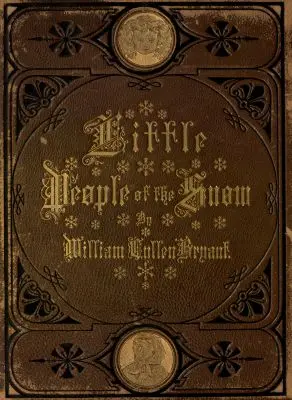
William Cullen Bryant
William Cullen Bryant
William Cullen Bryant
BEHIND THE BOOK
This eBook is for the use of anyone anywhere in the United States and most other parts of the world at no cost and with almost no restrictions whatsoever. You may copy it, give it away or re-use it under the terms of the Project Gutenberg License included with this eBook or online at www.gutenberg.org. If you are not located in the United States, you will have to check the laws of the country where you are located before using this eBook. Read the source licence.
The original source file, including credits and licence, is retained by this library. Request an original-format copy at no charge. Please include the book title and Project Gutenberg identifier #29700.
KEEP YOUR CURIOSITY GOING

Eric Mackay
Edmund Gosse
Sophia Margaretta Hensley
Gilbert Parker
George MacDonald

Elizabeth Bibesco