THE CLASSIC COLLECTION✦Letters of a Traveller; Or, Notes of Things Seen in Europe and AmericaCLASSIC FREE BOOKS
Letters of a Traveller; Or, Notes of Things Seen in Europe and America
William Cullen Bryant
THE CLASSIC COLLECTION · 1881
"Poetical Works of William Cullen Bryant" by William Cullen Bryant is a collection of poetry written in the mid-19th century. The work encompasses a broad range of themes, including nature, mortality, and the human experience, showcasing Bryant's deep appreciation for the American landscape and philosophical reflections on life. As one of the prominent figures in American poetry, Bryant's writings showcase his skill in evoking emotion and imagery, appealing to readers interested in richly layered verse. At the start of this compilation, the narrative introduces the poet’s familial background, highlighting his lineage tied to early American history, specifically the Mayflower. It reflects on his childhood, marked by a supportive father who encouraged his poetic inclinations despite expectations for him to pursue a medical career. This opening sets the stage for understanding Bryant's evolution as a poet, leading into discussions of his early works, including "Thanatopsis," and his formative experiences that inspired his poetic voice. Each poem is crafted with careful attention to both form and theme, ensuring a resonant exploration of nature’s beauty and humanity's intertwined fate, while the introductory section serves to contextualize Bryant's literary legacy.
Introduction adapted from the source catalogue; source summaries may be automatically generated.
Free to read · English · 93,106 words · No account needed
MAKE TIME FOR A GOOD BOOK
On by default. Untick to stop anonymous reading totals. Each page counts after 10 seconds in view. How this works.
Anonymous counting is on unless you have switched it off.
Think not that thou and I
Are here the only worshippers to day,
Beneath this glorious sky,
Mid the soft airs that o'er the meadows play;
These airs, whose breathing stirs
The fresh grass, are our fellow-worshippers.
See, as they pass, they swing
The censers of a thousand flowers that bend
O'er the young herbs of spring,
And the sweet odors like a prayer ascend,
While, passing thence, the breeze
Wakes the grave anthem of the forest-trees.
It is as when, of yore,
The Hebrew poet called the mountain-steeps,
The forests, and the shore
Of ocean, and the mighty mid-sea deeps,
And stormy wind, to raise
A universal symphony of praise.
For, lo! the hills around,
Gay in their early green, give silent thanks;
And, with a joyous sound,
The streamlet's huddling waters kiss their banks,
And, from its sunny nooks,
To heaven, with grateful smiles, the valley looks.
The blossomed apple-tree,
Among its flowery tufts, on every spray,
Offers the wandering bee
A fragrant chapel for his matin-lay;
And a soft bass is heard
From the quick pinions of the humming-bird.
Haply--for who can tell?--
Aerial beings, from the world unseen,
Haunting the sunny dell,
Or slowly floating o'er the flowery green,
May join our worship here,
With harmonies too fine for mortal ear.
Page 11.
In this poem, written and first printed in the year 1821, the author has endeavored, from a survey of the past ages of the world, and of the successive advances of mankind in knowledge, virtue, and happiness, to justify and confirm the hopes of the philanthropist for the future destinies of the human race.
Page 34.
The first half of this fragment may seem to the reader borrowed from the essay on Rural Funerals in the fourth number of "The Sketch-book." The lines were, however, written more than a year before that number appeared. The poem, unfinished as it is, would hardly have been admitted into this collection, had not the author been unwilling to lose what had the honor of resembling so beautiful a composition.
Page 43.
This poem, written about the time of the horrible butchery of the Sciotes by the Turks, in 1824, has been more fortunate than most poetical predictions. The independence of the Greek nation which it foretold, has come to pass, and the massacre, by inspiring a deeper detestation of their oppressors, did much to promote that event.
Page 44.
Her maiden veil, her own black hair, etc.
"The unmarried females have a modest falling down of the hair over the
eyes."--ELIOT.
Page 63.
Your reading position is saved on this browser. Take it to another device with a library code. Reading pages adapt to text, rather than matching a printed edition.
William Cullen Bryant
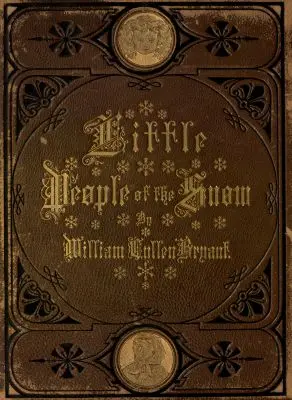
William Cullen Bryant
William Cullen Bryant
William Cullen Bryant
BEHIND THE BOOK
This eBook is for the use of anyone anywhere in the United States and most other parts of the world at no cost and with almost no restrictions whatsoever. You may copy it, give it away or re-use it under the terms of the Project Gutenberg License included with this eBook or online at www.gutenberg.org. If you are not located in the United States, you will have to check the laws of the country where you are located before using this eBook. Read the source licence.
The original source file, including credits and licence, is retained by this library. Request an original-format copy at no charge. Please include the book title and Project Gutenberg identifier #29700.
KEEP YOUR CURIOSITY GOING

Eric Mackay
Edmund Gosse
Sophia Margaretta Hensley
Gilbert Parker
George MacDonald

Elizabeth Bibesco