THE CLASSIC COLLECTION✦Letters of a Traveller; Or, Notes of Things Seen in Europe and AmericaCLASSIC FREE BOOKS
Letters of a Traveller; Or, Notes of Things Seen in Europe and America
William Cullen Bryant
THE CLASSIC COLLECTION · 1881
"Poetical Works of William Cullen Bryant" by William Cullen Bryant is a collection of poetry written in the mid-19th century. The work encompasses a broad range of themes, including nature, mortality, and the human experience, showcasing Bryant's deep appreciation for the American landscape and philosophical reflections on life. As one of the prominent figures in American poetry, Bryant's writings showcase his skill in evoking emotion and imagery, appealing to readers interested in richly layered verse. At the start of this compilation, the narrative introduces the poet’s familial background, highlighting his lineage tied to early American history, specifically the Mayflower. It reflects on his childhood, marked by a supportive father who encouraged his poetic inclinations despite expectations for him to pursue a medical career. This opening sets the stage for understanding Bryant's evolution as a poet, leading into discussions of his early works, including "Thanatopsis," and his formative experiences that inspired his poetic voice. Each poem is crafted with careful attention to both form and theme, ensuring a resonant exploration of nature’s beauty and humanity's intertwined fate, while the introductory section serves to contextualize Bryant's literary legacy.
Introduction adapted from the source catalogue; source summaries may be automatically generated.
Free to read · English · 93,106 words · No account needed
MAKE TIME FOR A GOOD BOOK
On by default. Untick to stop anonymous reading totals. Each page counts after 10 seconds in view. How this works.
Anonymous counting is on unless you have switched it off.
The breath of Spring-time at this twilight hour
Comes through the gathering glooms,
And bears the stolen sweets of many a flower
Into my silent rooms.
Where hast thou wandered, gentle gale, to find
The perfumes thou dost bring?
By brooks, that through the wakening meadows wind,
Or brink of rushy spring?
Or woodside, where, in little companies,
The early wild-flowers rise,
Or sheltered lawn, where, mid encircling trees,
May's warmest sunshine lies?
Now sleeps the humming-bird, that, in the sun,
Wandered from bloom to bloom;
Now, too, the weary bee, his day's work done,
Rests in his waxen room.
Now every hovering insect to his place
Beneath the leaves hath flown;
And, through the long night hours, the flowery race
Are left to thee alone.
O'er the pale blossoms of the sassafras
And o'er the spice-bush spray,
Among the opening buds, thy breathings pass,
And come embalmed away.
Yet there is sadness in thy soft caress,
Wind of the blooming year!
The gentle presence, that was wont to bless
Thy coming, is not here.
Go, then; and yet I bid thee not repair,
Thy gathered sweets to shed,
Where pine and willow, in the evening air,
Sigh o'er the buried dead.
Pass on to homes where cheerful voices sound,
And cheerful looks are cast,
And where thou wakest, in thine airy round,
No sorrow of the past.
Refresh the languid student pausing o'er
The learned page apart,
And he shall turn to con his task once more
With an encouraged heart.
Bear thou a promise, from the fragrant sward,
To him who tills the land,
Of springing harvests that shall yet reward
The labors of his hand.
And whisper, everywhere, that Earth renews
Her beautiful array,
Amid the darkness and the gathering dews,
For the return of day.
'Twas when the earth in summer glory lay,
We bore thee to thy grave; a sudden cloud
Had shed its shower and passed, and every spray
And tender herb with pearly moisture bowed.
How laughed the fields, and how, before our door, Danced the bright waters!--from his perch on high The hang-bird sang his ditty o'er and o'er, And the song-sparrow from the shrubberies nigh.
Yet was the home where thou wert lying dead
Mournfully still, save when, at times, was heard,
From room to room, some softly-moving tread,
Or murmur of some softly-uttered word.
Feared they to break thy slumber? As we threw A look on that bright bay and glorious shore, Our hearts were wrung with anguish, for we knew Those sleeping eyes would look on them no more.
Your reading position is saved on this browser. Take it to another device with a library code. Reading pages adapt to text, rather than matching a printed edition.
William Cullen Bryant
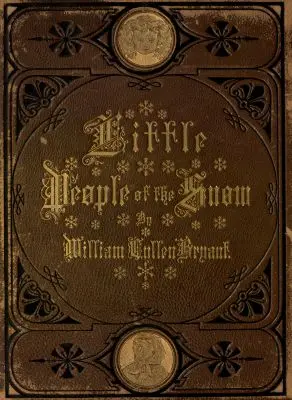
William Cullen Bryant
William Cullen Bryant
William Cullen Bryant
BEHIND THE BOOK
This eBook is for the use of anyone anywhere in the United States and most other parts of the world at no cost and with almost no restrictions whatsoever. You may copy it, give it away or re-use it under the terms of the Project Gutenberg License included with this eBook or online at www.gutenberg.org. If you are not located in the United States, you will have to check the laws of the country where you are located before using this eBook. Read the source licence.
The original source file, including credits and licence, is retained by this library. Request an original-format copy at no charge. Please include the book title and Project Gutenberg identifier #29700.
KEEP YOUR CURIOSITY GOING

Eric Mackay
Edmund Gosse
Sophia Margaretta Hensley
Gilbert Parker
George MacDonald

Elizabeth Bibesco