THE CLASSIC COLLECTION✦Letters of a Traveller; Or, Notes of Things Seen in Europe and AmericaCLASSIC FREE BOOKS
Letters of a Traveller; Or, Notes of Things Seen in Europe and America
William Cullen Bryant
THE CLASSIC COLLECTION · 1881
"Poetical Works of William Cullen Bryant" by William Cullen Bryant is a collection of poetry written in the mid-19th century. The work encompasses a broad range of themes, including nature, mortality, and the human experience, showcasing Bryant's deep appreciation for the American landscape and philosophical reflections on life. As one of the prominent figures in American poetry, Bryant's writings showcase his skill in evoking emotion and imagery, appealing to readers interested in richly layered verse. At the start of this compilation, the narrative introduces the poet’s familial background, highlighting his lineage tied to early American history, specifically the Mayflower. It reflects on his childhood, marked by a supportive father who encouraged his poetic inclinations despite expectations for him to pursue a medical career. This opening sets the stage for understanding Bryant's evolution as a poet, leading into discussions of his early works, including "Thanatopsis," and his formative experiences that inspired his poetic voice. Each poem is crafted with careful attention to both form and theme, ensuring a resonant exploration of nature’s beauty and humanity's intertwined fate, while the introductory section serves to contextualize Bryant's literary legacy.
Introduction adapted from the source catalogue; source summaries may be automatically generated.
Free to read · English · 93,106 words · No account needed
MAKE TIME FOR A GOOD BOOK
On by default. Untick to stop anonymous reading totals. Each page counts after 10 seconds in view. How this works.
Anonymous counting is on unless you have switched it off.
And enters cities murmuring with the feet
Of multitudes, and wanders forth again,
And joins the climes of frost to climes of heat,
Binds East to West, and marries main to main,
Nor stays till at the long-resounding shore
Of the great deep, where paths are known no more.
Oh, mighty instinct, that dost thus unite Earth's neighborhoods and tribes with friendly bands, What guilt is theirs who, in their greed or spite, Undo thy holy work with violent hands, And post their squadrons, nursed in war's grim trade, To bar the ways for mutual succor made!
I hear, from many a little throat,
A warble interrupted long;
I hear the robin's flute-like note,
The bluebird's slenderer song.
Brown meadows and the russet hill,
Not yet the haunt of grazing herds,
And thickets by the glimmering rill,
Are all alive with birds.
Oh choir of spring, why come so soon?
On leafless grove and herbless lawn
Warm lie the yellow beams of moon;
Yet winter is not gone.
For frost shall sheet the pools again;
Again the blustering East shall blow--
Whirl a white tempest through the glen,
And load the pines with snow.
Yet, haply, from the region where,
Waked by an earlier spring than here,
The blossomed wild-plum scents the air,
Ye come in haste and fear.
For there is heard the bugle-blast,
The booming gun, the jarring drum,
And on their chargers, spurring fast,
Armed warriors go and come.
There mighty hosts have pitched the camp
In valleys that were yours till then,
And Earth has shuddered to the tramp
Of half a million men!
In groves where once ye used to sing,
In orchards where ye had your birth,
A thousand glittering axes swing
To smite the trees to earth.
Ye love the fields by ploughmen trod;
But there, when sprouts the beechen spray,
The soldier only breaks the sod
To hide the slain away.
Stay, then, beneath our ruder sky;
Heed not the storm-clouds rising black,
Nor yelling winds that with them fly;
Nor let them fright you back,--
Back to the stifling battle-cloud,
To burning towns that blot the day,
And trains of mounting dust that shroud
The armies on their way.
Stay, for a tint of green shall creep
Soon o'er the orchard's grassy floor,
And from its bed the crocus peep
Beside the housewife's door.
Here build, and dread no harsher sound,
To scare you from the sheltering tree,
Than winds that stir the branches round,
And murmur of the bee.
And we will pray that, ere again
The flowers of autumn bloom and die,
Our generals and their strong-armed men
May lay their weapons by.
Your reading position is saved on this browser. Take it to another device with a library code. Reading pages adapt to text, rather than matching a printed edition.
William Cullen Bryant
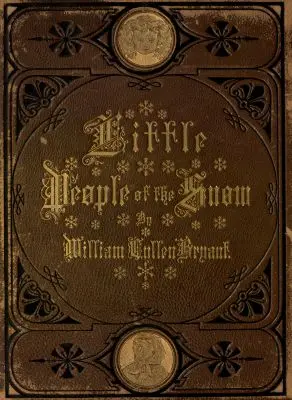
William Cullen Bryant
William Cullen Bryant
William Cullen Bryant
BEHIND THE BOOK
This eBook is for the use of anyone anywhere in the United States and most other parts of the world at no cost and with almost no restrictions whatsoever. You may copy it, give it away or re-use it under the terms of the Project Gutenberg License included with this eBook or online at www.gutenberg.org. If you are not located in the United States, you will have to check the laws of the country where you are located before using this eBook. Read the source licence.
The original source file, including credits and licence, is retained by this library. Request an original-format copy at no charge. Please include the book title and Project Gutenberg identifier #29700.
KEEP YOUR CURIOSITY GOING

Eric Mackay
Edmund Gosse
Sophia Margaretta Hensley
Gilbert Parker
George MacDonald

Elizabeth Bibesco