THE CLASSIC COLLECTION✦Letters of a Traveller; Or, Notes of Things Seen in Europe and AmericaCLASSIC FREE BOOKS
Letters of a Traveller; Or, Notes of Things Seen in Europe and America
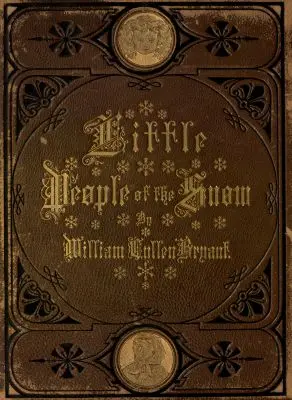
William Cullen Bryant
THE CLASSIC COLLECTION · 1881
"Poetical Works of William Cullen Bryant" by William Cullen Bryant is a collection of poetry written in the mid-19th century. The work encompasses a broad range of themes, including nature, mortality, and the human experience, showcasing Bryant's deep appreciation for the American landscape and philosophical reflections on life. As one of the prominent figures in American poetry, Bryant's writings showcase his skill in evoking emotion and imagery, appealing to readers interested in richly layered verse. At the start of this compilation, the narrative introduces the poet’s familial background, highlighting his lineage tied to early American history, specifically the Mayflower. It reflects on his childhood, marked by a supportive father who encouraged his poetic inclinations despite expectations for him to pursue a medical career. This opening sets the stage for understanding Bryant's evolution as a poet, leading into discussions of his early works, including "Thanatopsis," and his formative experiences that inspired his poetic voice. Each poem is crafted with careful attention to both form and theme, ensuring a resonant exploration of nature’s beauty and humanity's intertwined fate, while the introductory section serves to contextualize Bryant's literary legacy.
Introduction adapted from the source catalogue; source summaries may be automatically generated.
Free to read · English · 93,106 words · No account needed
MAKE TIME FOR A GOOD BOOK
On by default. Untick to stop anonymous reading totals. Each page counts after 10 seconds in view. How this works.
Anonymous counting is on unless you have switched it off.
The moon is at her full, and, riding high,
Floods the calm fields with light;
The airs that hover in the summer-sky
Are all asleep to-night.
There comes no voice from the great woodlands round
That murmured all the day;
Beneath the shadow of their boughs the ground
Is not more still than they.
But ever heaves and moans the restless Deep;
His rising tides I hear,
Afar I see the glimmering billows leap;
I see them breaking near.
Each wave springs upward, climbing toward the fair
Pure light that sits on high--
Springs eagerly, and faintly sinks, to where
The mother-waters lie.
Upward again it swells; the moonbeams show
Again its glimmering crest;
Again it feels the fatal weight below,
And sinks, but not to rest.
Again and yet again; until the Deep
Recalls his brood of waves;
And, with a sullen moan, abashed, they creep
Back to his inner caves.
Brief respite! they shall rush from that recess
With noise and tumult soon,
And fling themselves, with unavailing stress,
Up toward the placid moon.
O restless Sea, that, in thy prison here,
Dost struggle and complain;
Through the slow centuries yearning to be near
To that fair orb in vain;
The glorious source of light and heat must warm
Thy billows from on high,
And change them to the cloudy trains that form
The curtain of the sky.
Then only may they leave the waste of brine
In which they welter here,
And rise above the hills of earth, and shine
In a serener sphere.
Voices from the mountains speak,
Apennines to Alps reply;
Vale to vale and peak to peak
Toss an old-remembered cry:
"Italy
Shall be free!"
Such the mighty shout that fills
All the passes of her hills.
All the old Italian lakes
Quiver at that quickening word;
Como with a thrill awakes;
Garda to her depths is stirred;
Mid the steeps
Where he sleeps,
Dreaming of the elder years,
Startled Thrasymenus hears.
Sweeping Arno, swelling Po,
Murmur freedom to their meads.
Tiber swift and Liris slow
Send strange whispers from their reeds.
"Italy
Shall be free!"
Sing the glittering brooks that slide,
Toward the sea, from Etna's side.
Long ago was Gracchus slain;
Brutus perished long ago;
Yet the living roots remain
Whence the shoots of greatness grow;
Yet again,
Godlike men,
Sprung from that heroic stem,
Call the land to rise with them.
They who haunt the swarming street,
They who chase the mountain-boar,
Or, where cliff and billow meet,
Prune the vine or pull the oar,
With a stroke
Break their yoke;
Slaves but yestereve were they--
Freemen with the dawning day.
Your reading position is saved on this browser. Take it to another device with a library code. Reading pages adapt to text, rather than matching a printed edition.
William Cullen Bryant
William Cullen Bryant
William Cullen Bryant
William Cullen Bryant
BEHIND THE BOOK
This eBook is for the use of anyone anywhere in the United States and most other parts of the world at no cost and with almost no restrictions whatsoever. You may copy it, give it away or re-use it under the terms of the Project Gutenberg License included with this eBook or online at www.gutenberg.org. If you are not located in the United States, you will have to check the laws of the country where you are located before using this eBook. Read the source licence.
The original source file, including credits and licence, is retained by this library. Request an original-format copy at no charge. Please include the book title and Project Gutenberg identifier #29700.
KEEP YOUR CURIOSITY GOING

Eric Mackay
Edmund Gosse
Sophia Margaretta Hensley
Gilbert Parker
George MacDonald

Elizabeth Bibesco