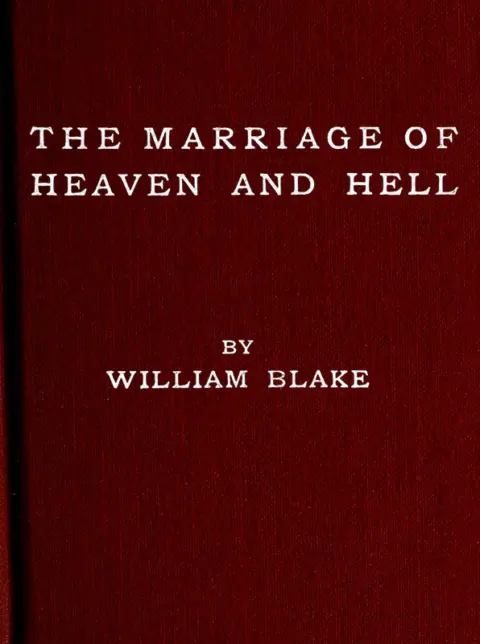
The Marriage of Heaven and Hell
William Blake
THE CLASSIC COLLECTION · 1783
Poems by William Blake. Explore this classic work in a free online edition. Subjects include English poetry -- 19th century; English poetry -- 18th century. Read the locally hosted text below, adjust the reading display, and continue where you left off.
Introduction adapted from the source catalogue; source summaries may be automatically generated.
Free to read · English · 26,448 words · No account needed
MAKE TIME FOR A GOOD BOOK
On by default. Untick to stop anonymous reading totals. Each page counts after 10 seconds in view. How this works.
Anonymous counting is on unless you have switched it off.
“Sweet sleep, come to me,
Underneath this tree;
Do father, mother weep?
Where can Lyca sleep?
“Lost in desert wild
Is your little child.
How can Lyca sleep
If her mother weep?
“If her heart does ache,
Then let Lyca wake;
If my mother sleep,
Lyca shall not weep.
“Frowning, frowning night,
O’er this desert bright
Let thy moon arise,
While I close my eyes.”
Sleeping Lyca lay
While the beasts of prey,
Come from caverns deep,
Viewed the maid asleep.
The kingly lion stood,
And the virgin viewed:
Then he gambolled round
O’er the hallowed ground.
Leopards, tigers, play
Round her as she lay;
While the lion old
Bowed his mane of gold,
And her bosom lick,
And upon her neck,
From his eyes of flame,
Ruby tears there came;
While the lioness
Loosed her slender dress,
And naked they conveyed
To caves the sleeping maid.
The Little Girl Found
All the night in woe
Lyca’s parents go
Over valleys deep,
While the deserts weep.
Tired and woe-begone,
Hoarse with making moan,
Arm in arm, seven days
They traced the desert ways.
Seven nights they sleep
Among shadows deep,
And dream they see their child
Starved in desert wild.
Pale through pathless ways
The fancied image strays,
Famished, weeping, weak,
With hollow piteous shriek.
Rising from unrest,
The trembling woman pressed
With feet of weary woe;
She could no further go.
In his arms he bore
Her, armed with sorrow sore;
Till before their way
A couching lion lay.
Turning back was vain:
Soon his heavy mane
Bore them to the ground.
Then he stalked around,
Smelling to his prey;
But their fears allay
When he licks their hands,
And silent by them stands.
They look upon his eyes,
Filled with deep surprise;
And wondering behold
A spirit armed in gold.
On his head a crown,
On his shoulders down
Flowed his golden hair.
Gone was all their care.
“Follow me,” he said;
“Weep not for the maid;
In my palace deep,
Lyca lies asleep.”
Then they followed
Where the vision led,
And saw their sleeping child
Among tigers wild.
To this day they dwell
In a lonely dell,
Nor fear the wolvish howl
Nor the lion’s growl.
Nurse’s Song
When the voices of children are heard on the green,
And whisperings are in the dale,
The days of my youth rise fresh in my mind,
My face turns green and pale.
Then come home, my children, the sun is gone down, And the dews of night arise; Your spring and your day are wasted in play, And your winter and night in disguise.
The Sick Rose
Your reading position is saved on this browser. Take it to another device with a library code. Reading pages adapt to text, rather than matching a printed edition.
William Blake
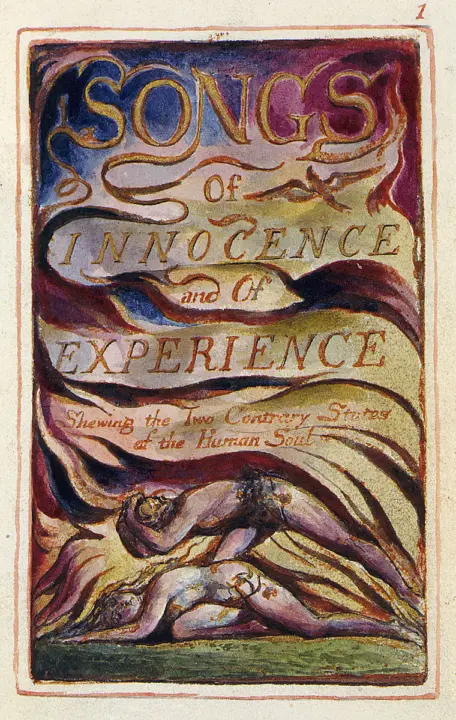
William Blake
BEHIND THE BOOK
This eBook is for the use of anyone anywhere in the United States and most other parts of the world at no cost and with almost no restrictions whatsoever. You may copy it, give it away or re-use it under the terms of the Project Gutenberg License included with this eBook or online at www.gutenberg.org. If you are not located in the United States, you will have to check the laws of the country where you are located before using this eBook. Read the source licence.
The original source file, including credits and licence, is retained by this library. Request an original-format copy at no charge. Please include the book title and Project Gutenberg identifier #79363.
KEEP YOUR CURIOSITY GOING

Eric Mackay
Edmund Gosse
Sophia Margaretta Hensley
Gilbert Parker
George MacDonald

Elizabeth Bibesco