THE CLASSIC COLLECTION✦An outlaw’s diary: the CommuneCLASSIC FREE BOOKS
An outlaw’s diary: the Commune
Cécile Tormay
THE CLASSIC COLLECTION · 1906
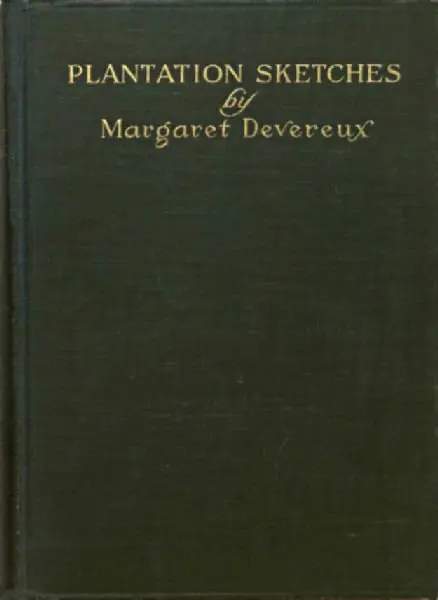
"Plantation Sketches" by Margaret Devereux is a collection of reminiscences detailing Southern life and culture, written in the early 20th century. The work offers a nostalgic glimpse into the lives of plantation families, focusing on both the relationships within these communities and their interactions with the enslaved population that constituted a significant aspect of that world. The author presents vivid illustrations of the customs, daily activities, and in particular the characters that were part of her upbringing on the plantations in North Carolina. The opening of "Plantation Sketches" frames the author's purpose, explaining that her sketches were originally conceived as stories for her grandchildren, aiming to preserve a true picture of Old South life, away from simplified narratives of cruelty and despair often associated with slavery. The text features the author's detailed memories of her family and their plantation lifestyle, describing her impressions of the environment, her experiences as a housewife, and the relationships with her household staff, including humorous anecdotes and poignant observations. Through her reflections, Devereux aims to provide her descendants an understanding of their heritage, highlighting both the idyllic and challenging aspects of life on the plantation.
Introduction adapted from the source catalogue; source summaries may be automatically generated.
Free to read · English · 30,959 words · No account needed
MAKE TIME FOR A GOOD BOOK
On by default. Untick to stop anonymous reading totals. Each page counts after 10 seconds in view. How this works.
Anonymous counting is on unless you have switched it off.
Harry, standing by, was feeling rather wrought up, while the Squire, also somewhat excited, continued:--
"I will give you a house in the free settlement, out in the slashes, and your young master will always take care of you."
Another rather disconcerting pause was broken by a second "Yes, Marster;" and the old man, picking up his hat, shuffled out.
The Squire glanced at Harry with a mischievous twinkle in his eyes, but the boy's face expressed such blank disappointment that he took pity upon him, and, picking up a newspaper, dismissed the matter.
Upon the following evening a low knock was heard at the study door, then a fumbling at the latch, and old Jerry once more stood upon the threshold.
"Well, old man, what is it now?" his master asked kindly. "Come, out with it!" he repeated, as the old man, with a feeble grin, stood helplessly fingering his hat. "What's the matter?"
And old Jerry, slowly scratching his head, made answer:--
"Thank, Marster; I's come to ax Marster what I done to 'splease Mars?"
"Displease me! Why, what has put that notion into your head?"
"I dunno, Mars, what I's done, but I's skeared Mars mout be set agin me, 'cause he say he gwine sen' me offen de plantation."
Then Harry explained that he was to be set free, and eagerly enlarged upon the delights of liberty. The hog-feeder listened, but was unmoved: he obstinately declined to accept his freedom, his plea being that "the varments" would "'stroy up his creeturs" if he were not there to look after them.
"De black sow, she got a fine litter o' pigs now, an' de foxes is
a'ter 'em de blessed time."
After this no more could be urged, and Jerry, scraping his foot, went out with a mind full of content.
[2] As this is a true tale of an old-time plantation negro, I think it but fair to state that he had a "chist" full of good clothes; but, with a parsimony not uncommon among his race, he preferred to protect his feet with old bits of blanket, instead of using the excellent home-knit woollen socks which lay snugly hidden away in his "chist;" and it was the same feeling which caused him to wrap himself now into an old garment made up of patches, although three good ones lay snugly folded away in the same chest.
Your reading position is saved on this browser. Take it to another device with a library code. Reading pages adapt to text, rather than matching a printed edition.
BEHIND THE BOOK
This eBook is for the use of anyone anywhere in the United States and most other parts of the world at no cost and with almost no restrictions whatsoever. You may copy it, give it away or re-use it under the terms of the Project Gutenberg License included with this eBook or online at www.gutenberg.org. If you are not located in the United States, you will have to check the laws of the country where you are located before using this eBook. Read the source licence.
The original source file, including credits and licence, is retained by this library. Request an original-format copy at no charge. Please include the book title and Project Gutenberg identifier #22673.
KEEP YOUR CURIOSITY GOING
Cécile Tormay

Moritz Busch
John L. Ransom
Frances Wright
Cécile Tormay

Mabel Potter Daggett