THE CLASSIC COLLECTION✦An outlaw’s diary: the CommuneCLASSIC FREE BOOKS
An outlaw’s diary: the Commune
Cécile Tormay
THE CLASSIC COLLECTION · 1906
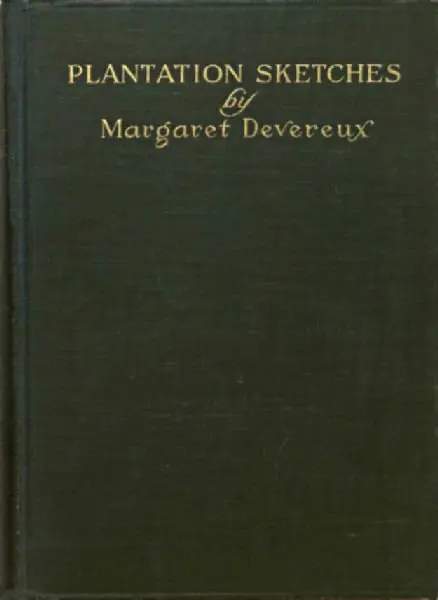
"Plantation Sketches" by Margaret Devereux is a collection of reminiscences detailing Southern life and culture, written in the early 20th century. The work offers a nostalgic glimpse into the lives of plantation families, focusing on both the relationships within these communities and their interactions with the enslaved population that constituted a significant aspect of that world. The author presents vivid illustrations of the customs, daily activities, and in particular the characters that were part of her upbringing on the plantations in North Carolina. The opening of "Plantation Sketches" frames the author's purpose, explaining that her sketches were originally conceived as stories for her grandchildren, aiming to preserve a true picture of Old South life, away from simplified narratives of cruelty and despair often associated with slavery. The text features the author's detailed memories of her family and their plantation lifestyle, describing her impressions of the environment, her experiences as a housewife, and the relationships with her household staff, including humorous anecdotes and poignant observations. Through her reflections, Devereux aims to provide her descendants an understanding of their heritage, highlighting both the idyllic and challenging aspects of life on the plantation.
Introduction adapted from the source catalogue; source summaries may be automatically generated.
Free to read · English · 30,959 words · No account needed
MAKE TIME FOR A GOOD BOOK
On by default. Untick to stop anonymous reading totals. Each page counts after 10 seconds in view. How this works.
Anonymous counting is on unless you have switched it off.
Dear Uncle,--This afternoon, while hunting in the Vine Ridge woods, Phil's gun went off and wounded him in the side. I was at my wit's end what to do, when I heard the Chieftain blow up the river; so I tore off to the levee, where I was lucky enough to succeed in attracting Captain Smith's attention, who sent off a boat, and we managed to get Phil on board. I wanted Smith to put back to our landing, but he thought the current too strong; and on the whole, I believe it is better for Phil to keep on to Hilton, as it would be impossible to get a doctor at home in this high water. Phil's hurt is not very serious, I hope.
Your dutiful nephew,
Harry Brace.
On the day succeeding Harry's homecoming, he entered the room
designated the "study," in which the Squire was usually to be found
when indoors.
The room probably owed the name of "study" to a set of Farmer's Magazines which, in all the dignity of expensive bindings, divided the shelf with a rather damaged edition of "The Turf Register," a "Farrier's Manual," a brace of antiquated medical works, and a stack of newspapers. Fishing tackle, a cupping apparatus, a set of engineering instruments, half a dozen ears of extra fine seed corn, medicine scales, and a huge cotton stock filled the rest of the bookcase.
The Squire, seated before a blazing fire, in the lazy comforts of convalescence, with pipe and tobacco at his elbow, presented a not unenviable picture when contrasted with the wintry grayness outside.
Harry, who had been greatly touched by the old hog-feeder's affectionate fidelity, now sought his uncle in order to beg that as a recompense he might be given his freedom.
"Freedom!" exclaimed the Squire; "why, confound it, my dear boy, what would he do with freedom, if he had it?"
"I think he would like it," Harry murmured, a little sheepishly.
"Why, he's as free as air now; a deuced sight freer than I am."
Nevertheless Harry gained his point, and though the Squire growled, "You young jackanapes, you've robbed me of the best hog-feeder on the river," still he was evidently pleased, and in the evening old Jerry was sent for.
When, in answer to the summons, Jerry presented himself at the study
door, his master said to him, with a stateliness fitted to the
occasion:--
"Jerry, I have sent for you to tell you that your young master here, as a reward for your fidelity, desires to give you your freedom."
Here the Squire paused, and Jerry, not knowing what else to say, said,
"Yes, Marster."
Your reading position is saved on this browser. Take it to another device with a library code. Reading pages adapt to text, rather than matching a printed edition.
BEHIND THE BOOK
This eBook is for the use of anyone anywhere in the United States and most other parts of the world at no cost and with almost no restrictions whatsoever. You may copy it, give it away or re-use it under the terms of the Project Gutenberg License included with this eBook or online at www.gutenberg.org. If you are not located in the United States, you will have to check the laws of the country where you are located before using this eBook. Read the source licence.
The original source file, including credits and licence, is retained by this library. Request an original-format copy at no charge. Please include the book title and Project Gutenberg identifier #22673.
KEEP YOUR CURIOSITY GOING
Cécile Tormay

Moritz Busch
John L. Ransom
Frances Wright
Cécile Tormay

Mabel Potter Daggett