THE CLASSIC COLLECTION✦Half a dozen boysCLASSIC FREE BOOKS
Half a dozen boys
Anna Chapin Ray
THE CLASSIC COLLECTION · 1900
"Phebe, Her Profession" by Anna Chapin Ray is a novel written in the early 20th century. The story centers around the character Phebe McAlister, who has just returned home after spending two years in Europe. Phebe's experience abroad has spurred her desire to pursue a career in medicine, seeking a purpose beyond domestic life. The narrative explores her challenges in balancing societal expectations with her ambition, while also incorporating family dynamics and relationships with characters such as Theodora, her sister, and Gifford, a charming young man involved in the arts. At the start of the novel, readers are introduced to a curious young boy named Mac, who engages in a whimsical dialogue with Gifford Barrett, the stranger he meets. Their conversation reveals aspects of childhood innocence, mischief, and the complexities of parental relationships, all while establishing a light, humorous tone. Alongside this interaction, fragments of Phebe’s life are presented, hinting at her imminent return and the life-altering decision she is about to make in choosing the medical profession over pursuing traditional gender roles. Through these interactions and introductions, the novel sets the stage for a deeper exploration of ambition, identity, and societal conventions against the backdrop of early 20th-century America.
Introduction adapted from the source catalogue; source summaries may be automatically generated.
Free to read · English · 52,108 words · No account needed
MAKE TIME FOR A GOOD BOOK
On by default. Untick to stop anonymous reading totals. Each page counts after 10 seconds in view. How this works.
Anonymous counting is on unless you have switched it off.
Two willow chairs were swaying to and fro in the gathering dusk, and two voices were blended in a low murmur. Theodora and Billy were exchanging the confidences born of a long week of separation while business had called Mr. Farrington to New York.
"How comes on the book, Ted?"
She shook her head.
"It doesn't come."
"Does Cicely's being here disturb you?"
"No, not really; not nearly so much as Melchisedek. In an unguarded moment, I asked him, one day, to come and help auntie write books. Since then he rushes from his breakfast straight to my room and capers madly on the threshold till I appear."
"And then?"
"Then he insists on lying in my lap and resting his head on my arm, and he snarls, every time I joggle him. It isn't helpful or inspiring, Billy."
"No; I should say not. What is the story, Ted?"
"I'm not going to tell even you, Billy," she returned quickly. "It always demoralizes me to talk over my stories while they are evolving. I must work them out alone. It seems conceited and selfish; but there's no help for it. You believe it; don't you?"
"I'll trust you, Ted. But is this hero very hectic?"
It was an old joke, but they were still laughing over it when Cicely appeared in the doorway, with Melchisedek under her arm.
"Cousin Theodora?" she said interrogatively, for the piazza was dark.
"Yes."
"I want to talk."
"You generally do, Cis," Billy observed unkindly.
"Yes; but I mean I have something to talk about. I don't always."
"Shall I go away?" he asked politely.
"No; I want a man's view of it, too. But perhaps you were busy and I'll
be in the way."
For her reply, Theodora drew another chair into the group. Cicely sat down, balanced Melchisedek on her knee and fell to poking his grey hair this way and that, as if at a loss how to begin the conversation.
"How far is it safe for a girl to follow up a boy?" she asked abruptly, yet with a little catch in her breath.
"Meaning yourself?" Billy queried.
"Yes, of course."
"I should say it depended a good deal on the boy."
"I mean Allyn."
"What's the matter? Have you had a falling out?"
"Yes, we are always doing it. I can't seem to help it, either. It's horrid. He is outspoken and tells me what he thinks of me; I'm peppery, and I don't like it."
"I know, dear," Theodora said gently, for she read the girl's irritation in her voice. "Allyn isn't always as polite as he might be; but we must try not to be too sensitive."
Your reading position is saved on this browser. Take it to another device with a library code. Reading pages adapt to text, rather than matching a printed edition.
Anna Chapin Ray
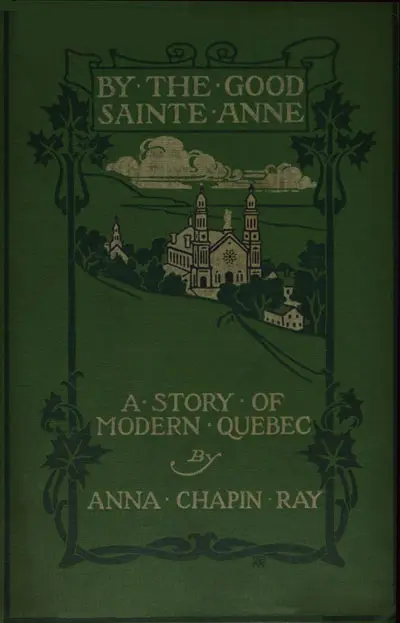
Anna Chapin Ray
Anna Chapin Ray
Anna Chapin Ray
BEHIND THE BOOK
This eBook is for the use of anyone anywhere in the United States and most other parts of the world at no cost and with almost no restrictions whatsoever. You may copy it, give it away or re-use it under the terms of the Project Gutenberg License included with this eBook or online at www.gutenberg.org. If you are not located in the United States, you will have to check the laws of the country where you are located before using this eBook. Read the source licence.
The original source file, including credits and licence, is retained by this library. Request an original-format copy at no charge. Please include the book title and Project Gutenberg identifier #12584.
KEEP YOUR CURIOSITY GOING
Coulson Kernahan

Maurice Baring
Frances Wright
Cécile Tormay

Frederic Jesup Stimson

W. H. P. (William Henry Pope) Jarvis