THE CLASSIC COLLECTION✦Half a dozen boysCLASSIC FREE BOOKS
Half a dozen boys
Anna Chapin Ray
THE CLASSIC COLLECTION · 1900
"Phebe, Her Profession" by Anna Chapin Ray is a novel written in the early 20th century. The story centers around the character Phebe McAlister, who has just returned home after spending two years in Europe. Phebe's experience abroad has spurred her desire to pursue a career in medicine, seeking a purpose beyond domestic life. The narrative explores her challenges in balancing societal expectations with her ambition, while also incorporating family dynamics and relationships with characters such as Theodora, her sister, and Gifford, a charming young man involved in the arts. At the start of the novel, readers are introduced to a curious young boy named Mac, who engages in a whimsical dialogue with Gifford Barrett, the stranger he meets. Their conversation reveals aspects of childhood innocence, mischief, and the complexities of parental relationships, all while establishing a light, humorous tone. Alongside this interaction, fragments of Phebe’s life are presented, hinting at her imminent return and the life-altering decision she is about to make in choosing the medical profession over pursuing traditional gender roles. Through these interactions and introductions, the novel sets the stage for a deeper exploration of ambition, identity, and societal conventions against the backdrop of early 20th-century America.
Introduction adapted from the source catalogue; source summaries may be automatically generated.
Free to read · English · 52,108 words · No account needed
MAKE TIME FOR A GOOD BOOK
On by default. Untick to stop anonymous reading totals. Each page counts after 10 seconds in view. How this works.
Anonymous counting is on unless you have switched it off.
"He was busy," Phebe said curtly, as she took off her sailor hat and
fanned herself.
"Jim Sykes said he see him drivin' off over Wisdom way."
"Yes, he had a case there, an important case." Phebe's head was tilted at
an aggressive angle.
"I guess I was some important, or he'd have said so, if he'd see me, last night. I had a bad spell, and like to fainted."
"What had you been eating?" Phebe inquired, with a sudden access of
professional severity.
"Be you his youngest girl?" Mrs. Richardson asked rather irrelevantly.
"Yes."
"The one that was in Paris?"
"Yes."
"I wonder at your father's lettin' you go. They say it's an awful wicked city, and I hear it's nip and tuck whether a person comes home as good as she went."
"I didn't find it so."
"Maybe not. Still, it's risky and I don't think much of folks that don't find America good enough for 'em. You look hot. Come in and get a drink of water."
Inside the house and with a glass of water in her hand, Phebe felt that it devolved upon her to make some efforts at conversation.
"You said you were worse, last night; didn't you? What were the symptoms?" she asked, between her sips.
"What's generally the symptoms? I felt sick and wanted to keel over."
"Had you been--?"
"No; I hadn't. You tell your father that I'll tell him about it, when he comes. I ain't goin' to be doctored by hearsay. Did you see Sol Bassitt's barn, as you come over the hill?"
"I came by the lower road."
"What did you do that for? It's a good mile further."
"Yes; but it's better riding, that way."
"You'd better go back over the hill. The barn's worth seein', the best one this side of town." Mrs. Richardson rocked to and fro in exultation at having some one to listen to her month's accumulation of gossip. Bannock Bars was an isolated hamlet, and visitors were few. "Sol's girl, Fannie, has gone to Oswego for a week. She's had scarlet fever, and it left her ailin'. It's too bad, for she is a likely girl."
"Very likely," Phebe assented, half under her breath.
"What?"
"I said it was extremely probable."
"What was?" Mrs. Richardson glared at her guest who was tranquilly waving
a palm-leaf fan.
"That Fannie is a good girl."
"Well, she is," Mrs. Richardson returned shortly.
There was a silence, while Phebe inspected the black cambric binding of her fan, and tried to gather energy to go out into the hot sun once more. Mrs. Richardson had rocked herself into more placid humor.
Your reading position is saved on this browser. Take it to another device with a library code. Reading pages adapt to text, rather than matching a printed edition.
Anna Chapin Ray
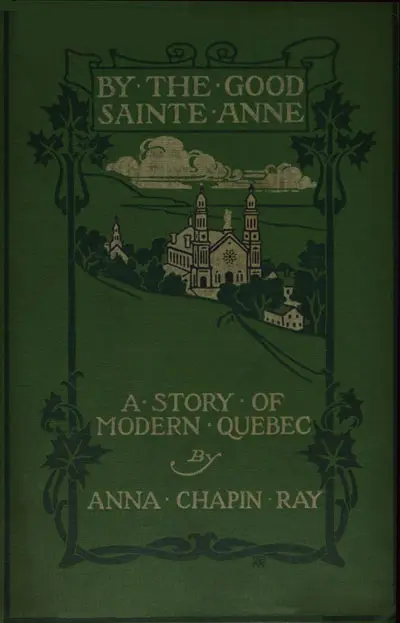
Anna Chapin Ray
Anna Chapin Ray
Anna Chapin Ray
BEHIND THE BOOK
This eBook is for the use of anyone anywhere in the United States and most other parts of the world at no cost and with almost no restrictions whatsoever. You may copy it, give it away or re-use it under the terms of the Project Gutenberg License included with this eBook or online at www.gutenberg.org. If you are not located in the United States, you will have to check the laws of the country where you are located before using this eBook. Read the source licence.
The original source file, including credits and licence, is retained by this library. Request an original-format copy at no charge. Please include the book title and Project Gutenberg identifier #12584.
KEEP YOUR CURIOSITY GOING
Coulson Kernahan

Maurice Baring
Frances Wright
Cécile Tormay

Frederic Jesup Stimson

W. H. P. (William Henry Pope) Jarvis