THE CLASSIC COLLECTION✦Half a dozen boysCLASSIC FREE BOOKS
Half a dozen boys
Anna Chapin Ray
THE CLASSIC COLLECTION · 1900
"Phebe, Her Profession" by Anna Chapin Ray is a novel written in the early 20th century. The story centers around the character Phebe McAlister, who has just returned home after spending two years in Europe. Phebe's experience abroad has spurred her desire to pursue a career in medicine, seeking a purpose beyond domestic life. The narrative explores her challenges in balancing societal expectations with her ambition, while also incorporating family dynamics and relationships with characters such as Theodora, her sister, and Gifford, a charming young man involved in the arts. At the start of the novel, readers are introduced to a curious young boy named Mac, who engages in a whimsical dialogue with Gifford Barrett, the stranger he meets. Their conversation reveals aspects of childhood innocence, mischief, and the complexities of parental relationships, all while establishing a light, humorous tone. Alongside this interaction, fragments of Phebe’s life are presented, hinting at her imminent return and the life-altering decision she is about to make in choosing the medical profession over pursuing traditional gender roles. Through these interactions and introductions, the novel sets the stage for a deeper exploration of ambition, identity, and societal conventions against the backdrop of early 20th-century America.
Introduction adapted from the source catalogue; source summaries may be automatically generated.
Free to read · English · 52,108 words · No account needed
MAKE TIME FOR A GOOD BOOK
On by default. Untick to stop anonymous reading totals. Each page counts after 10 seconds in view. How this works.
Anonymous counting is on unless you have switched it off.
"Yes. I put my little kettle of tea to draw on the hob--"
"The--what?"
"The hob," Cicely said severely; "and when I am tired of writing, I refresh myself with a cup of Flowery Pekoe and a biscuit, and then I return to my pen once more."
"How much do you usually accomplish in a night?"
"Four thousand, five hundred words is my usual limit."
"And do your never write during the day?"
"Never. My thoughts only arise by candle-light."
At this poetic outburst, the interviewer glanced up and privately registered the belief that Mrs. Farrington was slightly cracked.
"I always sleep till noon," Cicely reassured him. "Is there anything else
I can do for you?"
"No, thank you. I think not. This will make a very interesting and acceptable article, I am sure. But, before I go, would you mind telling me what you think of Browning?"
"The greatest poet of the century," Cicely replied glibly, mindful of
local prejudice.
"And your favorite poem?" he asked insinuatingly.
Then at last Cicely floundered, for she was quite beyond her depth.
"I think the Rubaiyát is by far the best," she said gravely, and her querist received the announcement in perfect good faith.
It was some weeks afterwards that Theodora, turning over her mail, came upon a marked copy of the Intermountain.
"What in the world is this?" she said in astonishment. "I never heard of
the paper."
She opened it, and then she gasped. Upon the first page appeared a woodcut, evidently culled from the advertising department, and beneath it these headlines:
"Interview with Mrs. Theodora Farrington.
Alone with Her Tea-Kettle.
The Famous Young Author Works by Night.
The Inspiration of Genius by the Hob."
Theodora read it through, carefully, deliberately, down to the final statements in regard to Browning. She wondered at first. Then the light dawned upon her, as she came upon a carefully-turned phrase descriptive of "the little grey dog, the constant companion of his gifted mistress," and she looked up.
"Cis, you wretch!" she said.
But Cicely had been watching her face and, as she watched, her own
dimples had grown deeper.
"Didn't you tell me I might?" she asked meekly.
"Yes," Theodora acknowledged; "yes, I did, and I don't know but it was justifiable. He must have been an innocent youth, Cis; but it's not so much worse than some of the tales told by men who have really seen me; only--don't do it again, dear. It might make me serious trouble."
Your reading position is saved on this browser. Take it to another device with a library code. Reading pages adapt to text, rather than matching a printed edition.
Anna Chapin Ray
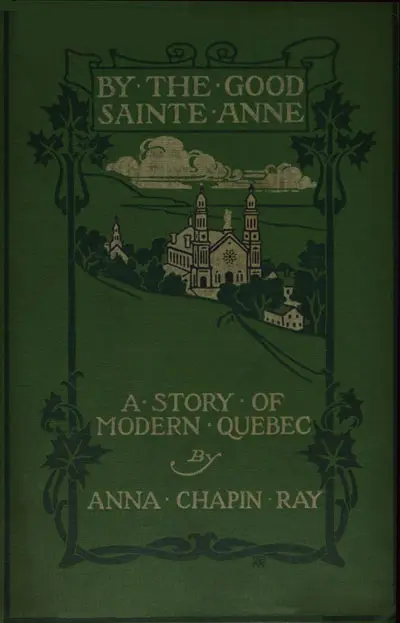
Anna Chapin Ray
Anna Chapin Ray
Anna Chapin Ray
BEHIND THE BOOK
This eBook is for the use of anyone anywhere in the United States and most other parts of the world at no cost and with almost no restrictions whatsoever. You may copy it, give it away or re-use it under the terms of the Project Gutenberg License included with this eBook or online at www.gutenberg.org. If you are not located in the United States, you will have to check the laws of the country where you are located before using this eBook. Read the source licence.
The original source file, including credits and licence, is retained by this library. Request an original-format copy at no charge. Please include the book title and Project Gutenberg identifier #12584.
KEEP YOUR CURIOSITY GOING
Coulson Kernahan

Maurice Baring
Frances Wright
Cécile Tormay

Frederic Jesup Stimson

W. H. P. (William Henry Pope) Jarvis