THE CLASSIC COLLECTION✦A Prince of SwindlersCLASSIC FREE BOOKS
A Prince of Swindlers
Guy Boothby
THE CLASSIC COLLECTION · 1898
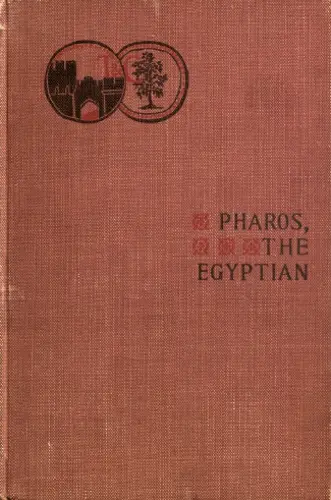
"Pharos, The Egyptian: A Romance" by Guy Boothby is a historical novel written in the late 19th century. The story revolves around Cyril Forrester, an artist whose life becomes entangled with the mysterious and sinister figure of Pharos, an Egyptian who embodies darkness and manipulation. The narrative explores themes of friendship, betrayal, and the supernatural against a backdrop of intrigue and moral conflict. At the start of the novel, we are introduced to Sir William Betford, who receives an unexpected visit from a man named Honoré de Silva, who delivers a cryptic packet from Forrester. This leads to a letter revealing the tragic circumstances that prompted Forrester to leave England. When we delve into Forrester's account, he recounts a series of fateful events, including an encounter with a drowning man and a subsequent meeting with Pharos, who exudes an unsettling influence over him. As the narrative unfolds, Forrester’s past and the dark connections to his family come to the fore, setting the stage for a tale filled with suspense, mystery, and existential dread.
Introduction adapted from the source catalogue; source summaries may be automatically generated.
Free to read · English · 100,405 words · No account needed
MAKE TIME FOR A GOOD BOOK
On by default. Untick to stop anonymous reading totals. Each page counts after 10 seconds in view. How this works.
Anonymous counting is on unless you have switched it off.
As you are aware, my picture that year was hung in an excellent position, was favourably received by those for whose criticism I had any sort of respect, attracted its fair share of attention from the general public, and, as a result, brought me as near contentment as a man can well hope or expect to be in this world. Before it had been twenty-four hours "on the line," I had received several tempting offers for it; but as I had set my heart on obtaining a certain sum, and was determined not to accept less, you may suppose I did not give them much attention. If I received what I wanted, I promised myself a treat I had been looking forward to all my life. In that case I would take a long holiday, and, instead of spending the next winter in England, would start for Egypt in the autumn, taking in Italy en route, make my way up the Nile, and be home again, all being well, in the spring, or, at latest, during the early days of summer.
Ever since I first became an exhibitor at Burlington House, I have made it a rule to studiously avoid visiting the gallery after varnishing day. My reasons would interest no one, but they were sufficiently strong to induce me to adhere to them. This year, however, I was led into doing so in a quite unintentional fashion, and as that exception vitally concerns this narrative, I must narrate in detail the circumstances that led up to it.
On a certain Friday early in June, I was sitting in my studio, after lunch, wondering what I should do with myself during the afternoon, when a knock sounded at the door, and a moment later, after I had invited whoever stood outside to enter, my old friend, George Merridew, his wife, son, and three daughters, trooped into the room. They were plainly up from the country, and, as usual, were doing the sights at express speed. George Merridew, as you know, stands six feet in his stockings, and is broad in proportion. His face is red, his eyes blue, and he carries with him wherever he goes the air of a prosperous country squire, which he certainly is. Like many other big men, he is unconscious of his strength, and when he shakes hands with you, you have reason to remember the fact for five minutes afterward. His wife is small, and, as some folks declare, looks younger than her eldest daughter, who is a tennis champion, a golfer, and boasts a supreme contempt for Royal Academicians and, for that matter, for artists generally. The son is at Oxford, a nice enough young fellow with limpid blue eyes, who, to his father's disgust, takes no sort of interest in fox-hunting, racing, football, or any other sport, and has openly asserted his intention of entering the Church in the near future. There are two other girls, Gwendoline and Ethel--the latter, by the way, promises to be a second edition of her mother--who, at present, are in the advanced schoolroom stage, dine with their parents, except on state occasions, and play duets together on the piano with a conscientious regard for time and fingering that gives their father no small amount of pleasure, but with other people rather detracts from the beauty of the performance.
Your reading position is saved on this browser. Take it to another device with a library code. Reading pages adapt to text, rather than matching a printed edition.
Guy Boothby
Guy Boothby
Guy Boothby
Guy Boothby
BEHIND THE BOOK
This eBook is for the use of anyone anywhere in the United States and most other parts of the world at no cost and with almost no restrictions whatsoever. You may copy it, give it away or re-use it under the terms of the Project Gutenberg License included with this eBook or online at www.gutenberg.org. If you are not located in the United States, you will have to check the laws of the country where you are located before using this eBook. Read the source licence.
The original source file, including credits and licence, is retained by this library. Request an original-format copy at no charge. Please include the book title and Project Gutenberg identifier #33610.
KEEP YOUR CURIOSITY GOING
Cécile Tormay

Moritz Busch
Coulson Kernahan
John L. Ransom

Maurice Baring
Frances Wright