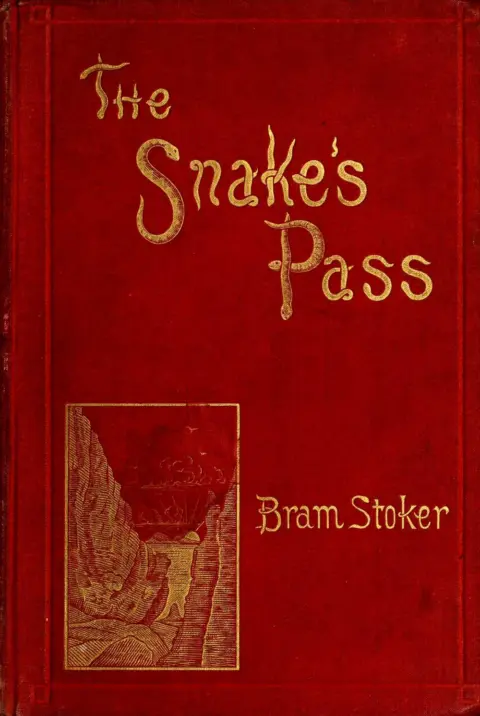
The Snake’s Pass
Bram Stoker
THE CLASSIC COLLECTION · 1906
"Personal Reminiscences of Henry Irving" by Bram Stoker is a biographical account written in the late 19th century. The text offers insights into the life and career of the renowned actor Henry Irving, detailing his journey from obscurity to acclaim and highlighting the impact he had on the theater world. Stoker, having been a close friend of Irving for nearly three decades, provides a personal perspective on Irving’s artistry, personality, and the friendships he cultivated along the way. The opening of the memoir sets the stage by recounting the author's first encounter with Henry Irving at the Theatre Royal in Dublin in 1867. Stoker vividly describes Irving's portrayal of Captain Absolute, emphasizing the remarkable quality of his acting that distinguished him from others. As the narrative progresses, it hints at the evolution of both Irving's craft and Stoker’s own critical voice, exploring the transformative power of performance and the challenges faced by artists in a shifting theatrical landscape. Through a blend of personal memory and critical reflection, the memoir unfolds the rich tapestry of Irving’s professional life and the profound influence he had on his peers and the theater industry.
Introduction adapted from the source catalogue; source summaries may be automatically generated.
Free to read · English · 183,027 words · No account needed
MAKE TIME FOR A GOOD BOOK
On by default. Untick to stop anonymous reading totals. Each page counts after 10 seconds in view. How this works.
Anonymous counting is on unless you have switched it off.
Oh that crowd! Never in the world was greater tribute to any man. The silence! The majestic silence, for it transcended negation and became positive from its dormant force. “Not dead silence, but living silence!” as the dead man’s old companion, Sir Edward Russell, said in words that should become immortal. All thoughts of self were forgotten; the lesser feelings of life seemed to have passed away in that glory of triumphant sorrow. Eye and heart and brain and memory went with the Dead as to the solemn music the mournful procession passed along. Surely a lifetime of devotion must have gone to the crowning of those long-drawn seconds. To one moving through that divine alley-way of sympathetic sorrow it seemed as though the serried ranks on either hand, seen in the dimness of that October day, went back and back to the very bounds of the thinking world.
As from the steps of the Sanctuary came the first words of the Service for the Burial of the Dead, a bright gleam of winter sunshine burst through the storied window of the South Transept and lit up the laurel pall till it glistened like gold.
And then for a little while few could see anything except dimly through
their tears.
When the last words of the Benediction had been spoken over his grave, there came from the Organ-loft the first solemn notes of Handel’s noble Dead March. The great organ had been supplemented by military instruments, and as the mournful notes of the trumpets rose they seemed to cling to the arches and dim corners of the great Cathedral, tearing open our hearts with endless echoes. And then the solemn booming of the muffled drums seemed to recall us to the life that has to be lived on, howsoever lonely or desolate it may be.
“The song of woe
Is after all an earthly song.”
The trumpets summon us, and the drums beat the time of the onward march— quick or slow as Duty calls.
March! March!
Abbey, Edwin A., R.A., 81, 293–297
Aberdeen, Earl of, 216
“Acting, an Art,” 394–395, 403, 404
“Acting and Actors,” 341
Acting, Old School and New, 8–15, 369–370
“Actor-Managers,” 28
“Actors and Acting,” 404
Actor’s Note,” “An, 341
Addresses by Irving, 393–404
Adventures, 405–422
Albery, James, 5
Aldrich, Thomas Bailey, 276
Aldworth, 131, 137–143, 151–155
Alexandra, Queen, 112–113, 174, 375, 382, 464, 465
Allingham, Mrs. H., 152
Alma-Tadema, Sir Laurence, R.A., 284–288, 394
Amber Heart, The, 425
America, Visits to, 186–199, 384–388
American Reporters, 195–199
Applause, Effect of, 47
Architect, The, 133
Arlton, Frank, 360–361
Arnold, Sir Arthur, 390
Arnold, Sir Edwin, 147
Arnott, A., 40–44, 91–92, 167
Art du Comédien,” “L’, 341
Art of Acting, The, 400, 404
Art-sense, 91–100
Arthur, Gen. Chester A. (President, U.S.A.), 384
Ashwell, Lena, 166
Asif Kadr Saiyid Wasif Ali Mirza, 215
Athenæum Club, 158
Aubertin, Mr., 225
Baba Khem Singh, Bedi of Kullar, 215
Your reading position is saved on this browser. Take it to another device with a library code. Reading pages adapt to text, rather than matching a printed edition.
Bram Stoker
Bram Stoker
Bram Stoker
Bram Stoker
BEHIND THE BOOK
This eBook is for the use of anyone anywhere in the United States and most other parts of the world at no cost and with almost no restrictions whatsoever. You may copy it, give it away or re-use it under the terms of the Project Gutenberg License included with this eBook or online at www.gutenberg.org. If you are not located in the United States, you will have to check the laws of the country where you are located before using this eBook. Read the source licence.
The original source file, including credits and licence, is retained by this library. Request an original-format copy at no charge. Please include the book title and Project Gutenberg identifier #68779.
KEEP YOUR CURIOSITY GOING
John L. Ransom

Herman W. Mudgett

Harriet Monroe
Daniel Dulany Addison
Charles Lanman

Harold Rosher