No. XIII; or, The Story of the Lost Vestal
Emma Marshall
THE CLASSIC COLLECTION · 1894
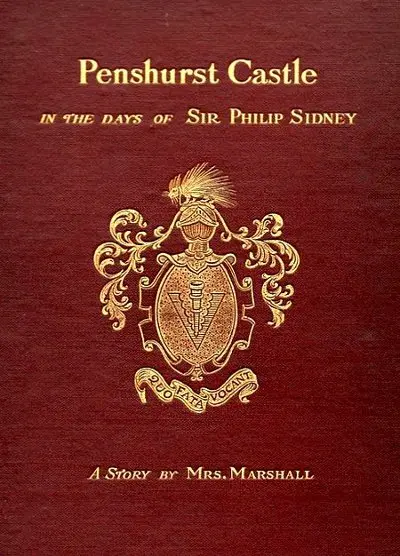
"Penshurst Castle in the Time of Sir Philip Sidney" by Emma Marshall is a historical account written in the late 19th century. This work delves into the life and times of Sir Philip Sidney, a revered poet, scholar, and soldier during the Elizabethan era. The narrative sets the scene at Penshurst Castle, exploring the events surrounding Sidney, while also introducing fictional characters such as Mary Gifford and her younger sister Lucy Forrester, who navigate the complexities of their lives amidst the backdrop of the time. The opening of the narrative presents a glimpse into the domestic life of Mary and Lucy Gifford, contrasting their sheltered existence with the lively events occurring in the world outside, such as the anticipated tournament at Whitehall. As Lucy dreams of attending the tournament and meeting Mr. Sidney, the sisters' relationship and family dynamics are explored, particularly the difficulties presented by their stepmother. The chapter not only foreshadows Lucy's desire for adventure but also hints at deeper tensions and secrets, as Mary reveals her protective instincts over her son Ambrose. The dialogue and interactions paint a vivid picture of the period and establish a foundation of character development that promises to unfold throughout the story.
Introduction adapted from the source catalogue; source summaries may be automatically generated.
Free to read · English · 80,337 words · No account needed
MAKE TIME FOR A GOOD BOOK
On by default. Untick to stop anonymous reading totals. Each page counts after 10 seconds in view. How this works.
Anonymous counting is on unless you have switched it off.
'It is fortunate for you, Mistress Forrester, that you will be under due control in London, for in good sooth you will need it. If you must go, good evening.'
Lucy turned at the door and made a profound curtsey, then, drawing her kerchief closer to her throat, she left the room, George following.
'I don't set much store by Mistress Forrester's manner, Aunt Ratcliffe,' Dorothy said; 'an ill-bred country child, who, of course, is ignorant, so we will pardon her.'
'Ignorant, yes,' Mistress Ratcliffe said, 'but her pretty face.'
'Pretty!' Dorothy screamed, 'Pretty! Nay, aunt, you cannot call that baby-faced chit pretty. No air; no breeding; mere dairymaid's beauty. It makes me laugh to think how proud she was of her fine gown and cap, which only showed her awkward gait the more.' And Mistress Dorothy fingered her Flemish lace and the string of beads round her short, thick neck, with profound belief in her own charms.
If Lucy's beauty was that of a milkmaid, Dorothy's was decidedly of a different character. Her complexion was sallow and pale; her hair, which was by no means abundant, was of the sandy hue, which she tried to persuade herself was like the Queen's. Her eyes were of a greenish colour, and deeply set under a heavy forehead, and her figure was angular and ungraceful.
Fine feathers do not always make a fine bird, and Dorothy Ratcliffe, although with what in those days was considered to be a fortune at her back, did not find fervent suitors for her favour. She was, therefore, very ready to fall in with Mistress Ratcliffe's wishes, and take pains to ingratiate herself with George, failing Humphrey, whose position as one of Mr Sidney's esquires, made him the more desirable of the two brothers.
Dorothy Ratcliffe was the child of George's uncle, who was a recluse living at Tunbridge. He was a scholar and a pedant, and concerned himself but little about his only child, whose fortune was inherited from her mother.
Marriages in those days were generally settled for the people principally concerned, with or without their consent, as it happened, and Master Ratcliffe and George's mother had a sort of tacit understanding with each other that Dorothy should take herself and her fortune to Hillbrow Place.
Dorothy was not unwilling to find herself mistress there, but she had always a lingering hope that Humphrey would at last be a victim to her charms, and then it would be easy to throw George over.
But things did not look very promising, and Dorothy asked, in an irritable tone, before she parted with her aunt for the night,--
Your reading position is saved on this browser. Take it to another device with a library code. Reading pages adapt to text, rather than matching a printed edition.
Emma Marshall
Emma Marshall
Emma Marshall
Emma Marshall
BEHIND THE BOOK
This eBook is for the use of anyone anywhere in the United States and most other parts of the world at no cost and with almost no restrictions whatsoever. You may copy it, give it away or re-use it under the terms of the Project Gutenberg License included with this eBook or online at www.gutenberg.org. If you are not located in the United States, you will have to check the laws of the country where you are located before using this eBook. Read the source licence.
The original source file, including credits and licence, is retained by this library. Request an original-format copy at no charge. Please include the book title and Project Gutenberg identifier #28616.
KEEP YOUR CURIOSITY GOING
Cécile Tormay

Moritz Busch
Coulson Kernahan
John L. Ransom

Maurice Baring
Frances Wright