No. XIII; or, The Story of the Lost Vestal
Emma Marshall
THE CLASSIC COLLECTION · 1894
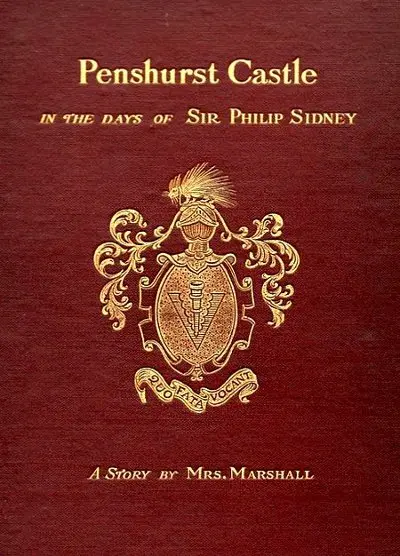
"Penshurst Castle in the Time of Sir Philip Sidney" by Emma Marshall is a historical account written in the late 19th century. This work delves into the life and times of Sir Philip Sidney, a revered poet, scholar, and soldier during the Elizabethan era. The narrative sets the scene at Penshurst Castle, exploring the events surrounding Sidney, while also introducing fictional characters such as Mary Gifford and her younger sister Lucy Forrester, who navigate the complexities of their lives amidst the backdrop of the time. The opening of the narrative presents a glimpse into the domestic life of Mary and Lucy Gifford, contrasting their sheltered existence with the lively events occurring in the world outside, such as the anticipated tournament at Whitehall. As Lucy dreams of attending the tournament and meeting Mr. Sidney, the sisters' relationship and family dynamics are explored, particularly the difficulties presented by their stepmother. The chapter not only foreshadows Lucy's desire for adventure but also hints at deeper tensions and secrets, as Mary reveals her protective instincts over her son Ambrose. The dialogue and interactions paint a vivid picture of the period and establish a foundation of character development that promises to unfold throughout the story.
Introduction adapted from the source catalogue; source summaries may be automatically generated.
Free to read · English · 80,337 words · No account needed
MAKE TIME FOR A GOOD BOOK
On by default. Untick to stop anonymous reading totals. Each page counts after 10 seconds in view. How this works.
Anonymous counting is on unless you have switched it off.
The horizon had not yet widened to the small landed proprietors of these days, and education, as we understand the word, was confined to the few, and had not reached the people to whom the concerns of everyday life were all-important. Women like Mistress Ratcliffe could often scarcely write their own names, and read slowly and with difficulty the psalms in their prayer-book, or the lessons of the Church in their Bible.
Spelling was eccentric, even in the highest circles, as many letters still preserved in family archives prove, and was made to suit the ear and eye of the writer, without reference to rule or form.
The evening passed somewhat slowly. There was an evident restraint upon
every one present.
Dorothy's performance on the mandoline did not elicit much praise, except from Mistress Ratcliffe, who was annoyed that George should seat himself on the settle, by Lucy's side, and encourage her to talk, instead of listening while his cousin sang a melancholy ditty, in anything but a musical voice.
When Dorothy had finished, she laid down the mandoline in a pet, and
yawning, said,--
'I am weary after my long ride from Tunbridge, Aunt Ratcliffe. I pray you forgive me if I retire early to bed.'
'Nay, Doll, you must have a cup of spiced wine ere you go, we cannot spare
you yet.'
'It is plain I am not wanted, so I can well be spared,' was the reply, with a disagreeable laugh and a jerk of the head in the direction of the settle.
Lucy now sprang up, saying,--
'I, too, must crave leave to bid you good evening, Mistress Ratcliffe. I have to settle plans with my sister before I sleep to-night, and the evening shadows are falling.'
'If you must leave us, Mistress Forrester,' Mistress Ratcliffe said stiffly, 'I may as well inform you, with regret, that the plan proposed by my sons for asking you to bear me company to London in a useful capacity, cannot be fulfilled. I take my niece with me, and two serving-men on the second horse, hence--'
'Oh! madam,' Lucy said, 'there is no need of excusations. I go to London in the next week as waiting-woman to my lady the Countess of Pembroke. It may be that I shall see you there, and I shall be sure to know you and Mistress Dorothy, and make you my proper reverence, even if you have forgotten me.'
'The impudent little hussy!' Mistress Ratcliffe murmured, but she retained her feelings, and said,--
Your reading position is saved on this browser. Take it to another device with a library code. Reading pages adapt to text, rather than matching a printed edition.
Emma Marshall
Emma Marshall
Emma Marshall
Emma Marshall
BEHIND THE BOOK
This eBook is for the use of anyone anywhere in the United States and most other parts of the world at no cost and with almost no restrictions whatsoever. You may copy it, give it away or re-use it under the terms of the Project Gutenberg License included with this eBook or online at www.gutenberg.org. If you are not located in the United States, you will have to check the laws of the country where you are located before using this eBook. Read the source licence.
The original source file, including credits and licence, is retained by this library. Request an original-format copy at no charge. Please include the book title and Project Gutenberg identifier #28616.
KEEP YOUR CURIOSITY GOING
Cécile Tormay

Moritz Busch
Coulson Kernahan
John L. Ransom

Maurice Baring
Frances Wright