THE CLASSIC COLLECTION✦The Montessori Elementary Material The Advanced Montessori MethodCLASSIC FREE BOOKS
The Montessori Elementary Material The Advanced Montessori Method
Maria Montessori
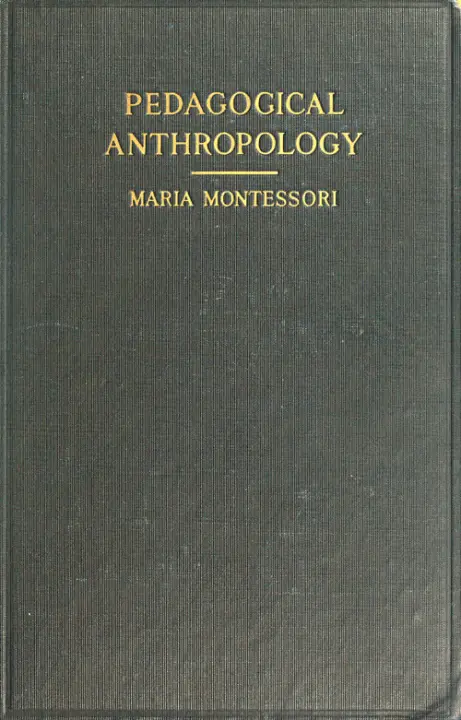
THE CLASSIC COLLECTION · 1913
"Pedagogical Anthropology" by Maria Montessori is a scientific publication written in the early 20th century. This work delves into the intersection of anthropology and pedagogy, aiming to establish a new educational philosophy based on the scientific study of human development. The text suggests a methodical approach to understanding individuals in an educational context, focusing on their physiological, psychological, and social characteristics. The beginning of the volume outlines Montessori's intent to define a new domain within anthropology that directly serves educational purposes. She emphasizes the importance of understanding human biology and variations to enhance pedagogical methods and improve education systems. In the preface, Montessori describes her lectures at the University of Rome, which form the foundation of the work, highlighting the crucial connection between scientific discovery and educational reform. She underscores the necessity of developing a science that can foster the improvement and moral evolution of humanity, thus framing education as an essential tool for societal transformation.
Introduction adapted from the source catalogue; source summaries may be automatically generated.
Free to read · English · 175,121 words · No account needed
MAKE TIME FOR A GOOD BOOK
On by default. Untick to stop anonymous reading totals. Each page counts after 10 seconds in view. How this works.
Anonymous counting is on unless you have switched it off.
Mean averages, 391
Measurement of abdomen, 386
of cranium, 375-377
of face, 378-385
of limbs, 386-387
of stature, 362-366
of thorax, 385
of total spread of arms, 367
Medial man, theory of the, 65, 454-470
Mediterranean race, 79, 214, 264, 270, 323
Melanosis, 329
Mendel's laws, 50-59
Mesoprosopic face, 263
Metabolism, 40-42, 124
Method, importance of, in experimental sciences, 23-30
Methodology, statistical, 391-403
Microcephaly, 243
Microdontia, 337
Microphthalmia, 333
Mongolians the most brachyscelous race, 77
Monkey-like traits:
flat hand, 317
lack of certain lines in palm, 318
Monkey-like, long forearm, 310
thin lips, 336
Morphological adaptation of hand, 314
combinations, De Giovanni's, 65
evolution of cranium, 197
Morphology of body at various ages, 146-147
of the brain, 247
importance of, 338
Mortality, curve of general, 115
infant, in relation to vital index, 296
in Italy, 293
Morula, 44
Mother's love, psychic stimulus of, 142
Multicellular organisms, formation of, 42-46
Muscles of head and face, 277-278
of thorax, 285
Mutations, De Vries' theory of, 47
Myxedematous idiocy, 153
NAILS, the, 317
Nanism, achondroplastic, 103-105
Neanderthal skull, 192
Neck, the, 282-283
Norm, facial, 378
frontal, 372
lateral, 372
occipital, 372
of profile, 379
vertical, 371
Nose, anomalies of, 335-336
Nutrition, influence of, on school children, 418
Onycogryposis, 317
Orientation, line of, 265
Orthognathism, 268, 271
Ovum, human, 44
PALATE, cleft, 272
ogival, 338, 352
Palms, lines of the, 318
Papillary lines, 319
Paralysis, infantile, 408
Parasites, social duty towards, 168
Parasitism, stigma of, 314, 317
Peasant, class stigma of, 271, 326, 346
Pedagogical method, need of reform in, 123, 144, 302
Pellagra, symptoms of, 161
Pelvis, 304-307
growth of, 306
rotation of, 307
sexual differences in, 305
skeleton of, 304
Personal error, 387-390, 457
Photogenic conditions, 136-138
Phototherapy, 136
Pia Barolo society, 131
Pigments, the, 320-331
during growth, 323
Pigmentation of hair, 326
of iris, 325
of skin, 325
Pigmy races, 109
Pithecanthropus, skull of, 192
Plagiocephalic cranium, 196, 372
Plagioprosopy, 271, 383
Platyopic profile, 271
Playthings, children's natural contempt for, 143
Pleasure, expression of, 279
necessary to human existence, 141
Polytrichia, 330
Polydactylism, 317
Ponderal index, 181
evolution of, 183, 184
method of computing, 181-183
Pregnancy, too frequent, 173
Profile, Egyptian, 270
Greek, 269
low types of, 271
norm of, 379
proopic, 271
Roman, 269
Progeneism, 267, 385
Prognathism, 267, 268, 385
Prophatnia, 385
Prosopometry, 379-385
Prosoposcopy, 378-379
Protoplasm, 38
Psychic stimuli, effect on health of children, 144
test, De Sanctis', 425
Puberty, change in pigments at, 323, 326
growth of jaw at, 274
of limbs at, 310
of nose at, 274
influence of climate on, 135-136
of cold on, 132
of direct sexual stimuli on, 131
of heat on, 135
of nutrition on, 130-132
of psychic stimuli on, 134, 141, 142
repose preceding, 115
of Russian girls, 135
of women of Lapland, 135
relation of growth of brain and face to, 230
Pulmonary capacity, 288-294
QUETELET'S binomial curve, 398
RACE, Eurafrican, 214, 270
Mediterranean, 79, 214, 264, 270, 323
Rachitic rosary, 302
Racial types in Europe, different characteristics of two principal, 353
Rewards and punishments, fallacy of, 123, 144-145, 432, 441, 443
Rhythm of brain growth, 232-236
of facial growth, 274
of stature, triennial, 113
Rickets, 97, 103, 164-166, 244, 268, 296, 302
foetal, 103
SCHOOL benches, deformations due to, 122, 302, 307, 349
records, 411
School-sanatorium, 160
Scientific philosophy, Morselli's, 21
Sea-shore, benefit to children, 136-137
Seriation, 396
importance of, 455
Sexual education, 356
function, dignity of the, 126
morality, 117, 126, 473-476
Sitting stature, 365-366
at different ages, 85
Skeleton, human, 71-72
articulations of, 107
of face, 188-189
of limbs, 308
of pelvis, 304
Skin, the, 320-344
Solitary confinement, 141
Sorrow, expression of, 278
Space, empirical relation to stature, 139
Your reading position is saved on this browser. Take it to another device with a library code. Reading pages adapt to text, rather than matching a printed edition.
Maria Montessori
Maria Montessori
Maria Montessori
BEHIND THE BOOK
This eBook is for the use of anyone anywhere in the United States and most other parts of the world at no cost and with almost no restrictions whatsoever. You may copy it, give it away or re-use it under the terms of the Project Gutenberg License included with this eBook or online at www.gutenberg.org. If you are not located in the United States, you will have to check the laws of the country where you are located before using this eBook. Read the source licence.
The original source file, including credits and licence, is retained by this library. Request an original-format copy at no charge. Please include the book title and Project Gutenberg identifier #46643.
KEEP YOUR CURIOSITY GOING

Charles G. (Charles Griffith) Ross
Hannah Webster Foster

Emily Lawless
Edwin Hamlin Carr

Charles De Lano Hine
Andrew Ure