THE CLASSIC COLLECTION✦Heu-Heu, or The monsterCLASSIC FREE BOOKS
Heu-Heu, or The monster
H. Rider (Henry Rider) Haggard
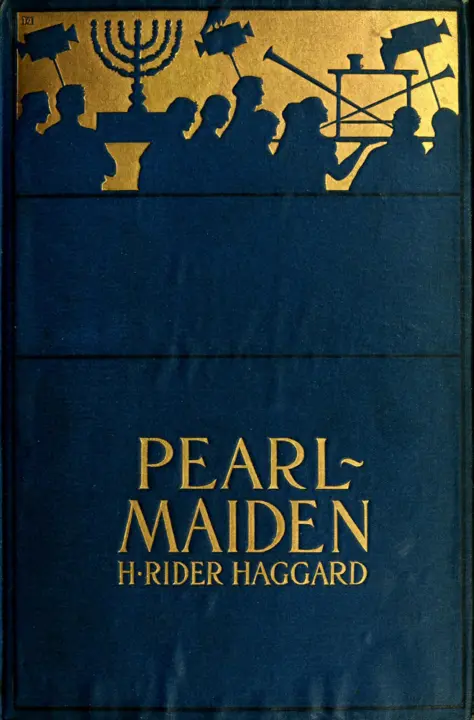
THE CLASSIC COLLECTION · 1901
"Pearl-Maiden: A Tale of the Fall of Jerusalem" by H. Rider Haggard is a historical novel written in the early 20th century. The story unfolds against the backdrop of Jerusalem's tumultuous period under Roman rule, focusing on the harrowing experiences of its inhabitants as they grapple with oppression and the impending fall of their city. Central to the narrative are the characters Rachel, a noble Jewish woman, and Nehushta, her devoted slave and protector, as they face the brutal realities of persecution for their Christian faith. At the start of the novel, we are introduced to Cæsarea, where King Agrippa celebrates a festival while dark fates loom for captured Christians in the nearby prison. The ominous atmosphere sets the stage for a day filled with grisly spectacles involving gladiatorial combats and cruel entertainments, culminating in plans to sacrifice innocent Christians to wild beasts. Rachel and Nehushta are among those condemned, navigating fear and determination as they share poignant conversations about faith, family, and the child Rachel bears. While darkness hovers, their strength and bond echo against the backdrop of despair, indicating both personal and spiritual resilience amidst catastrophic events.
Introduction adapted from the source catalogue; source summaries may be automatically generated.
Free to read · English · 134,394 words · No account needed
MAKE TIME FOR A GOOD BOOK
On by default. Untick to stop anonymous reading totals. Each page counts after 10 seconds in view. How this works.
Anonymous counting is on unless you have switched it off.
With a guttural exclamation of pity Nehushta bent down. Placing her strong arms beneath the slender form of her young mistress, and lifting her as though she were a child, she carried her to the centre of the court, where stood a fountain; for before it was turned to the purposes of a jail once this place had been a palace. Here she set her mistress on the ground with her back against the stonework, and dashed water in her face till presently she was herself again.
While Rachel sat thus—for the place was cool and pleasant and she could not sleep who must die that day—a wicket-gate was opened and several persons, men, women, and children, were thrust through it into the court.
“Newcomers from Tyre in a great hurry not to lose the lions’ party,” cried the facetious warden of the gate. “Pass in, my Christian friends, pass in and eat your last supper according to your customs. You will find it over there, bread and wine in plenty. Eat, my hungry friends, eat before you are eaten and enter into Heaven or—the stomach of the lions.”
An old woman, the last of the party, for she could not walk fast, turned round and pointed at the buffoon with her staff.
“Blaspheme not, you heathen dog!” she said, “or rather, blaspheme on and go to your reward! I, Anna, who have the gift of prophecy, tell you, renegade who were a Christian, and therefore are doubly guilty, that you have eaten your last meal—on earth.”
The man, a half-bred Syrian who had abandoned his faith for profit and now tormented those who were once his brethren, uttered a furious curse and snatched a knife from his girdle.
“You draw the knife? So be it, perish by the knife!” said Anna. Then without heeding him further the old woman hobbled on after her companions, leaving the man to slink away white to the lips with terror. He had been a Christian and knew something of Anna and of this “gift of prophecy.”
The path of these strangers led them past the fountain, where Rachel and Nehushta rose to greet them as they came.
“Peace be with you,” said Rachel.
“In the name of Christ, peace,” they answered, and passed on towards the arches where the other captives were gathered. Last of all, at some distance behind the rest, came the white-haired woman, leaning on her staff.
As she approached, Rachel turned to repeat her salutation, then uttered
a little cry and said:
“Mother Anna, do you not know me, Rachel, the daughter of Benoni?”
“Rachel!” she answered, starting. “Alas! child, how came you here?”
Your reading position is saved on this browser. Take it to another device with a library code. Reading pages adapt to text, rather than matching a printed edition.
H. Rider (Henry Rider) Haggard
H. Rider (Henry Rider) Haggard
H. Rider (Henry Rider) Haggard
H. Rider (Henry Rider) Haggard
BEHIND THE BOOK
This eBook is for the use of anyone anywhere in the United States and most other parts of the world at no cost and with almost no restrictions whatsoever. You may copy it, give it away or re-use it under the terms of the Project Gutenberg License included with this eBook or online at www.gutenberg.org. If you are not located in the United States, you will have to check the laws of the country where you are located before using this eBook. Read the source licence.
The original source file, including credits and licence, is retained by this library. Request an original-format copy at no charge. Please include the book title and Project Gutenberg identifier #5175.
KEEP YOUR CURIOSITY GOING
Cécile Tormay

Moritz Busch
Coulson Kernahan
John L. Ransom

Maurice Baring
Frances Wright