THE CLASSIC COLLECTION✦Heu-Heu, or The monsterCLASSIC FREE BOOKS
Heu-Heu, or The monster
H. Rider (Henry Rider) Haggard
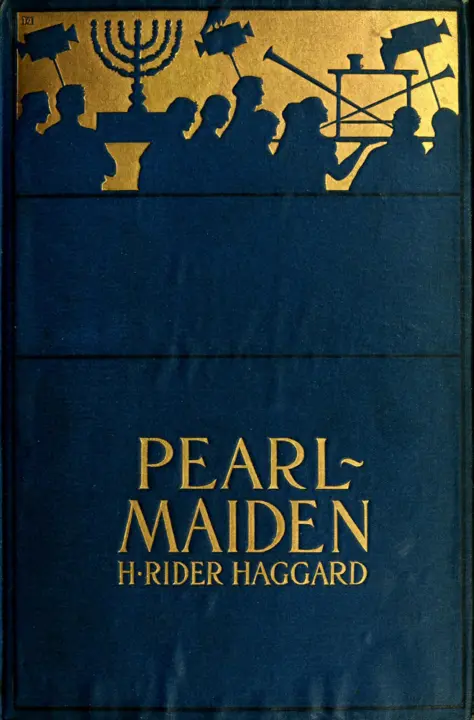
THE CLASSIC COLLECTION · 1901
"Pearl-Maiden: A Tale of the Fall of Jerusalem" by H. Rider Haggard is a historical novel written in the early 20th century. The story unfolds against the backdrop of Jerusalem's tumultuous period under Roman rule, focusing on the harrowing experiences of its inhabitants as they grapple with oppression and the impending fall of their city. Central to the narrative are the characters Rachel, a noble Jewish woman, and Nehushta, her devoted slave and protector, as they face the brutal realities of persecution for their Christian faith. At the start of the novel, we are introduced to Cæsarea, where King Agrippa celebrates a festival while dark fates loom for captured Christians in the nearby prison. The ominous atmosphere sets the stage for a day filled with grisly spectacles involving gladiatorial combats and cruel entertainments, culminating in plans to sacrifice innocent Christians to wild beasts. Rachel and Nehushta are among those condemned, navigating fear and determination as they share poignant conversations about faith, family, and the child Rachel bears. While darkness hovers, their strength and bond echo against the backdrop of despair, indicating both personal and spiritual resilience amidst catastrophic events.
Introduction adapted from the source catalogue; source summaries may be automatically generated.
Free to read · English · 134,394 words · No account needed
MAKE TIME FOR A GOOD BOOK
On by default. Untick to stop anonymous reading totals. Each page counts after 10 seconds in view. How this works.
Anonymous counting is on unless you have switched it off.
“This,” said Amram solemnly, “comes of not locking one’s office. Do not misunderstand me; it was no fault of mine. A certain apprentice is to blame, to whom I shall have a word to say. In fact, I think that I will say it at once,” and he stepped towards the door.
“Indeed you will not,” interrupted Nehushta.
“And pray, my Libyan friend, how will you prevent me?”
“By putting a knife into your gizzard, as I did through that of the renegade Rufus an hour or two ago! Ah! I see you have heard the story.”
Amram considered, then replied:
“And what if I also have a knife?”
“In that case,” said Nehushta, “draw it, and we will see which is the better, man or woman. Merchant, your weapon is your pen. You have not a chance with me, an Arab of Libya, and you know it.”
“Yes,” answered Amram, “I think I do; you desert folk are so reckless and athletic. Also, to be frank, as you may have guessed, I am unarmed. Now, what do you propose?”
“I propose that you get us safely out of Cæsarea, or, if you prefer it, that we shall all die here in this grain-store, for, by whatever god you worship, Phœnician, before a hand is laid upon my mistress or me, this knife goes through your heart. I owe no love to your people, who bought me, a king’s daughter, as a slave, and I shall be quite happy to close my account with one of them. Do you understand?”
“Perfectly, perfectly. Why show such temper? The affair is one of business; let us discuss it in a business spirit. You wish to escape from Cæsarea; I wish you to escape from my grain-store. Let me go out and arrange the matter.”
“On a plank; not otherwise unless we accompany you,” answered Nehushta. “Man, why do you waste words with us. Listen. This lady is the only child of Benoni, the great merchant of Tyre. Doubtless you know him?”
“To my cost,” replied Amram, with a bow. “Three times has he overreached me in various bargains.”
“Very well; then you know also that he is rich and will pay him liberally who rescues his daughter from great peril.”
“He might do so, but I am not sure.”
“I am sure,” answered Nehushta, “and for this service my mistress here will give you a bill for any reasonable sum drawn upon her father.”
“Yes, but the question is—will he honour it? Benoni is a prejudiced man, a very prejudiced man, a Jew of the Jews, who—does not like Christians.”
Your reading position is saved on this browser. Take it to another device with a library code. Reading pages adapt to text, rather than matching a printed edition.
H. Rider (Henry Rider) Haggard
H. Rider (Henry Rider) Haggard
H. Rider (Henry Rider) Haggard
H. Rider (Henry Rider) Haggard
BEHIND THE BOOK
This eBook is for the use of anyone anywhere in the United States and most other parts of the world at no cost and with almost no restrictions whatsoever. You may copy it, give it away or re-use it under the terms of the Project Gutenberg License included with this eBook or online at www.gutenberg.org. If you are not located in the United States, you will have to check the laws of the country where you are located before using this eBook. Read the source licence.
The original source file, including credits and licence, is retained by this library. Request an original-format copy at no charge. Please include the book title and Project Gutenberg identifier #5175.
KEEP YOUR CURIOSITY GOING
Cécile Tormay

Moritz Busch
Coulson Kernahan
John L. Ransom

Maurice Baring
Frances Wright