THE CLASSIC COLLECTION✦Heu-Heu, or The monsterCLASSIC FREE BOOKS
Heu-Heu, or The monster
H. Rider (Henry Rider) Haggard
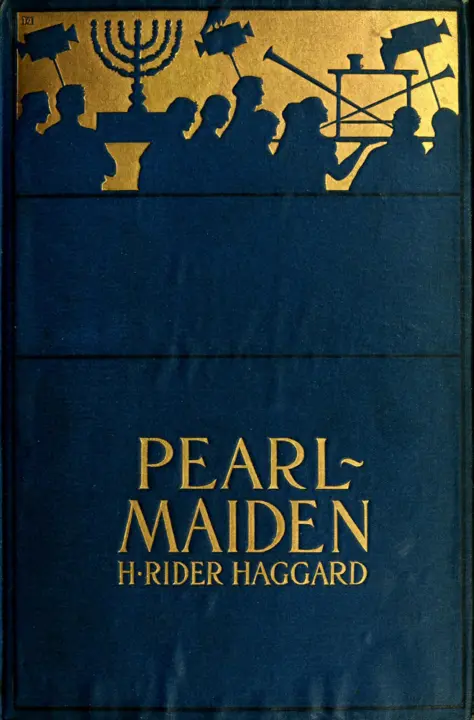
THE CLASSIC COLLECTION · 1901
"Pearl-Maiden: A Tale of the Fall of Jerusalem" by H. Rider Haggard is a historical novel written in the early 20th century. The story unfolds against the backdrop of Jerusalem's tumultuous period under Roman rule, focusing on the harrowing experiences of its inhabitants as they grapple with oppression and the impending fall of their city. Central to the narrative are the characters Rachel, a noble Jewish woman, and Nehushta, her devoted slave and protector, as they face the brutal realities of persecution for their Christian faith. At the start of the novel, we are introduced to Cæsarea, where King Agrippa celebrates a festival while dark fates loom for captured Christians in the nearby prison. The ominous atmosphere sets the stage for a day filled with grisly spectacles involving gladiatorial combats and cruel entertainments, culminating in plans to sacrifice innocent Christians to wild beasts. Rachel and Nehushta are among those condemned, navigating fear and determination as they share poignant conversations about faith, family, and the child Rachel bears. While darkness hovers, their strength and bond echo against the backdrop of despair, indicating both personal and spiritual resilience amidst catastrophic events.
Introduction adapted from the source catalogue; source summaries may be automatically generated.
Free to read · English · 134,394 words · No account needed
MAKE TIME FOR A GOOD BOOK
On by default. Untick to stop anonymous reading totals. Each page counts after 10 seconds in view. How this works.
Anonymous counting is on unless you have switched it off.
“Then go to Amram, or to Pluto, and ask for the key of Hades for aught I care!” replied his superior with irritation. “He lives about a league off at the other end of the town.”
“I do not wish for the walk,” said the conscientious soldier; “but as we are searching for these escaped Christians, by your leave, I do think it would have been much better to have got that key from Amram and peeped into the chamber upstairs.”
Thereon the temper of the officer, already ruffled by the events of the morning and the long watch of the preceding night, gave way, and he departed, consigning the Christians, escaped or recaptured, Amram and the key, his subordinate, and even the royal Agrippa who did not pay his debts, to every infernal god of every religion with which he was acquainted.
Nehushta lifted her head from the floor.
“Thanks be to God! They are gone,” she said.
“But, Nou, will they not come back? Oh! I fear lest they should come
back.”
“I think not. That sharp-nosed rat has made the other angry, and I believe that he will find him some harder task than the seeking of a key from Amram. Still, there is danger that this Amram may appear himself to visit his store, for in these days of festival he is sure to be selling grain to the bakers.”
Scarcely were the words out of her mouth when a key rattled, the door was pushed sharply, and the piece of wood slipped and fell. Then the hinges creaked, and Amram—none other—entered, and, closing the door behind him, locked it, leaving the key in the lock.
Amram was a shrewd-faced, middle-aged Phœnician and, like most Phœnicians of that day, a successful trader, this corn-store representing only one branch of his business. For the rest he was clad in a quiet-coloured robe and cap, and to all appearance unarmed.
Having locked the door, he walked to a little table, beneath which stood a box containing his tablets whereon were entered the amounts of corn bought and delivered, to come face to face with Nehushta. Instantly she slid between him and the door.
“Who in the name of Moloch are you?” he asked, stepping back astonished, to perceive as he did so, Rachel seated on the heap of sacks; “and you,” he added. “Are you spirits, thieves, ladies in search of a lodging, or—perchance those two Christians whom the soldiers are looking for in yonder house?”
“We are the two Christians,” said Rachel desperately. “We fled from the amphitheatre, and have taken refuge here, where they nearly found us.”
Your reading position is saved on this browser. Take it to another device with a library code. Reading pages adapt to text, rather than matching a printed edition.
H. Rider (Henry Rider) Haggard
H. Rider (Henry Rider) Haggard
H. Rider (Henry Rider) Haggard
H. Rider (Henry Rider) Haggard
BEHIND THE BOOK
This eBook is for the use of anyone anywhere in the United States and most other parts of the world at no cost and with almost no restrictions whatsoever. You may copy it, give it away or re-use it under the terms of the Project Gutenberg License included with this eBook or online at www.gutenberg.org. If you are not located in the United States, you will have to check the laws of the country where you are located before using this eBook. Read the source licence.
The original source file, including credits and licence, is retained by this library. Request an original-format copy at no charge. Please include the book title and Project Gutenberg identifier #5175.
KEEP YOUR CURIOSITY GOING
Cécile Tormay

Moritz Busch
Coulson Kernahan
John L. Ransom

Maurice Baring
Frances Wright