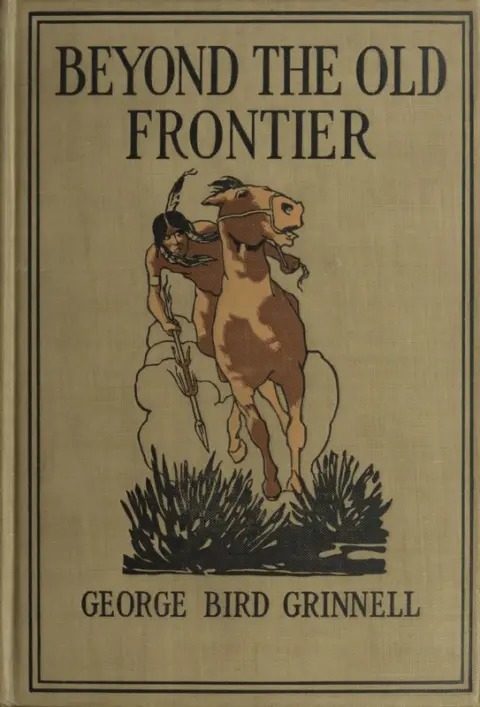
Beyond the Old Frontier: Adventures of Indian-Fighters, Hunters, and Fur-Traders
George Bird Grinnell
THE CLASSIC COLLECTION · 1889
"Pawnee Hero Stories and Folk-Tales" by George Bird Grinnell is a collection of indigenous narratives written in the late 19th century. This work presents the rich oral tradition of the Pawnee people, chronicling their legends, hero stories, and folk tales, while also providing insights into their customs, beliefs, and way of life. It reflects on the transformation of the Pawnee community as they adapt to changing times and the importance of preserving their stories for future generations. The opening of the book introduces Grinnell’s journey to the Pawnee Agency where he seeks to document the tribe’s stories before they are lost forever. He recounts a significant meeting with Eagle Chief, reflecting the deep connection between the storyteller and the traditions being passed down orally through generations. The text struggles with the loss of heritage as the younger generation moves toward a more modern existence, emphasizing the importance of recording these tales not just for historical value but to maintain the cultural identity of the Pawnee people. Grinnell’s mission as a recorder of these narratives is clear, aiming to present the tales in their purest form, offering readers a genuine glimpse into the Pawnee's character and worldview.
Introduction adapted from the source catalogue; source summaries may be automatically generated.
Free to read · English · 85,106 words · No account needed
MAKE TIME FOR A GOOD BOOK
On by default. Untick to stop anonymous reading totals. Each page counts after 10 seconds in view. How this works.
Anonymous counting is on unless you have switched it off.
It was the last day of my stay at the Pawnee agency. I had seen many an old friend; had laughed and joked with some over incidents of former years, and with others had mourned over brave warriors or wise old men who were no longer with us. My visit had been full of pleasure, and yet full of pain. When I had first known the tribe it numbered more than three thousand people, now there are only a little more than eight hundred of them. The evidences of their progress toward civilization are cheering. They are now self-supporting. They no longer die of hunger. But the character of the people has changed. In the old barbaric days they were light-hearted, merry, makers of jokes, keenly alive to the humorous side of life. Now they are serious, grave, little disposed to laugh. Then they were like children without a care. Now they are like men, on whom the anxieties of life weigh heavily. Civilization, bringing with it some measure of material prosperity, has also brought to these people care, responsibility, repression. No doubt it is best, and it is inevitable, but it is sad, too.
It was my last day, and I was again sitting with Eagle Chief, telling him that the time had come for me to go. He said, "Ah, my son, I like to see you here. I like to sit with you, and to talk over the old times. My heart is sick when I think that you are going away, and that we may never see each other any more. But," he added, solemnly, "it may be that Ti-ra´-wa will be good to us, and will let us live a long time until we are very old, and then some day we may meet again."
Agriculture in the old times, 253;
present, 401.
Animals, sacred character of, 17;
see also Nahu´rac.
Antelope and deer, story of, 204.
Apaches, 392.
Arapahoes, 47, 323 et seq.
Arickaras, Arickarees, 159, 218, 229, 231, 239.
Arkansas, Pawnees in, 229.
Arms, 263.
Arrows, 205, 264, 282.
Arrow heads of stone, 249, 251, 253, 352, 365;
of bone and horn, 252;
of sheet-iron, 252, 377.
A-ti´-us, 198 et seq.
Auger, General, 325.
Ax, 66.
Baby on board, 141.
Battles, mode of fighting, 312.
Bear Chief, 20, 141, 225, 235, 252, 363.
Bear dance, origin of, 128.
Bear Man, story of, 121.
Bear's-eyes, 241.
Big Knife, 141.
Big Shields, 235.
Blackfoot story of deer and antelope, 205.
Bone implements, 170, 254.
Bows, 205, 264, 282.
Boy who saw A-ti´-us, 195.
Boy who was Sacrificed, 161.
Buffalo, hunting, 135 et seq., 249;
summer hunt, 270.
Buffalo staves, 271, 277.
Bundles, sacred, 351, 360, 364, 371.
Burnt offerings, 361;
see sacrifices.
Caddos, 218, 222, 228.
Captive, sacrifice of, 362.
Carr, General, 325.
Cedar tree, 126.
Ceremonies, of the hunt, 272;
religious, 360.
Chau-i, 215 et seq., 233, 241, 260, 400.
Cheyenne Blanket, A, 76.
Cheyennes, 39, 48, 64, 65, 74, 76, 190, 246, 266, 307, 309, 323
et seq.
Chief, office of, 260.
Clothing, 257, 262.
Comanche Chief, 25.
Comanches, 25-44, 49, 65, 83, 186, 246, 307, 392.
Cooper's Indian characters, 13.
Corn, origin, 254, 356;
sacred character, 254, 256.
Corn dance, 369.
Counting coup, 47, 93, 179, 188, 366, 367.
Court House Rock, 67, 88.
Crier, 163.
Crook, General, 325, 399.
Your reading position is saved on this browser. Take it to another device with a library code. Reading pages adapt to text, rather than matching a printed edition.
George Bird Grinnell
George Bird Grinnell

Caspar Whitney & George Bird Grinnell & Owen Wister
George Bird Grinnell
BEHIND THE BOOK
This eBook is for the use of anyone anywhere in the United States and most other parts of the world at no cost and with almost no restrictions whatsoever. You may copy it, give it away or re-use it under the terms of the Project Gutenberg License included with this eBook or online at www.gutenberg.org. If you are not located in the United States, you will have to check the laws of the country where you are located before using this eBook. Read the source licence.
The original source file, including credits and licence, is retained by this library. Request an original-format copy at no charge. Please include the book title and Project Gutenberg identifier #36923.
KEEP YOUR CURIOSITY GOING

Maurice Baring
Francis Greenleaf Allinson & Anne C. E. (Anne Crosby Emery) Allinson
Stuart Dodgson Collingwood
Percy Keese Fitzhugh
Mary Macleod & Edmund Spenser

Cooke Don-Carlos