READ · DISCOVER · ENJOYClassic literature · Always free
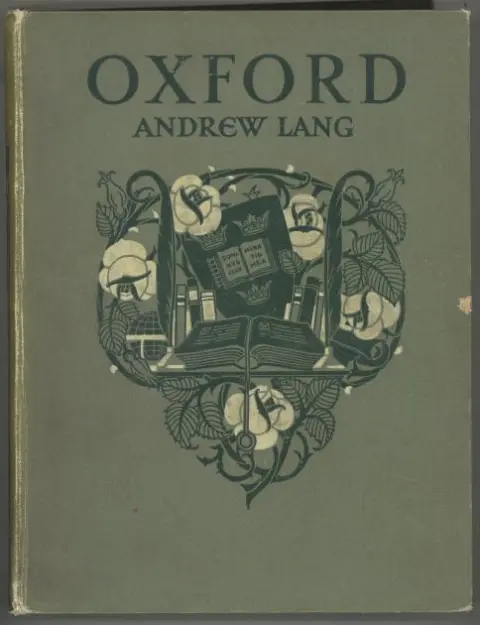
Oxford — digital edition cover

THE CLASSIC COLLECTION · 1910

Oxford

"Oxford" by Andrew Lang is a historical account written in the early 20th century. The work captures the rich tapestry of life at the University of Oxford, exploring its diverse history through personal impressions and descriptions from various eras. Lang does not aim to provide a comprehensive history but instead offers snapshots of its evolving landscape and culture, reflecting on how Oxford influences and is influenced by its scholars and society over time. The beginning of "Oxford" sets the stage with a contemplative preface that reflects on the city's historical significance and its transitions across different ages. Lang likens the town to a palimpsest, suggesting that its identity has been shaped by its continuous use and modification through time. The opening chapter discusses the early history of Oxford, highlighting its geographical advantages and strategic importance as a center for trade, learning, and religion. It references figures like St. Frideswyde and the shifting dynamics among the early inhabitants, capturing the essence of the relationship between the town and its academic institution. Overall, this opening portion invites readers to ponder the depth of Oxford's historical context while illustrating its unique charm and significance in the realm of education.

Introduction adapted from the source catalogue; source summaries may be automatically generated.

Start reading ↓

Free to read · English · 31,567 words · No account needed

MAKE TIME FOR A GOOD BOOK

Oxford

On by default. Untick to stop anonymous reading totals. Each page counts after 10 seconds in view. How this works.

Anonymous counting is on unless you have switched it off.

Oxford

Καπνὸν δ’ ἐνὶ γέσσῃ ἔδρακον ὀφθαλμοῖσι διὰ δρυμὰ πυκνὰ καὶ ὕλην

The low hills were not yet cleared, nor the fens and the wolds trimmed and enclosed. Centuries later, when the early students came, they had to ride ‘through the thick forest and across the moor, to the East Gate of the city’ (Munimenta Academica, Oxon., vol. i. p. 60). In the midst of a country still wild, Oxford was already no mean city; but the place where the hostile races of the land met to settle their differences, to feast together and forget their wrongs over the mead and ale, or to devise treacherous murder, and close the banquet with fire and sword.

Again and again, after Eadward the Elder took Mercia, the Danes went about burning and wasting England. The wooden towns were flaming through the night, and sending up a thick smoke through the day, from Thamesmouth to Cambridge. ‘And next was there no headman that force would gather, and each fled as swift as he might, and soon was there no shire that would help another.’ When the first fury of the plundering invaders was over, when the Northmen had begun to wish to settle and till the land and have some measure of peace, the early meetings between them and the English rulers were held in the border-town, in Oxford. Thus Sigeferth and Morkere, sons of Earngrim, came to see Eadric in Oxford, and there were slain at a banquet, while their followers perished in the attempt to avenge them. ‘Into the tower of St. Frideswyde they were driven, and as men could not drive them thence, the tower was fired, and they perished in the burning.’ So says William of Malmesbury, who, so many years later, read the story, as he says, in the records of the Church of St. Frideswyde. There is another version of the story in the Codex Diplomaticus (DCCIX.). Aethelred is made to say, in a deed of grant of lands to St. Frideswyde’s Church (‘mine own minster’), that the Danes were slain in the massacre of St. Brice. On that day Aethelred, ‘by the advice of his satraps, determined to destroy the tares among the wheat, the Danes in England.’ Certain of these fled into the minster, as into a fortress, and therefore it was burned and the books and monuments destroyed. For this cause Aethelred gives lands to the minster, ‘fro Charwell brigge andlong the streame, fro Merewell to Rugslawe, fro the lawe to the foule putte,’ and so forth. It is pleasant to see how old are the familiar names ‘Cherwell,’ ‘Hedington,’ ‘Couelee’ or Cowley, where the college cricket-grounds are. Three years passed, and the headmen of the English and of the Danes met at Oxford again, and more peacefully, and agreed to live together, obedient to the laws of Eadgar; to the law, that is, as it was administered in older days, that seem happier and better ruled to men looking back on them from an age of confusion and bloodshed. At Oxford, too, met the peaceful gathering of 1035, when Danish and English claims were in some sort reconciled, and at Oxford Harold Harefoot, the son of Cnut, died in March 1040. The place indeed was fatal to kings, for St. Frideswyde, in her anger against King Algar, left her curse on it. Just as the old Irish kings were forbidden by their customs to do this or that, to cross a certain moor on May morning, or to listen to the winnowing of the night-fowl’s wings in the dusk above the lake of Tara; so the kings of England shunned to enter Oxford, and to come within the walls of Frideswyde the maiden. Harold died there, as we have seen, but there he was not buried. His body was laid at Westminster, where it could not rest, for his enemies dug it up, and cast it forth upon the fens, or threw it into the river. Many years later, when Henry III. entered Oxford, not without fear, the curse of Frideswyde lighted also upon him. He came in 1263, with Edward the prince, and misfortune fell upon him, so that his barons defeated and took him prisoner at the battle of Lewes. The chronicler of Oseney Abbey mentions his contempt of superstitions, and how he alone of English kings entered the city: ‘Quod nullus rex attemptavit a tempore Regis Algari,’ an error, for Harold attemptavit, and died. When Edward I. was king, he was less audacious than his father, and in 1275 he rode up to the East Gate and turned his horse’s head about, and sought a lodging outside the town, reflexis habenis equitans extra moenia aulam regiain in suburbio positam introivit. In 1280, however, he seems to have plucked up courage and attended a Chapter of Dominicans in Oxford.

Your reading position is saved on this browser. Take it to another device with a library code. Reading pages adapt to text, rather than matching a printed edition.

More from this author

BEHIND THE WORDS

About Andrew Lang

Andrew Lang (1844–1912). Explore Letters on Literature, The companions of Pickle Being a sequel to ‘Pickle the spy’, Sir Walter Scott and other works in this collection. These books span essays & ideas, history, biography & memoir.

Explore this author’s books →

THE READERS’ VERDICT

How did this story stay with you?

Not rated yet
Your rating for Oxford

Be the first to share your verdict.

One rating per browser, which you can change or remove. A necessary browser identifier remembers your vote. How ratings work

A GOOD STORY DESERVES COMPANY

Pass this book along.

A great read is even better when it’s shared.

SEND A LITTLE INSPIRATION

Share this book

BEHIND THE BOOK

Edition & source details.

Title
Oxford
Author
Andrew Lang
First publication (Open Library catalogue match)
1910
Digital edition publisher
Project Gutenberg
Gutenberg release date
2000-12-01
Language
English
Source edition imprint
Not stated in source catalogue
Source identifier
Project Gutenberg #2444
Contributors
No additional named contributors in source metadata

Public-domain source & licence

This eBook is for the use of anyone anywhere in the United States and most other parts of the world at no cost and with almost no restrictions whatsoever. You may copy it, give it away or re-use it under the terms of the Project Gutenberg License included with this eBook or online at www.gutenberg.org. If you are not located in the United States, you will have to check the laws of the country where you are located before using this eBook. Read the source licence.

Full source licence and obtaining an original copy

The original source file, including credits and licence, is retained by this library. Request an original-format copy at no charge. Please include the book title and Project Gutenberg identifier #2444.

the full Project Gutenberg License must appear
prominently whenever any copy of a Project Gutenberg work (any work
on which the phrase “Project Gutenberg” appears, or with which the
phrase “Project Gutenberg” is associated) is accessed, displayed,
performed, viewed, copied or distributed:

This eBook is for the use of anyone anywhere in the United States and most
other parts of the world at no cost and with almost no restrictions
whatsoever. You may copy it, give it away or re-use it under the terms
of the Project Gutenberg™ License included with this eBook or online
at www.gutenberg.org. If you
are not located in the United States, you will have to check the laws
of the country where you are located before using this eBook.

1.E.2. If an individual Project Gutenberg electronic work is
derived from texts not protected by U.S. copyright law (does not
contain a notice indicating that it is posted with permission of the
copyright holder), the work can be copied and distributed to anyone in
the United States without paying any fees or charges. If you are
redistributing or providing access to a work with the phrase “Project
Gutenberg” associated with or appearing on the work, you must comply
either with the requirements of paragraphs 1.E.1 through 1.E.7 or
obtain permission for the use of the work and the Project Gutenberg
trademark as set forth in paragraphs 1.E.8 or 1.E.9.

1.E.3. If an individual Project Gutenberg electronic work is posted
with the permission of the copyright holder, your use and distribution
must comply with both paragraphs 1.E.1 through 1.E.7 and any
additional terms imposed by the copyright holder. Additional terms
will be linked to the Project Gutenberg License for all works
posted with the permission of the copyright holder found at the
beginning of this work.

1.E.4. Do not unlink or detach or remove the full Project Gutenberg
License terms from this work, or any files containing a part of this
work or any other work associated with Project Gutenberg.

1.E.5. Do not copy, display, perform, distribute or redistribute this
electronic work, or any part of this electronic work, without
prominently displaying the sentence set forth in paragraph 1.E.1 with
active links or immediate access to the full terms of the Project
Gutenberg License.

1.E.6. You may convert to and distribute this work in any binary,
compressed, marked up, nonproprietary or proprietary form, including
any word processing or hypertext form. However, if you provide access
to or distribute copies of a Project Gutenberg work in a format
other than “Plain Vanilla ASCII” or other format used in the official
version posted on the official Project Gutenberg website
(www.gutenberg.org), you must, at no additional cost, fee or expense
to the user, provide a copy, a means of exporting a copy, or a means
of obtaining a copy upon request, of the work in its original “Plain
Vanilla ASCII” or other form. Any alternate format must include the
full Project Gutenberg License as specified in paragraph 1.E.1.

1.E.7. Do not charge a fee for access to, viewing, displaying,
performing, copying or distributing any Project Gutenberg works
unless you comply with paragraph 1.E.8 or 1.E.9.

1.E.8. You may charge a reasonable fee for copies of or providing
access to or distributing Project Gutenberg electronic works
provided that:

• You pay a royalty fee of 20% of the gross profits you derive from
the use of Project Gutenberg works calculated using the method
you already use to calculate your applicable taxes. The fee is owed
to the owner of the Project Gutenberg trademark, but he has
agreed to donate royalties under this paragraph to the Project
Gutenberg Literary Archive Foundation. Royalty payments must be paid
within 60 days following each date on which you prepare (or are
legally required to prepare) your periodic tax returns. Royalty
payments should be clearly marked as such and sent to the Project
Gutenberg Literary Archive Foundation at the address specified in
Section 4, “Information about donations to the Project Gutenberg
Literary Archive Foundation.”

• You provide a full refund of any money paid by a user who notifies
you in writing (or by e-mail) within 30 days of receipt that s/he
does not agree to the terms of the full Project Gutenberg™
License. You must require such a user to return or destroy all
copies of the works possessed in a physical medium and discontinue
all use of and all access to other copies of Project Gutenberg™
works.

• You provide, in accordance with paragraph 1.F.3, a full refund of
any money paid for a work or a replacement copy, if a defect in the
electronic work is discovered and reported to you within 90 days of
receipt of the work.

• You comply with all other terms of this agreement for free
distribution of Project Gutenberg™ works.


1.E.9. If you wish to charge a fee or distribute a Project
Gutenberg™ electronic work or group of works on different terms than
are set forth in this agreement, you must obtain permission in writing
from the Project Gutenberg Literary Archive Foundation, the manager of
the Project Gutenberg™ trademark. Contact the Foundation as set
forth in Section 3 below.

1.F.

1.F.1. Project Gutenberg volunteers and employees expend considerable
effort to identify, do copyright research on, transcribe and proofread
works not protected by U.S. copyright law in creating the Project
Gutenberg™ collection. Despite these efforts, Project Gutenberg™
electronic works, and the medium on which they may be stored, may
contain “Defects,” such as, but not limited to, incomplete, inaccurate
or corrupt data, transcription errors, a copyright or other
intellectual property infringement, a defective or damaged disk or
other medium, a computer virus, or computer codes that damage or
cannot be read by your equipment.

1.F.2. LIMITED WARRANTY, DISCLAIMER OF DAMAGES - Except for the “Right
of Replacement or Refund” described in paragraph 1.F.3, the Project
Gutenberg Literary Archive Foundation, the owner of the Project
Gutenberg™ trademark, and any other party distributing a Project
Gutenberg™ electronic work under this agreement, disclaim all
liability to you for damages, costs and expenses, including legal
fees. YOU AGREE THAT YOU HAVE NO REMEDIES FOR NEGLIGENCE, STRICT
LIABILITY, BREACH OF WARRANTY OR BREACH OF CONTRACT EXCEPT THOSE
PROVIDED IN PARAGRAPH 1.F.3. YOU AGREE THAT THE FOUNDATION, THE
TRADEMARK OWNER, AND ANY DISTRIBUTOR UNDER THIS AGREEMENT WILL NOT BE
LIABLE TO YOU FOR ACTUAL, DIRECT, INDIRECT, CONSEQUENTIAL, PUNITIVE OR
INCIDENTAL DAMAGES EVEN IF YOU GIVE NOTICE OF THE POSSIBILITY OF SUCH
DAMAGE.

1.F.3. LIMITED RIGHT OF REPLACEMENT OR REFUND - If you discover a
defect in this electronic work within 90 days of receiving it, you can
receive a refund of the money (if any) you paid for it by sending a
written explanation to the person you received the work from. If you
received the work on a physical medium, you must return the medium
with your written explanation. The person or entity that provided you
with the defective work may elect to provide a replacement copy in
lieu of a refund. If you received the work electronically, the person
or entity providing it to you may choose to give you a second
opportunity to receive the work electronically in lieu of a refund. If
the second copy is also defective, you may demand a refund in writing
without further opportunities to fix the problem.

1.F.4. Except for the limited right of replacement or refund set forth
in paragraph 1.F.3, this work is provided to you ‘AS-IS’, WITH NO
OTHER WARRANTIES OF ANY KIND, EXPRESS OR IMPLIED, INCLUDING BUT NOT
LIMITED TO WARRANTIES OF MERCHANTABILITY OR FITNESS FOR ANY PURPOSE.

1.F.5. Some states do not allow disclaimers of certain implied
warranties or the exclusion or limitation of certain types of
damages. If any disclaimer or limitation set forth in this agreement
violates the law of the state applicable to this agreement, the
agreement shall be interpreted to make the maximum disclaimer or
limitation permitted by the applicable state law. The invalidity or
unenforceability of any provision of this agreement shall not void the
remaining provisions.

1.F.6. INDEMNITY - You agree to indemnify and hold the Foundation, the
trademark owner, any agent or employee of the Foundation, anyone
providing copies of Project Gutenberg™ electronic works in
accordance with this agreement, and any volunteers associated with the
production, promotion and distribution of Project Gutenberg™
electronic works, harmless from all liability, costs and expenses,
including legal fees, that arise directly or indirectly from any of
the following which you do or cause to occur: (a) distribution of this
or any Project Gutenberg work, (b) alteration, modification, or
additions or deletions to any Project Gutenberg work, and (c) any
Defect you cause.

Section 2. Information about the Mission of Project Gutenberg

Project Gutenberg is synonymous with the free distribution of
electronic works in formats readable by the widest variety of
computers including obsolete, old, middle-aged and new computers. It
exists because of the efforts of hundreds of volunteers and donations
from people in all walks of life.

Volunteers and financial support to provide volunteers with the
assistance they need are critical to reaching Project Gutenberg’s
goals and ensuring that the Project Gutenberg collection will
remain freely available for generations to come. In 2001, the Project
Gutenberg Literary Archive Foundation was created to provide a secure
and permanent future for Project Gutenberg and future
generations. To learn more about the Project Gutenberg Literary
Archive Foundation and how your efforts and donations can help, see
Sections 3 and 4 and the Foundation information page at www.gutenberg.org.

Section 3. Information about the Project Gutenberg Literary Archive Foundation

The Project Gutenberg Literary Archive Foundation is a non-profit
501(c)(3) educational corporation organized under the laws of the
state of Mississippi and granted tax exempt status by the Internal
Revenue Service. The Foundation’s EIN or federal tax identification
number is 64-6221541. Contributions to the Project Gutenberg Literary
Archive Foundation are tax deductible to the full extent permitted by
U.S. federal laws and your state’s laws.

The Foundation’s business office is located at 41 Watchung Plaza #516,
Montclair NJ 07042, USA, +1 (862) 621-9288. Email contact links and up
to date contact information can be found at the Foundation’s website
and official page at www.gutenberg.org/contact

Section 4. Information about Donations to the Project Gutenberg
Literary Archive Foundation

Project Gutenberg™ depends upon and cannot survive without widespread
public support and donations to carry out its mission of
increasing the number of public domain and licensed works that can be
freely distributed in machine-readable form accessible by the widest
array of equipment including outdated equipment. Many small donations
($1 to $5,000) are particularly important to maintaining tax exempt
status with the IRS.

The Foundation is committed to complying with the laws regulating
charities and charitable donations in all 50 states of the United
States. Compliance requirements are not uniform and it takes a
considerable effort, much paperwork and many fees to meet and keep up
with these requirements. We do not solicit donations in locations
where we have not received written confirmation of compliance. To SEND
DONATIONS or determine the status of compliance for any particular state
visit www.gutenberg.org/donate.

While we cannot and do not solicit contributions from states where we
have not met the solicitation requirements, we know of no prohibition
against accepting unsolicited donations from donors in such states who
approach us with offers to donate.

International donations are gratefully accepted, but we cannot make
any statements concerning tax treatment of donations received from
outside the United States. U.S. laws alone swamp our small staff.

Please check the Project Gutenberg web pages for current donation
methods and addresses. Donations are accepted in a number of other
ways including checks, online payments and credit card donations. To
donate, please visit: www.gutenberg.org/donate.

Section 5. General Information About Project Gutenberg electronic works

Professor Michael S. Hart was the originator of the Project
Gutenberg concept of a library of electronic works that could be
freely shared with anyone. For forty years, he produced and
distributed Project Gutenberg eBooks with only a loose network of
volunteer support.

Project Gutenberg eBooks are often created from several printed
editions, all of which are confirmed as not protected by copyright in
the U.S. unless a copyright notice is included. Thus, we do not
necessarily keep eBooks in compliance with any particular paper
edition.

Most people start at our website which has the main PG search
facility: www.gutenberg.org.

This website includes information about Project Gutenberg,
including how to make donations to the Project Gutenberg Literary
Archive Foundation, how to help produce our new eBooks, and how to
subscribe to our email newsletter to hear about new eBooks.


KEEP YOUR CURIOSITY GOING

Your next chapter awaits.